
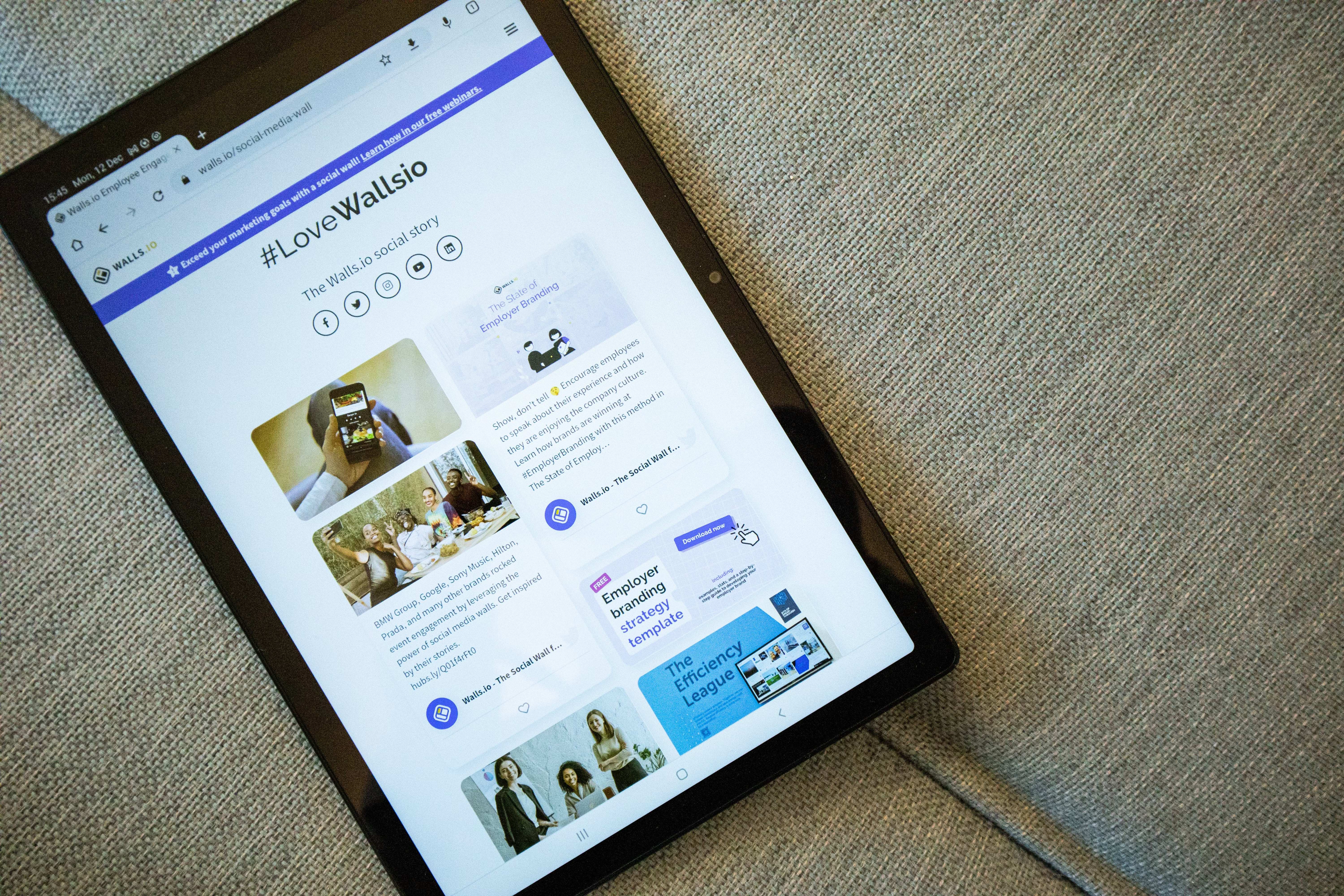
Launching a website is more than pressing publish. A well-planned launch should make it easy for search engines to crawl the site, simple for visitors to navigate, and fast enough to deliver a smooth experience on every device.
Whether you are building a business website, an ecommerce store, a service page, or a WordPress site, launch day is the moment to check the details that affect visibility, usability, and performance. A careful process helps you avoid common issues such as broken links, confusing layouts, weak mobile experiences, and slow loading pages.
Start with a clear site structure
Before launch, review the overall structure of the website. A sensible hierarchy helps visitors find information quickly and helps search engines understand how pages relate to one another. Your homepage should lead to main sections such as services, products, about, blog, and contact, with subpages organised in a logical way.
For SEO-friendly website design, structure matters as much as style. Keep important pages within a few clicks of the homepage, and make sure each page has a clear purpose. For example, a service business might separate general services from individual service pages, while an ecommerce site should organise product categories, filters, and product pages so users can browse without friction.
Internal linking also supports structure. If a visitor reads a blog post about launch preparation, relevant links can guide them towards related services or further guidance. For a broader look at SEO support for site growth, you can explore a free website SEO audit.
Design for mobile first and responsive behaviour
Most websites now need to work well on small screens first. Mobile-first design means designing the core content and interactions for mobile users before expanding the layout for larger screens. This approach is especially important because menu behaviour, button spacing, form fields, and content hierarchy can all feel very different on a phone.
Responsive web design ensures the site adapts smoothly across screen sizes. Check that text remains readable without zooming, images scale correctly, and CTAs do not overlap other elements. Navigation should be simple and thumb-friendly, with enough spacing between tap targets. On ecommerce and business websites alike, a poor mobile layout can make product discovery or enquiry submission unnecessarily difficult.
It is also worth checking the design on different browsers and devices, not just on the desktop version used during development. Google’s SEO Starter Guide is a useful reference for understanding how design choices connect to crawlability, usability, and search visibility.
Review UX, UI, and page layout
User experience is about how easy and pleasant the website is to use. User interface is about the visual and interactive elements that support that experience. At launch, both need a careful review. Even a good-looking website can underperform if the layout is confusing or the user journey feels unclear.
Check whether each page has one main goal. A landing page should guide the visitor towards a specific action, such as submitting a form, booking a call, or adding a product to cart. A service page should explain the offer, build trust, answer questions, and make the next step obvious. A homepage should introduce the brand, signpost key sections, and support different visitor intents without clutter.
Content layout should help scanning. Use headings, short paragraphs, bullet points, and clear visual hierarchy. Avoid placing too many competing calls to action above the fold. Good design supports clarity rather than distraction, which can improve engagement and make your pages easier to understand.
Check website speed and Core Web Vitals
Website speed affects how quickly users can interact with your pages, and that has a direct impact on experience. Slow pages can make it harder for visitors to stay engaged, especially on mobile connections. Performance also matters for SEO because search engines favour pages that are usable and technically sound.
Launch checks should include image optimisation, sensible file sizes, lightweight fonts, and clean code where possible. For WordPress website design, review plugins carefully because too many can slow the site down. For ecommerce sites, large product images, filters, and scripts need extra attention. Compress media, use modern image formats where suitable, and avoid unnecessary animations that add delay without value.
You can test performance with PageSpeed Insights to identify issues linked to loading, interactivity, and layout stability. Core Web Vitals are not the only measure of quality, but they are a helpful signal when reviewing the technical side of website design.
Make accessibility and trust part of the launch checklist
Accessible design helps more people use your site, including visitors using screen readers, keyboards, or smaller devices. At launch, make sure colour contrast is readable, forms have labels, images have meaningful alt text where needed, and interactive elements can be used without a mouse alone.
Trust signals also matter. Add clear contact details, policy pages, business information, and relevant reassurance around payments or service delivery. For online shops, product pages should include useful descriptions, prices, shipping information, and returns details. For service businesses, clear explanations of process and expectations help reduce uncertainty.
Avoid deceptive patterns such as hidden information, misleading buttons, or intrusive pop-ups that interrupt the user journey. Better design is usually clearer design. If accessibility is a priority, the guidance from the W3C Web Accessibility Initiative is a reliable place to start.
Test conversions, forms, and launch readiness
Conversion-focused design should be practical, not pushy. Before launch, test the key actions you expect visitors to take. Submit contact forms, test checkout flows, review confirmation messages, and check that buttons and links behave correctly on mobile and desktop.
Look at the user journey from first visit to action. Are the next steps obvious? Is the copy aligned with visitor intent? Do the service pages answer common questions before asking for an enquiry? Does the product page reduce hesitation with enough detail and supporting information? Results depend on traffic quality, offer clarity, trust signals, page layout, and testing, so launch should be treated as the starting point for improvement rather than the finish line.
It also helps to connect design with ongoing measurement. After launch, monitor how people move through the site, where they drop off, and which pages need refinement. If you want to understand how design, SEO, and growth support one another, the Backlink Works insights hub is a useful reference point.
Best practices before you go live
Use a simple launch checklist to reduce avoidable issues:
- Check that all main pages load correctly and no links are broken.
- Review titles, meta descriptions, headings, and on-page copy for clarity.
- Confirm the site is mobile-friendly and responsive across key screen sizes.
- Optimise images, scripts, and plugins for speed.
- Test forms, checkout flows, navigation menus, and buttons.
- Check alt text, contrast, and keyboard access for accessibility basics.
- Make sure analytics and search tools are connected correctly.
If you are working on a larger redesign or a new WordPress build, this is the stage to compare design decisions against business goals. A launch that looks polished but confuses users is still likely to underperform. A launch that balances structure, usability, speed, and content clarity has a much stronger foundation.
Conclusion
A website launch checklist is not only about technical housekeeping. It is about creating a site that is easy to use, easy to understand, and ready to support SEO, lead generation, and customer enquiries from day one. Good website design connects the visual layer, the content structure, the mobile experience, and the performance details that shape how people interact with your site.
Whether you are launching a business website, ecommerce store, service page, or blog, focus on crawlability, responsiveness, accessibility, speed, and clarity. Those essentials will not guarantee success, but they do give your website a far stronger starting point.
Frequently Asked Questions
What should be checked before launching a website?
Check structure, mobile usability, page speed, forms, internal links, headings, metadata, and accessibility basics.
Why does website design matter for SEO?
Design affects crawlability, mobile usability, content structure, internal linking, accessibility, and page experience.
How can I improve conversion-focused design?
Make the next step clear, reduce distractions, use helpful trust signals, and test forms, buttons, and page layouts.
What is the most common website launch mistake?
Launching with poor mobile usability or slow pages is common, especially when design and performance are not tested together.
- Sponsored Ad -





