
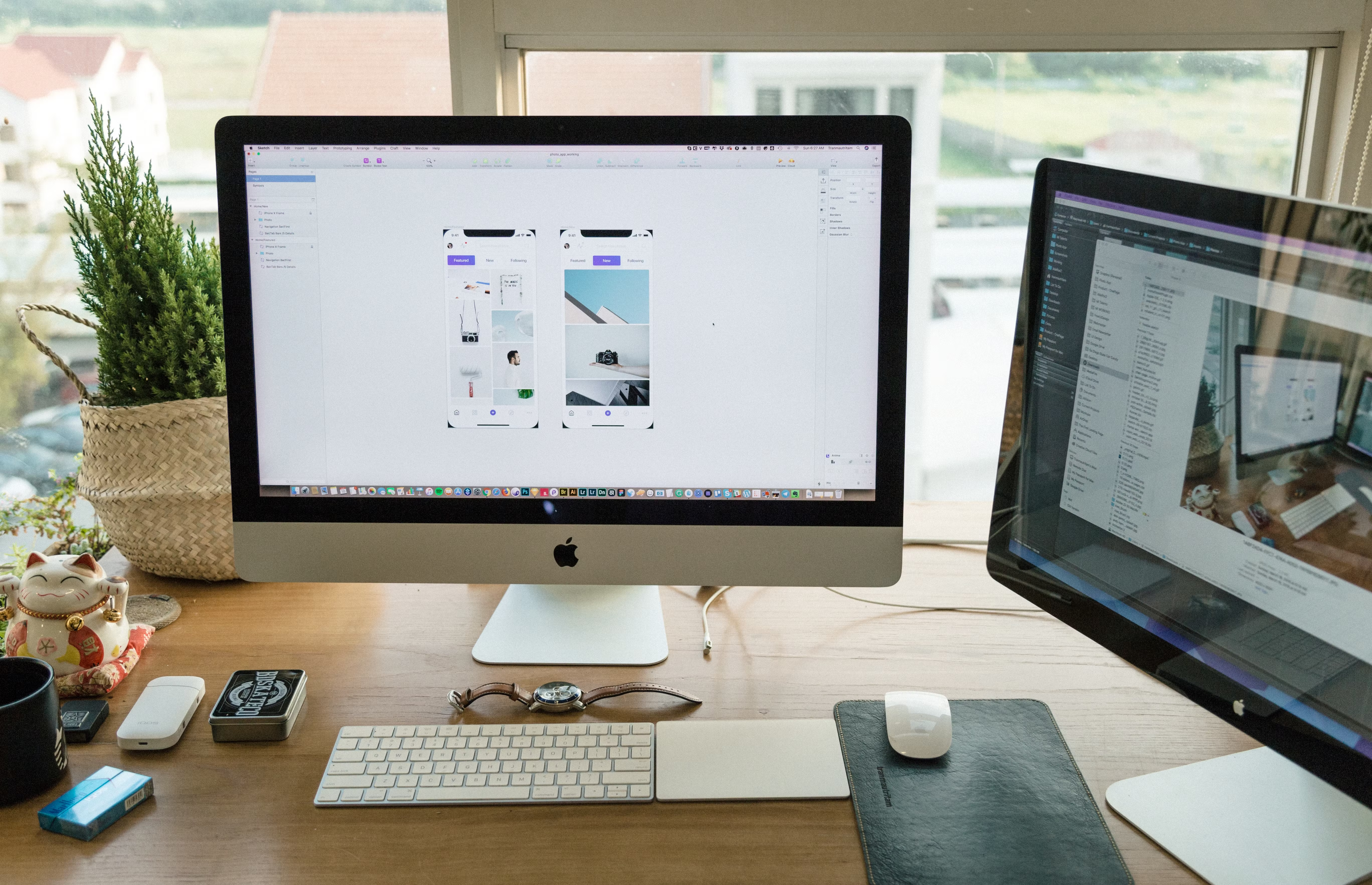
Website personalisation is the practice of adapting a website’s content, layout, messaging, or calls to action to better match what a visitor is likely looking for. Done well, it can improve clarity, reduce friction, and help people find the next step more easily.
For SEO education, digital marketing, and website growth, personalisation is not about being clever for its own sake. It is about designing pages that feel relevant, load quickly, work well on mobile, and support both user experience and conversion goals without becoming misleading or intrusive.
What Website Personalisation Means in Practice
At a design level, personalisation can be as simple as showing different hero text to first-time visitors and returning visitors, highlighting relevant service categories, or tailoring calls to action by page type. It can also involve smarter content layout, such as showing ecommerce product recommendations, location-based service options, or industry-specific proof points.
The key is to keep it useful. Visitors should always understand where they are, what the page offers, and what to do next. Personalisation should support the page’s purpose, not distract from it.
For example, a business website may use a homepage that routes visitors to services, case studies, or contact pages depending on their likely intent. A WordPress site might use page templates that change content blocks by audience segment. An ecommerce site might highlight recently viewed products or category-specific offers, as long as the page remains easy to scan and accessible.
Why Personalisation Matters for UX, SEO, and Conversions
Personalisation matters because people expect relevant, efficient experiences. When pages feel generic, users may have to do more work to find what they need. That can increase friction, reduce trust, and weaken engagement.
From an SEO perspective, website design supports search visibility through crawlability, mobile usability, internal linking, structured content, accessibility, and page performance. Personalisation should never block key content from search engines or create inconsistent experiences that confuse users. If content changes dynamically, make sure the important information remains discoverable and indexable where appropriate.
For conversions, results depend on many factors: traffic quality, offer strength, page clarity, trust signals, copy, layout, and testing. Personalisation can help by matching intent more closely, but it will not fix weak messaging or a poor user journey on its own.
If you are also reviewing technical and content foundations, a free website SEO audit can help identify structural issues that may limit both visibility and user experience.
Designing Personalised Pages Without Hurting Usability
Good personalisation starts with a clean, responsive web design. Keep the page structure familiar so visitors do not feel lost when content changes. The header, navigation, page title, and main call to action should stay consistent unless there is a clear reason to adjust them.
On mobile-first design, space is limited, so every personalised element needs a purpose. Avoid overcrowding the screen with too many banners, pop-ups, or competing messages. Instead, use simple content blocks that prioritise the most useful information first.
Useful personalisation often appears in:
- Hero sections with audience-specific messaging
- Landing pages that match campaign intent
- Service pages tailored by sector or location
- Product pages that show related items or support content
- Navigation that highlights the most relevant categories
For design inspiration and accessibility principles, Google’s web design learning resources are a useful reference for keeping interfaces practical and user-focused.
How to Personalise Key Page Types
Different pages need different approaches. A homepage may need broad guidance, while a landing page should stay focused on one action. Service pages can adapt to audience needs, and product pages can guide comparison and decision-making.
Homepages and business websites
Use the homepage to direct visitors efficiently. A short value proposition, clear navigation, and audience-based pathways can help people choose the right section faster. This is especially useful for agencies, consultants, and service businesses with more than one offer.
Landing pages
Landing pages should align with the traffic source and user intent. If someone clicks an ad or email about one specific service, the page should repeat that message clearly. Keep the layout focused, reduce unnecessary links, and make the call to action easy to spot.
Service pages and product pages
Service pages can use personalisation to highlight industries, outcomes, or process details that matter to the visitor. Product pages can surface reviews, delivery information, FAQs, or related products in a way that supports decision-making without overwhelming the user.
Ecommerce website design
For ecommerce, personalisation works best when it supports browsing. Examples include category recommendations, recently viewed products, and clearer filtering. Make sure these features do not slow the site down or interfere with Core Web Vitals, especially on mobile devices.
Website Structure, Speed, and Accessibility Considerations
Personalisation works best on a strong website structure. That means clear headings, logical content hierarchy, sensible internal linking, and predictable navigation. Search engines and users both benefit when pages are easy to understand and move through.
Website speed matters too. Personalised scripts, third-party tools, and heavy visual elements can increase load time if they are not managed carefully. Review how any dynamic content affects the page experience, particularly LCP, INP, and CLS. If a personalised element shifts layout while loading, it can harm usability and Core Web Vitals.
Accessibility should be part of the process from the start. Ensure personalised content remains readable with keyboard navigation, screen readers, and different devices. Avoid using colour alone to communicate meaning, and keep contrast strong enough for text and buttons.
When working in WordPress website design, it is often best to use lightweight themes, well-maintained plugins, and templates that allow flexible but structured content blocks. This helps keep personalisation manageable without creating a fragile site.
Best Practices and Common Mistakes
A good rule is to personalise with purpose. Start small, measure behaviour, and refine gradually. Not every page needs custom content, and too much variation can make the site harder to maintain.
Best practices include:
- Keep the core page structure consistent
- Match content to visitor intent
- Test on mobile as well as desktop
- Use plain, clear language
- Track engagement, clicks, and form completion
- Review speed and layout stability after adding dynamic content
Common mistakes include using personalisation to hide important information, changing too much at once, overloading pages with widgets, or relying on assumptions instead of testing. It is also a mistake to treat personalisation as a replacement for strong copy, trust signals, and clear navigation.
If you want to improve the wider site structure behind these decisions, Backlink Works offers practical SEO education and growth resources that can support your planning without replacing proper testing and design work.
Conclusion
Website personalisation can improve UX and conversions when it is built around clarity, relevance, and performance. The most effective approach is usually subtle: better page layouts, more useful content blocks, clearer calls to action, and a stronger match between the visitor’s intent and the page they land on.
For website owners, designers, developers, and marketers, the goal is not to personalise everything. It is to create a site that feels helpful, loads quickly, works well on mobile, supports accessibility, and gives users a smoother path to action.
Frequently Asked Questions
What is website personalisation?
It is the process of adapting parts of a website so the content feels more relevant to different visitors or intents.
Does personalisation help SEO?
It can support SEO indirectly through better engagement, clearer structure, stronger mobile usability, and improved page experience.
Can personalisation slow down a website?
Yes, if it relies on heavy scripts or too many third-party tools. Keep it lightweight and test performance carefully.
What is the safest way to start?
Begin with small changes on key pages, such as tailored headlines, clearer calls to action, or improved content blocks, then test the results.
- Sponsored Ad -





