
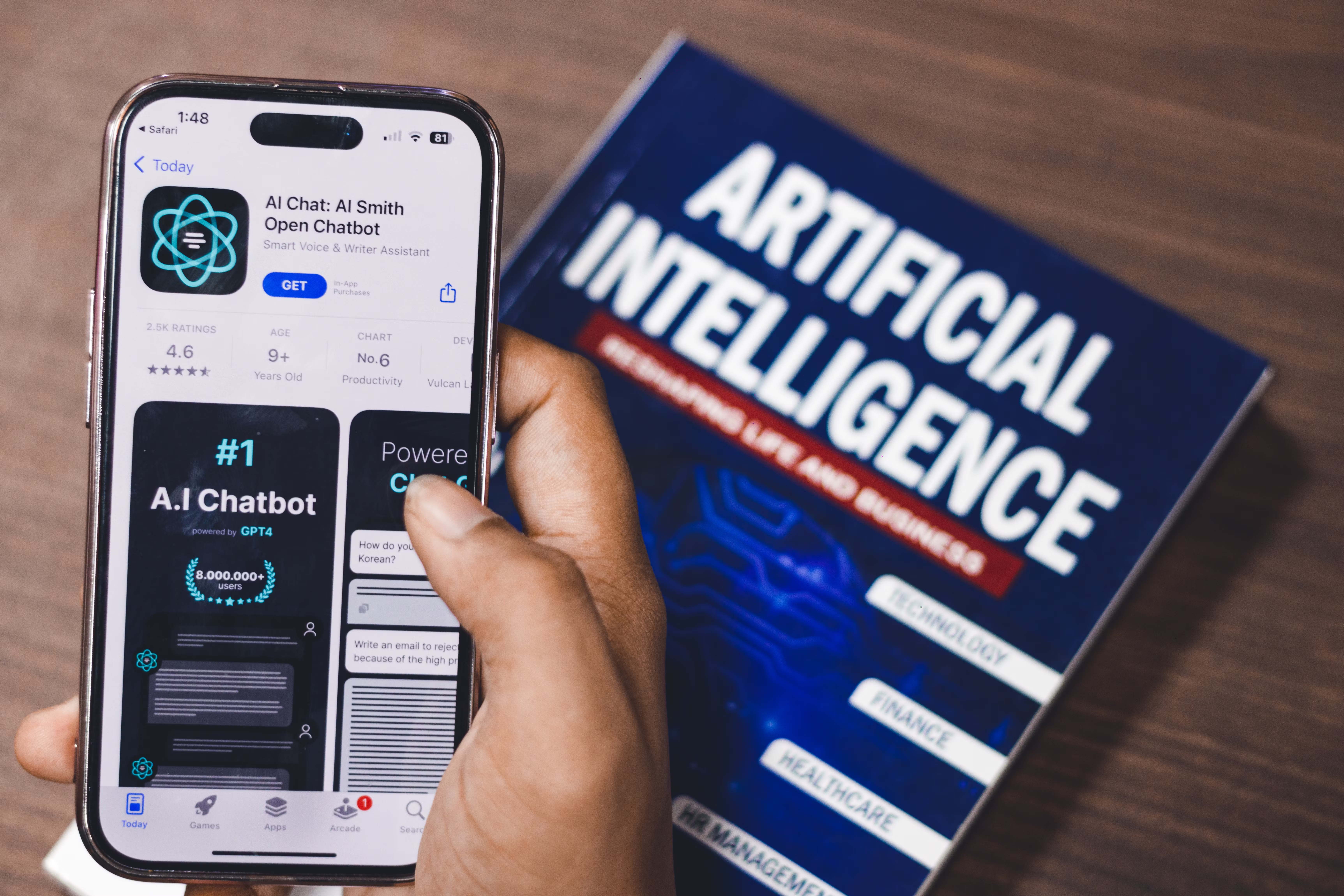
AI search is changing how shoppers discover products, compare options, and move from a question to a purchase. For ecommerce businesses, that means understanding How AI Search Works for Ecommerce: A Beginner Guide to AEO is no longer optional if you want to think clearly about visibility, content, and traffic across answer engines and generative search tools.
Instead of only showing a list of blue links, AI-powered search experiences may summarise information, combine sources, and present a direct answer with supporting citations or brand mentions. That can affect how customers find your store through Google AI Overviews, Google AI Mode, ChatGPT Search, Perplexity, Microsoft Copilot Search, Gemini, or Claude, even though each platform may handle retrieval and attribution differently.
What AI search means for ecommerce
AI search usually refers to search experiences that use large language models and retrieval systems to answer questions in a more conversational way. For ecommerce, this often means users ask broader, more specific questions such as “best waterproof walking boots for winter” or “which protein powder suits sensitive stomachs?” and receive a generated response rather than only a classic results page.
This matters because ecommerce discovery is no longer limited to keyword matching. AI systems may interpret intent, identify entities such as brands, products, categories, materials, and use cases, then present a response based on what they can understand from the web and other sources they access. Strong traditional SEO still matters here, because pages that are crawlable, indexable, clear, and helpful are generally easier for machines and people to understand.
At the same time, AI answers are not fixed. Different platforms may select sources differently, and even the same platform may vary by query, location, account, or product update. That is why AI visibility should be treated as part of wider search strategy, not as a shortcut that replaces SEO.
How answer engines process product and category queries
Answer engines try to respond to a question directly. In ecommerce, they may look for product specifications, buying guidance, comparisons, compatibility details, shipping or returns information, and broader context such as use case or budget. The goal is not always to list ten websites, but to produce a useful summary.
For a store owner, this creates a few practical implications. First, the content on product and category pages needs to answer real shopper questions, not just repeat a product name. Second, pages should use clear headings, concise copy, accurate details, and structured data where appropriate. Third, the site should make it easy for crawlers and users to find essential information without friction.
If you are new to Generative Engine Optimisation or Answer Engine Optimisation, think of them as emerging ways of improving how your content is understood and surfaced by AI systems. These ideas may complement standard SEO, but they are not a universally defined replacement for it. A useful starting point is a practical SEO review such as Backlink Works’ free website SEO audit, which can help you spot crawl, content, and structure issues before you focus on AI visibility.
AI citations, brand mentions, and what they actually mean
In AI search, a clickable citation is a link shown with the answer. A text-only brand mention is your brand name appearing in the response without a link. A recommendation is when the system suggests your product or brand as a relevant option. A referral visit is the user clicking through to your site. These are related, but they are not the same thing.
It is also important to separate an AI citation from a traditional search impression or ranking. A page can rank well in organic search and still not be cited in an AI-generated answer. The reverse can also happen, although it is not something you can assume or control with precision. AI-generated responses may combine information from multiple sources, and attribution can be incomplete or inconsistent.
For ecommerce, this means your aim should be broad visibility and clarity. Build pages that are accurate, descriptive, and easy to verify. Use consistent brand and product naming across your site, marketplaces, and profiles. Make sure your organisation details, authorship, and editorial processes are transparent, especially if you publish buying advice, reviews, or category guides.
What to optimise for without overpromising
Entity optimisation means making it easier for systems to understand who you are, what you sell, and how your pages relate to your brand. In practice, that includes consistent business details, clear product naming, well-written category pages, and accurate structured data. Structured data can clarify page meaning, but it does not guarantee inclusion in AI answers or rich features.
Semantic search is the idea that systems try to understand meaning, not just matching words. That is why ecommerce content should cover context as well as keywords. For example, a running shoe page may need to mention terrain, cushioning, pronation, sizing advice, and who the product suits. This helps both users and search systems understand the page.
Content created or assisted by AI can be useful, but only if it is reviewed carefully. AI-generated drafts may contain errors, outdated details, weak sourcing, or generic phrasing. Human editing remains essential. Good AI content should still reflect real product knowledge, accurate claims, and a consistent brand voice. For broader SEO education on visibility and link authority, Backlink Works also explains how backlink building supports site authority and discoverability, which can still matter in a search strategy that includes AI-driven experiences.
Technical checks: crawlability, indexing, and AI crawler access
Before changing anything for AI search, check the basics. Search-engine crawlers, AI-related crawlers, training-related crawlers, and user-triggered retrieval do not all behave the same way. Some AI systems may rely on search indexes, some may fetch live pages, and some may use a mix of sources. Blocking or allowing one crawler does not guarantee or prevent visibility everywhere.
That is why technical accessibility matters. Pages should be indexable, fast enough to load reliably, and free from accidental barriers such as broken internal links, blocked resources, or confusing navigation. If you use robots.txt, meta robots tags, or other access controls, review current official documentation before making changes. Google’s helpful content guidance for search is a sensible reference point for keeping page quality and usefulness in focus.
For ecommerce sites, practical checks include product availability, canonical tags, duplicate category pages, pagination, and whether important text is hidden behind scripts that are hard to process. The goal is not to chase every AI crawler, but to keep your site understandable and technically healthy.
How to measure AI search visibility without guessing
AI search analytics are still developing, and reporting is often incomplete. You may see referral traffic from some platforms, but other visits may appear as direct, unclassified, or ordinary referral traffic depending on the browser, app, or analytics setup. That means you should avoid reading too much into any single metric.
Useful signals include branded search growth, referral visits from AI-powered tools where available, landing page engagement, assisted conversions, and recurring question themes in customer enquiries. It can also help to track how often your brand name is mentioned accurately in AI-generated answers, even when there is no click. That gives you a better picture of visibility than traffic alone.
A simple monthly review can include: which product or category pages are being referenced, whether brand details are accurate, whether important pages are indexed, and whether users coming from AI-assisted journeys behave differently from other visitors. If you need a wider technical and backlink health check, a structured SEO review such as Backlink Works can sit alongside your own analytics work, but it should never replace direct measurement in your platform.
Conclusion
AI search is not a replacement for traditional SEO, but it does change how ecommerce visibility works. The strongest approach is to build helpful content, technical clarity, and brand consistency first, then layer in AEO thinking where it fits. Focus on pages that answer real shopper questions, use accurate structured data, and keep your site easy to crawl and understand.
If you treat AI search as part of a broader visibility strategy, rather than a shortcut or a guaranteed traffic source, you will make better decisions for your store, your content, and your brand.
Frequently Asked Questions
Is AEO only relevant for large ecommerce brands?
No. Smaller stores can also benefit from clearer product pages, better entity consistency, and useful comparison content. The main difference is scale, not eligibility.
Can structured data make my products appear in AI answers?
Structured data can help machines understand your content, but it does not guarantee citations or recommendations. It works best when it accurately matches the visible page.
Should I rewrite all my product pages for AI search?
Not necessarily. Start with your most important pages, improve clarity, add missing buying information, and fix technical issues first. Useful pages for people are usually the best place to begin.
How do I know if AI search is sending traffic to my site?
Check referral traffic, landing page behaviour, branded searches, and conversions in your analytics. Some AI-assisted visits may be hard to isolate, so look for patterns rather than a single report.
- Sponsored Ad -





