
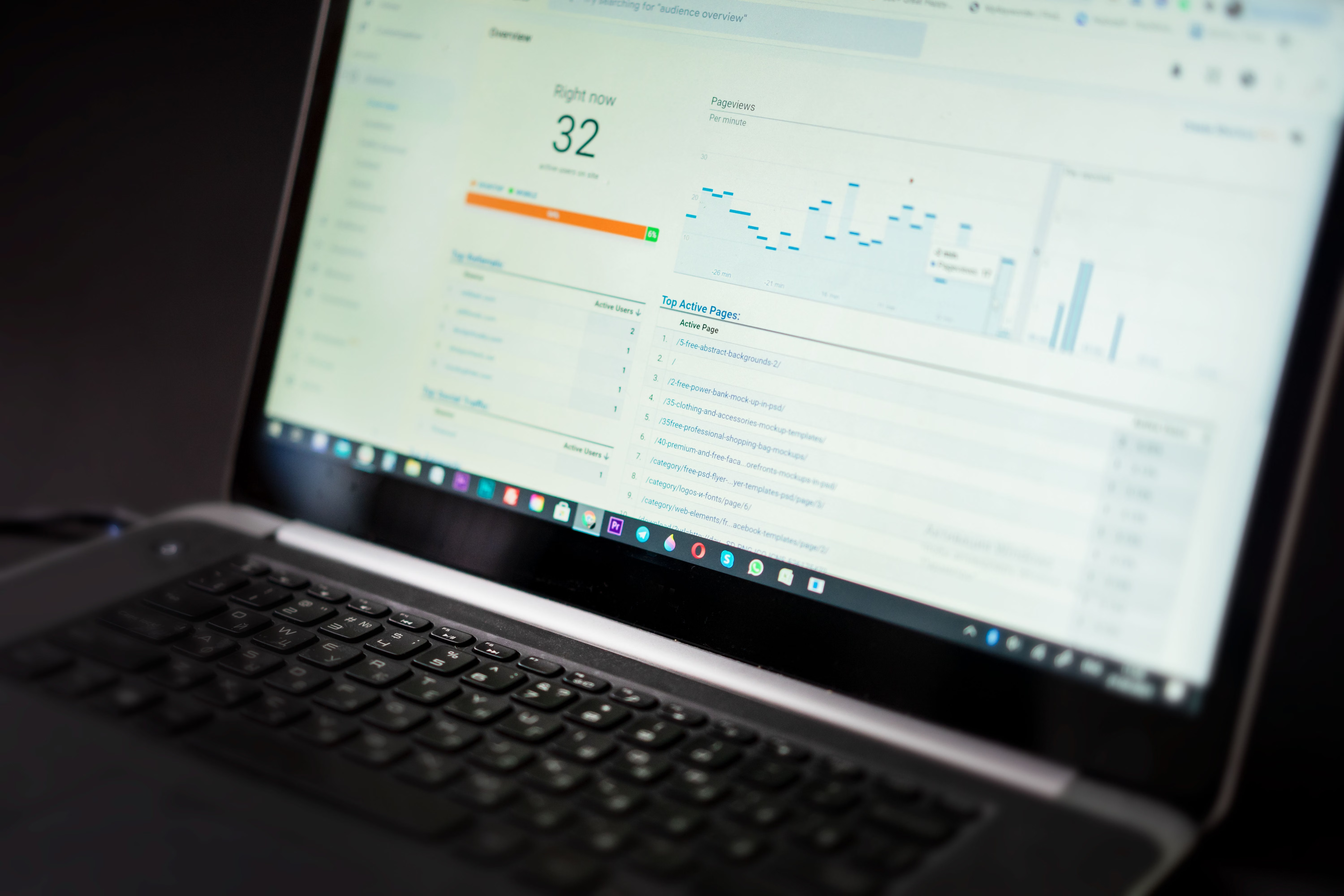
Google search keeps evolving, and by 2026 the biggest changes are less about a single headline update and more about how ranking systems, AI-driven results, and quality signals work together. For website owners, the main shift is not simply “how to rank” but how to remain visible across classic organic listings, AI-assisted search experiences, local results, and richer result formats.
This means SEO is now more closely tied to content usefulness, crawlability, page experience, structured data, and brand trust. If you manage a blog, ecommerce site, local business, or WordPress build, understanding these changes helps you prioritise the work that supports long-term search visibility rather than chasing short-lived tactics.
What Google Ranking Changes Mean for Visibility
Google ranking systems continue to refine how they assess relevance, helpfulness, and overall page quality. In practice, this means pages that match intent well and demonstrate clear expertise are more likely to hold visibility than pages built mainly around keywords.
For SEO professionals, the important takeaway is that rankings are no longer influenced by one factor alone. A page can be technically sound but still underperform if the content is thin, outdated, hard to navigate, or not aligned with what searchers actually want.
Website owners should review whether their key pages answer questions directly, use clear headings, and provide enough depth to be genuinely useful. If your site relies heavily on template content or thin category pages, that is a sign to improve information quality rather than expecting technical fixes alone to move rankings.
AI Search Updates and the New Visibility Challenge
AI-led search experiences are changing how users discover information and click through to websites. Even when a page is still ranking well, it may receive fewer clicks if search results answer the query more directly or present more context above the organic links.
That does not mean SEO is becoming less important. It means visibility must be measured more broadly. Impressions, mentions, inclusion in richer search results, and branded search interest can matter as much as traditional position tracking.
To adapt, create content that is easy for search systems to interpret. Use concise introductions, descriptive subheadings, and clear answers to common questions. Search-facing content should be structured for both people and systems that summarise information.
For teams monitoring search performance, tools such as Google Search Console remain essential for understanding how pages are indexed, which queries trigger visibility, and where click patterns have changed.
Technical SEO and Crawling Still Shape Results
Technical SEO continues to matter because Google cannot rank what it cannot efficiently crawl, render, or index. This includes site architecture, internal linking, canonical tags, robots rules, XML sitemaps, and page speed.
One of the biggest practical developments is that performance and usability have become more closely connected to search outcomes. Fast-loading pages are easier for users to engage with and easier for search systems to process consistently. If your website has large images, excessive scripts, or plugin bloat, those issues can weaken visibility over time.
WordPress users should pay particular attention to theme efficiency, plugin overlap, and mobile rendering. A clean setup often performs better than a heavily customised build with many moving parts. For a broader site health review, a free website SEO audit can help identify technical issues that affect crawling, indexing, and visibility.
If you are checking site speed and Core Web Vitals, it is sensible to review pages through the browser and with tools like PageSpeed testing. Focus on improvements that make a real difference to users, such as reducing layout shift, improving image delivery, and cutting unnecessary third-party code.
Content SEO Is Moving Towards Depth, Clarity, and Freshness
Content quality signals are becoming harder to ignore. Google continues to reward pages that demonstrate original insight, direct usefulness, and a clear reason to exist. Surface-level articles that repeat common advice without adding anything new tend to struggle for sustained visibility.
For publishers and marketers, this means updating content strategy. Stronger pages usually combine practical answers, first-hand experience, specific examples, and simple explanations. That is especially important for informational queries where searchers want confidence, not just volume.
Refresh older content where it has become stale, fix any outdated references, and remove sections that no longer serve the query. It can also help to consolidate overlapping pages so that your site does not compete with itself.
When planning content, think about search intent first. A user looking for comparison advice needs different content from someone looking for setup instructions or a product page. Matching that intent remains one of the most reliable ways to improve organic performance.
Local SEO and Ecommerce SEO Are Getting More Competitive
Local SEO continues to depend on relevance, distance, prominence, and business completeness. For local businesses, search visibility is shaped by accurate listings, strong reviews, service pages, and location-specific content that proves real local relevance.
Ecommerce sites face a different challenge. Product visibility depends on well-structured category pages, unique product descriptions, indexable filters, and strong internal linking. Thin duplicate pages created by facets or near-identical product variants can cause indexing inefficiencies and weaken authority across the site.
Google also places more value on trustworthy merchant and product experiences. That means accurate availability, clear pricing, helpful imagery, and transparent policies matter more than ever. If you sell online, make sure product pages help users compare options and make informed decisions quickly.
For businesses working with link acquisition or broader authority-building, it is better to focus on safe, relevant growth patterns than shortcuts. Editorially placed links and structured outreach can still support visibility, but they should sit alongside strong technical and content foundations. Backlink Works provides educational resources on this wider process, including its backlink building process.
What Website Owners Should Check Next
The best response to ongoing Google changes is a balanced review of your site rather than a single tactical fix. Start with the pages that matter most commercially or editorially and ask whether they are easy to crawl, easy to understand, and genuinely useful.
Use a checklist approach:
- Review Search Console for indexing issues, query changes, and pages losing visibility.
- Check whether important pages still match current search intent.
- Improve speed, mobile usability, and rendering where users are struggling.
- Update content that is outdated, thin, or overlapping with other pages.
- Strengthen internal links so important pages are easier to find.
- Confirm local, product, and structured data details are accurate and consistent.
For SEO teams, this is also a good time to assess reporting. Rankings alone do not tell the full story. Track clicks, impressions, branded searches, crawl efficiency, and engagement so you can see whether visibility is improving in meaningful ways.
Conclusion
Google SEO updates in 2026 are best understood as an ongoing shift towards better search quality, stronger content usefulness, and more complex visibility patterns. The sites that perform well are usually the ones that combine technical stability with clear information, strong page experience, and a realistic understanding of how search results now work.
If you focus on helping users first, keeping your site technically sound, and monitoring search performance with the right tools, you will be better positioned to adapt as Google’s systems continue to evolve.
Frequently Asked Questions
Has Google made one single update that changed SEO in 2026?
There is no reason to assume one single change explains everything. SEO performance is usually shaped by multiple ranking systems, content quality, technical health, and search result features working together.
Should I change my content strategy because of AI search?
Yes, but not by rewriting everything. Focus on clearer structure, stronger answers, and original value so your content can perform in both classic results and AI-assisted search experiences.
What should I check first if my rankings drop?
Start with Search Console, then review content relevance, indexing status, internal links, and page performance. A drop often has more than one cause.
Do backlinks still matter for visibility?
Yes, but they work best as part of a wider SEO strategy. Links support authority, while content quality and technical SEO determine whether that authority can translate into visibility.
- Sponsored Ad -





