
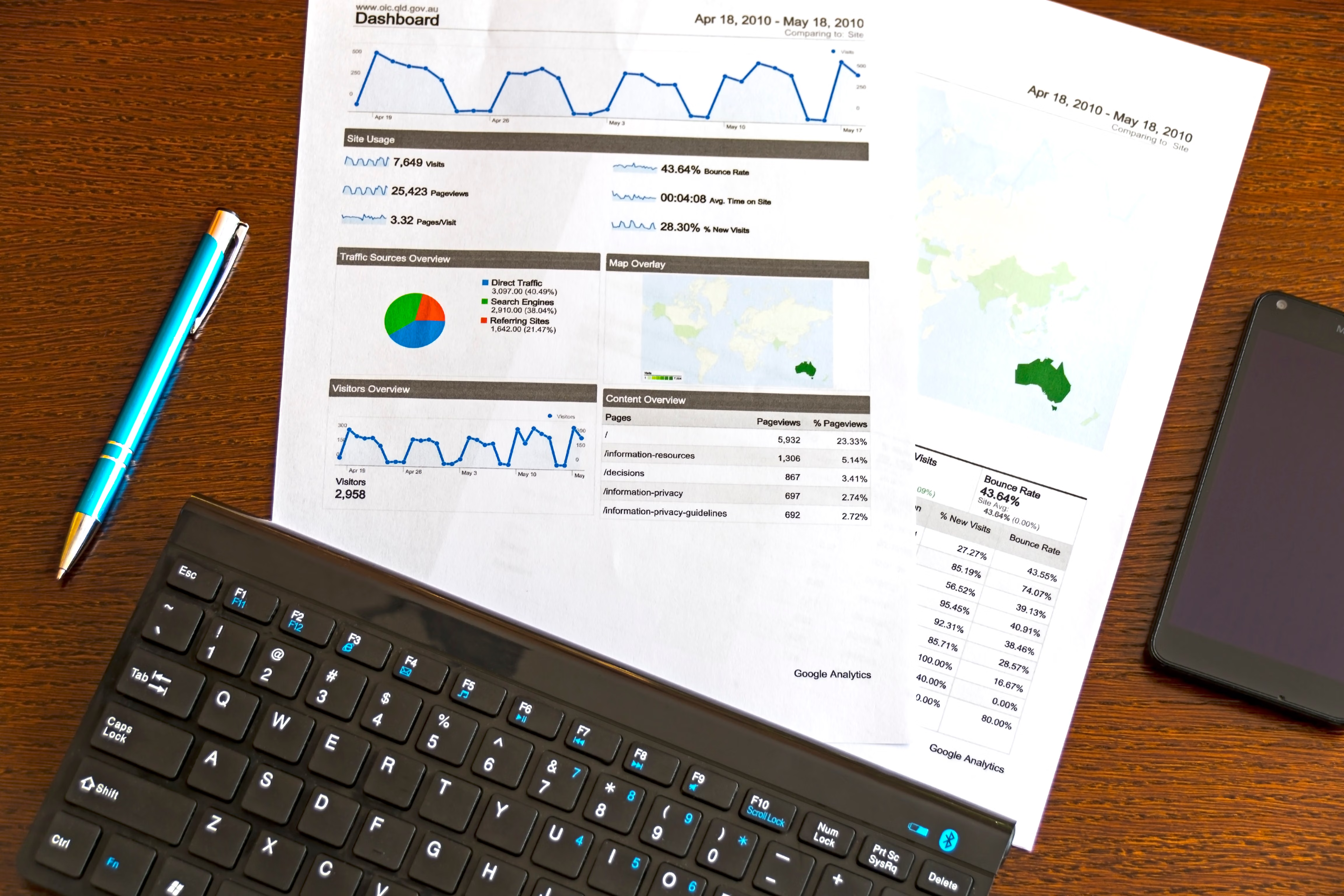
A backlink report is only useful if you know how to read it properly. A long list of linking domains may look impressive at first glance, but the real value sits in the quality, relevance, and trust signals behind each link.
This guide explains how to interpret a backlink report example in a practical way, so you can spot strong links, weak links, and potential risks. Whether you are a website owner, blogger, SEO beginner, or agency professional, understanding link quality helps you make better decisions about link building and organic visibility.
What a backlink report shows
A backlink report is a summary of websites that link to your pages or a competitor’s pages. It usually includes the referring domain, target URL, anchor text, link type, and authority metrics. Some reports also show whether the link is dofollow or nofollow, whether it has been indexed, and when it was first discovered.
If you are comparing reports from different tools, the figures may vary slightly because each platform uses its own crawl data. Tools such as Ahrefs can be useful for checking backlinks, but the numbers should always be read as indicators rather than absolute truth.
The main job of a backlink report is not to count links. It is to help you judge whether the links are relevant, trustworthy, and likely to support sustainable SEO growth.
How to read link quality
Link quality is the most important part of any report. A strong backlink usually comes from a real website with useful content, a sensible outbound linking pattern, and some topical connection to your site. A weak backlink may come from a low-value directory, a thin page, or a website that exists mainly to place links.
Authority and trust
Authority metrics can help you compare domains, but they should not be used on their own. A high metric does not automatically mean a valuable link, and a lower-metric site can still be highly relevant and useful. Look for signs that the domain has genuine content, real traffic potential, and consistent editorial standards.
Placement and context
Backlinks placed inside the main body of a relevant article are usually more meaningful than links buried in footers or crowded lists. Context matters because search engines and users both benefit when the link makes sense within the surrounding content.
A good backlink report example should make it easy to see where the link appears and whether it sits naturally within the page. If the surrounding text looks forced, the link may carry less value.
How to judge relevance
Relevance tells you whether the linking page and linking domain are connected to your topic, industry, or audience. For example, a link from a marketing blog to an SEO service page is more relevant than a link from a random unrelated site.
When reading a backlink report, ask these practical questions:
- Does the linking page cover a related topic?
- Would a real reader find the link helpful?
- Does the domain serve a similar audience?
- Is the anchor text aligned with the destination page?
Relevance is especially important for small businesses and niche websites. A few well-matched backlinks often provide more value than many unrelated ones. If you want a broader educational overview, the backlink building guide from Backlink Works is a useful starting point for understanding link strategy and safe growth.
Anchor text, dofollow, and nofollow
Anchor text is the clickable wording used in the backlink. It helps search engines understand the context of the destination page, but it should look natural. Branded anchors, plain URL anchors, and descriptive phrases are often safer than repeated exact-match keywords.
Dofollow links can pass more direct SEO value, while nofollow links may still help with discovery, brand visibility, and referral traffic. A healthy backlink profile usually contains a mix of both. A report that shows only one type of link may deserve a closer look.
If your backlink report includes many repeated exact-match anchors, that can be a sign of over-optimised link building. For a safer approach to link acquisition, see the Google-safe backlinks resource from Backlink Works.
Checklist for reviewing a backlink report
Use this simple checklist when assessing links in any backlink report example:
- Check whether the referring domain looks real and active.
- Review whether the linking page is topically relevant.
- Look at the anchor text for natural wording.
- Identify whether the link is dofollow or nofollow.
- Check whether the page is indexable and likely to be crawled.
- Assess whether the link sits in useful content or in a weak location.
- Notice patterns of repeated anchors, duplicate domains, or obvious low-quality sources.
This checklist is useful for agencies, bloggers, and business owners because it turns a long report into a clear review process. It also helps you separate promising links from those that may not be worth keeping or pursuing.
Common mistakes when reading backlink reports
One common mistake is chasing volume instead of value. A report may show hundreds of links, but if most are irrelevant or low quality, the overall profile may not support organic growth well.
Another mistake is trusting authority metrics alone. Metrics are helpful, but they do not replace human judgement. A site can have a strong score and still be a poor topical fit.
Other mistakes to avoid include:
- Ignoring anchor text patterns and over-optimisation.
- Assuming every indexed link is valuable.
- Overlooking nofollow links that still drive traffic or visibility.
- Focusing only on new links and ignoring older links that may have changed.
- Using irrelevant links as a shortcut to rankings.
If you are reviewing backlink growth as part of a broader SEO audit, the free website SEO audit from Backlink Works can help you connect backlink issues with wider on-page or technical problems.
Best practices for safer backlink analysis
Good backlink analysis should support long-term SEO rather than short-term tactics. Focus on links that look editorial, contextually relevant, and earned through useful content or genuine outreach. Natural backlink growth is usually more stable than aggressive link acquisition.
It also helps to review backlinks alongside indexing behaviour. A link may be present in a report, but if the page is not indexed or rarely crawled, its impact may be limited. For that reason, some SEO teams also monitor whether backlinks are being discovered correctly by search engines.
When you need a practical overview of safe link-building steps, the backlink building process explains how links are created in a more controlled and white-hat way. Backlink Works can also be a useful backlink building resource for teams that want to learn rather than guess.
For commercial site owners, the goal should be to build a backlink profile that looks trustworthy, relevant, and steady over time. That usually means favouring quality links over risky shortcuts and making sure each new backlink fits the site naturally.
Conclusion
A backlink report example becomes genuinely useful when you know how to read beyond the raw numbers. Look at the source domain, the topic match, the anchor text, the link placement, and the crawl or indexation signals. These details tell you far more about SEO value than link count alone.
Used well, backlink reports help website owners, bloggers, agencies, and business teams make better decisions about link building and organic ranking improvement. The aim is not to collect the most links, but to build a cleaner, more relevant backlink profile that supports long-term visibility.
Frequently Asked Questions
What is a backlink report used for?
A backlink report shows which websites link to a page or domain and helps you assess link quality, relevance, and risk. It is useful for competitor research, link audits, and planning safer SEO improvements. The best reports help you understand patterns, not just link counts.
How do I know if a backlink is high quality?
Check whether the linking site is relevant, active, and trustworthy. A high-quality backlink usually appears in useful content, uses natural anchor text, and comes from a page that genuinely fits your topic. Authority metrics help, but topical relevance and placement matter just as much.
Are nofollow backlinks useless?
No, nofollow backlinks can still provide referral traffic, visibility, and brand exposure. They may also help create a natural-looking backlink profile. While they usually pass less direct SEO value than dofollow links, they still have a role in healthy link profiles.
Can backlink indexing affect SEO value?
Yes, indexing can affect whether a backlink is discovered and considered during crawling. If a linking page is not indexable or is rarely crawled, its impact may be limited. Indexation is only one factor, though, so relevance and quality still matter most.
- Sponsored Ad -





