
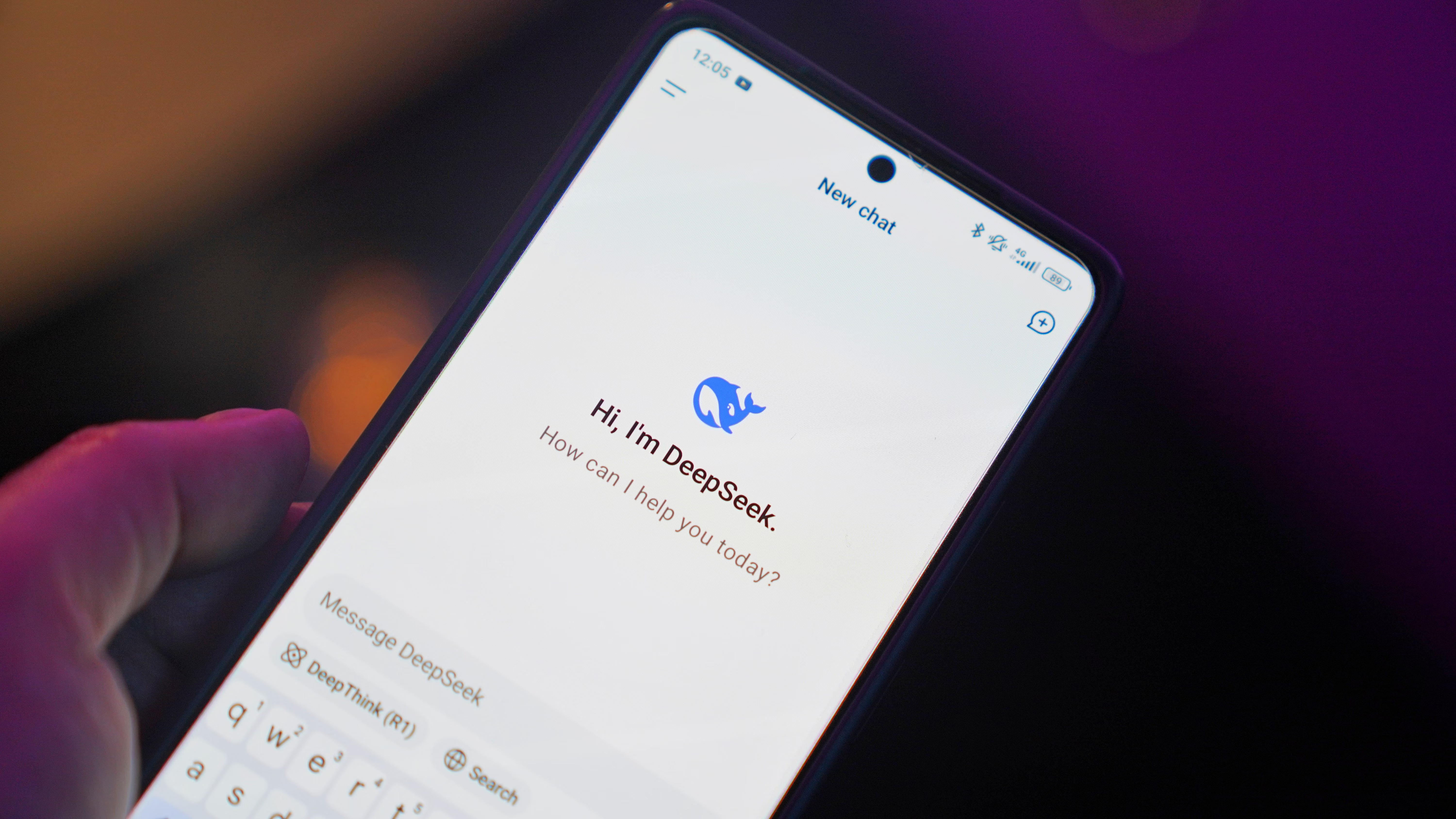
AI Search Traffic and Brand Mentions: How to Track Visibility is becoming a practical question for anyone who wants to understand how people discover brands through generative search. Instead of only scanning traditional blue links, users may now read AI-generated summaries, ask follow-up questions, and decide whether to visit a site based on the answer they see.
That shift matters because visibility in AI search is not the same as a classic ranking position. A page can be cited, mentioned, summarised, or skipped depending on the query, the platform, and how the system chooses to present information. For website owners, the goal is to track those signals carefully without assuming that every mention leads to traffic.
What AI search visibility actually means
AI search includes generative search, answer engines, and AI-assisted search experiences such as Google AI Overviews, Google AI Mode, ChatGPT Search, Perplexity, Microsoft Copilot Search, Gemini, and Claude. These systems can produce conversational answers that combine information from multiple sources, rather than simply listing webpages in order.
Because of that, visibility can take several forms. Your brand might appear as a clickable citation, a text-only mention, a product recommendation, or not appear at all. A citation is not the same as a mention, and neither is the same as a referral visit. A citation may support trust, but it does not always send traffic. Likewise, a brand mention may improve awareness without creating a click.
This is why AI search traffic needs a broader view than traditional rankings alone. A page can be useful to an answer engine because it is clear, topical, well-structured, and easy to interpret, even if it does not behave like a standard search result.
Why brand mentions matter as much as clicks
Brand mentions in AI-generated answers can shape how users perceive authority, relevance, and familiarity. If a platform references your business name, product, or editorial publication, that can influence future searches even when the answer does not generate an immediate visit.
For this reason, it helps to track three different outcomes separately: what the model says about your brand, whether it cites your pages, and whether people later click through. These signals are related, but they are not interchangeable. A mention can be helpful for awareness, while a citation can help users check the source. A visit then depends on the user’s intent and the answer format.
To support this kind of visibility, your brand details should be consistent across your website and wider web presence. Clear organisation information, accurate author pages, and trustworthy source material can make it easier for systems to understand who you are. Google’s guidance on establishing business details in Search is a useful reference point for keeping brand information clear and machine-readable.
How AI search differs from traditional search results
Traditional search usually presents a set of ranked links, while AI-generated search experiences may answer the question directly and then offer supporting sources or follow-up prompts. That changes user behaviour. People may refine the question, read the summary, or click only when they need depth, proof, or a product page.
Different platforms also handle sources differently. Google AI Overviews, Google AI Mode, ChatGPT Search, Perplexity, Copilot, Gemini, and Claude do not all present attribution in the same way, and those interfaces can change over time. It is safer to treat source selection as dynamic rather than fixed.
For site owners, that means SEO still matters. Helpful content, crawlability, indexing, clear internal linking, and accurate page structure remain important foundations. AI search may change how users enter your site, but it does not remove the need for strong technical SEO and good content.
What Generative Engine Optimisation and Answer Engine Optimisation can help with
Generative Engine Optimisation, often shortened to GEO, and Answer Engine Optimisation, or AEO, are terms used to describe content and technical practices that may improve how information is interpreted by AI search systems. These terms are still developing, and different marketers use them in different ways.
In practical terms, these approaches usually overlap with established SEO and content strategy. The focus is on clear entity identification, useful explanations, trustworthy sourcing, accurate structured data, and pages that answer specific questions well. Entity optimisation means helping systems understand who or what your brand represents, not trying to force visibility through artificial signals.
Generative and answer engines may prefer content that is easy to parse, but no format guarantees inclusion. Adding FAQs, headings, or schema alone will not ensure a citation. The goal should be to make pages more understandable for people first, and more legible for machines second.
How to track AI search traffic and brand mentions
Tracking AI visibility is partly a measurement task and partly a monitoring task. Start by looking for referral traffic, landing page performance, assisted conversions, and unusual patterns in branded search behaviour. Some AI-driven visits may appear as referral traffic, while others may show up as direct or unclassified depending on the platform and analytics setup.
It also helps to monitor brand mentions in the answers themselves. Compare how your brand is described, whether source links appear, and whether the source context is accurate. A mention that misstates your service, pricing, or category can be as important to spot as a positive citation.
A sensible audit process includes:
- Testing key commercial and informational queries manually in relevant AI search experiences.
- Checking whether your pages are crawlable and indexable.
- Reviewing structured data for accuracy and consistency.
- Comparing branded search trends with referral and landing page behaviour.
- Recording recurring prompts where your site appears or is absent.
For traditional search performance, Google Search Console can still be useful for monitoring query and page data, and its search analytics guidance explains the basics of measuring search visibility. It will not capture every AI search journey, but it remains a strong part of the picture.
If you are improving your wider SEO foundations at the same time, a free website SEO audit can help identify crawl, content, and technical issues that may also affect discoverability in AI-driven experiences.
Technical and content checks that support visibility
AI search systems can only surface pages they can access, understand, and trust. That makes crawlability and indexability basic requirements, not advanced tactics. Check robots.txt rules, meta robots tags, canonicals, page speed, and internal links before making any assumptions about AI visibility.
Structured data can help clarify what a page is about, such as an article, organisation, product, or local business. Use it only when it reflects the visible content on the page. It can improve machine understanding, but it does not guarantee selection or citation. If you use schema, validate it with an official testing tool and keep it up to date.
Content quality matters just as much. AI-assisted content can be useful, but it still needs human editing, fact-checking, original insight, and a consistent brand voice. Weak sourcing, duplicated material, and outdated claims can reduce trust in both users and systems. Traditional SEO support, such as the ultimate guide to backlink building, can still play a role in strengthening authority signals, but it should be part of a balanced strategy rather than a shortcut.
Common mistakes to avoid
One common mistake is treating every AI mention as proof of success. Another is focusing only on citations and ignoring whether the answer is accurate, relevant, or aligned with your brand. It is also easy to overreact to one example query and assume the pattern applies across all topics or platforms.
Avoid manipulative tactics such as fake mentions, spammy content, hidden text, or deceptive structured data. These approaches can damage trust and create technical or editorial problems. Instead, aim for clear authorship, credible references, and pages that genuinely help users solve a problem.
It is also unhelpful to rebuild your whole content strategy around a single platform. Google AI Overviews, ChatGPT Search, Perplexity, Copilot, Gemini, and Claude may all surface information differently, and their interfaces can change. A stable content strategy should serve human readers and remain adaptable as systems evolve.
Conclusion
AI search traffic and brand mentions are worth tracking because they show how your content appears in conversational, generative, and answer-led search journeys. The most useful approach is to combine traditional SEO, clear content, technical accessibility, and brand monitoring rather than chasing one platform or one metric.
Focus on accurate information, strong entity signals, healthy crawl paths, and meaningful measurement. That gives your site the best chance of being understood by both people and AI systems, without relying on promises that no platform can make.
Frequently Asked Questions
What is the difference between an AI citation and a brand mention?
A citation usually links to a source, while a brand mention may simply name your business without a link. A citation can lead to traffic, but a mention may only support awareness or recognition.
Can AI search traffic be tracked in analytics?
Partly, yes, but not perfectly. Some visits may appear as referral traffic, while others may be grouped as direct or unclassified. It helps to combine analytics with manual query checks and brand monitoring.
Does structured data guarantee visibility in AI answers?
No. Structured data can help explain your content, but it does not guarantee that any AI platform will cite, mention, or recommend your pages.
Should content be written mainly for AI search systems?
No. Content should still be created for human readers first. AI visibility is more likely to benefit from useful, accurate, well-structured content than from pages written only to please a system.
- Sponsored Ad -





