
Quiz marketing has become a practical way to turn passive website visitors into engaged prospects. When used well, it can support content marketing, improve user experience, and give businesses a clearer path from attention to lead generation.
For brands focused on website growth, online visibility, and measurable customer acquisition, quizzes can do more than entertain. They can guide users, collect useful first-party data, and create a natural bridge between traffic sources such as SEO, social media marketing, email marketing, Google Ads, and PPC campaigns.
What quiz marketing is and why it works
Quiz marketing uses interactive questions to help visitors discover something useful about themselves, their needs, or the right solution for them. This could be a product finder, a readiness assessment, a knowledge quiz, or a recommendation tool.
The appeal is simple: quizzes invite participation. Instead of asking people to read and decide on their own, they give users a guided experience. That can increase time on page, improve engagement, and make a website feel more helpful and memorable.
From a digital marketing perspective, quizzes sit at the intersection of content marketing and conversion optimisation. They are not a shortcut, but they can support stronger engagement when they are aligned with a clear business goal.
How quizzes can increase website traffic
Quizzes can attract traffic in several ways. They can be published as shareable content on a website, promoted through social media marketing, embedded in blog posts, and used in email campaigns to bring people back to the site.
They also support SEO-driven marketing when built around relevant search intent. For example, a business might create a quiz titled “Which website growth strategy suits your business best?” or “How ready is your ecommerce store for paid traffic?” These types of topics can complement long-form content and help widen topical coverage.
Quizzes often encourage longer visits because users must click through several steps. That can improve engagement signals and help the site feel more interactive. However, traffic growth still depends on promotion, topic relevance, and the quality of the surrounding content. A quiz will not perform well if it is disconnected from audience needs or hidden on a poorly optimised page.
For SEO support, it helps to publish the quiz alongside useful copy, clear headings, and related internal content. If your website is also working on broader authority building, a strong technical and content foundation matters. For businesses reviewing that wider strategy, a free website SEO audit can help identify issues that may limit search visibility.
How quizzes improve lead generation
Quizzes are effective lead generation tools because they naturally create a value exchange. A visitor answers a few questions, then receives a personalised result, recommendation, or next step. If the offer is relevant, they are often more willing to share an email address or contact details.
This works well for service businesses, consultants, ecommerce brands, and local businesses. For example, a skincare brand might offer a routine finder, while a marketing agency might use a lead qualification quiz to identify a visitor’s budget, goals, or current challenges. The result can then connect the user to the right product page, consultation form, or content resource.
The key is to keep the quiz useful rather than overly pushy. If the questions are too long or the result feels generic, users may drop off. A good quiz should feel like a helpful decision-making tool, not a disguised form.
When paired with email marketing, quiz results can be used to segment contacts more accurately. That makes follow-up messages more relevant and can improve campaign performance over time. It also supports better customer acquisition because the business learns more about what each lead actually needs.
How quiz marketing supports conversion optimisation
Quizzes can improve conversion rates by reducing friction. Many website visitors are not ready to buy immediately, but they are willing to answer a few simple questions. That creates a softer path into the sales journey.
A well-designed quiz can direct users to the most suitable product, service, or article. This is especially useful in ecommerce marketing, where product choice can feel overwhelming, and in lead generation for services where the offer needs clearer positioning.
To improve conversions, the quiz should match the page intent. If someone lands on a blog post about local business marketing, a quiz about local visibility challenges may feel natural. If they arrive from a Google Ads campaign, the landing page, quiz promise, and result should all match the ad message.
If you are planning to build the quiz into a broader link and content strategy, it can help to understand how authority and site structure fit together. Backlink Works offers resources on the backlink building process, which can support the wider SEO environment around high-value content.
Where quiz marketing fits into a wider digital strategy
Quiz marketing is most effective when it sits inside a broader online marketing strategy rather than operating alone. It can support content distribution, remarketing, audience segmentation, and brand visibility across channels.
For paid media, quizzes can improve the quality of traffic from Google Ads or PPC campaigns when the landing page is tightly aligned with the ad promise. Results will still depend on budget, targeting, offer strength, competition, and tracking. A quiz cannot fix weak targeting or a confusing landing page.
For social media marketing, quizzes can give users a low-pressure reason to click through to the website. For email marketing, quizzes can revive dormant subscribers by offering a fresh interaction. For local business marketing, a quiz can help people choose the right service package or learn which branch, plan, or appointment type suits them best.
AI marketing can also support quiz creation by helping teams draft questions, cluster user intents, and personalise result paths. Even so, human review is important. The quiz must still feel accurate, relevant, and aligned with the brand voice.
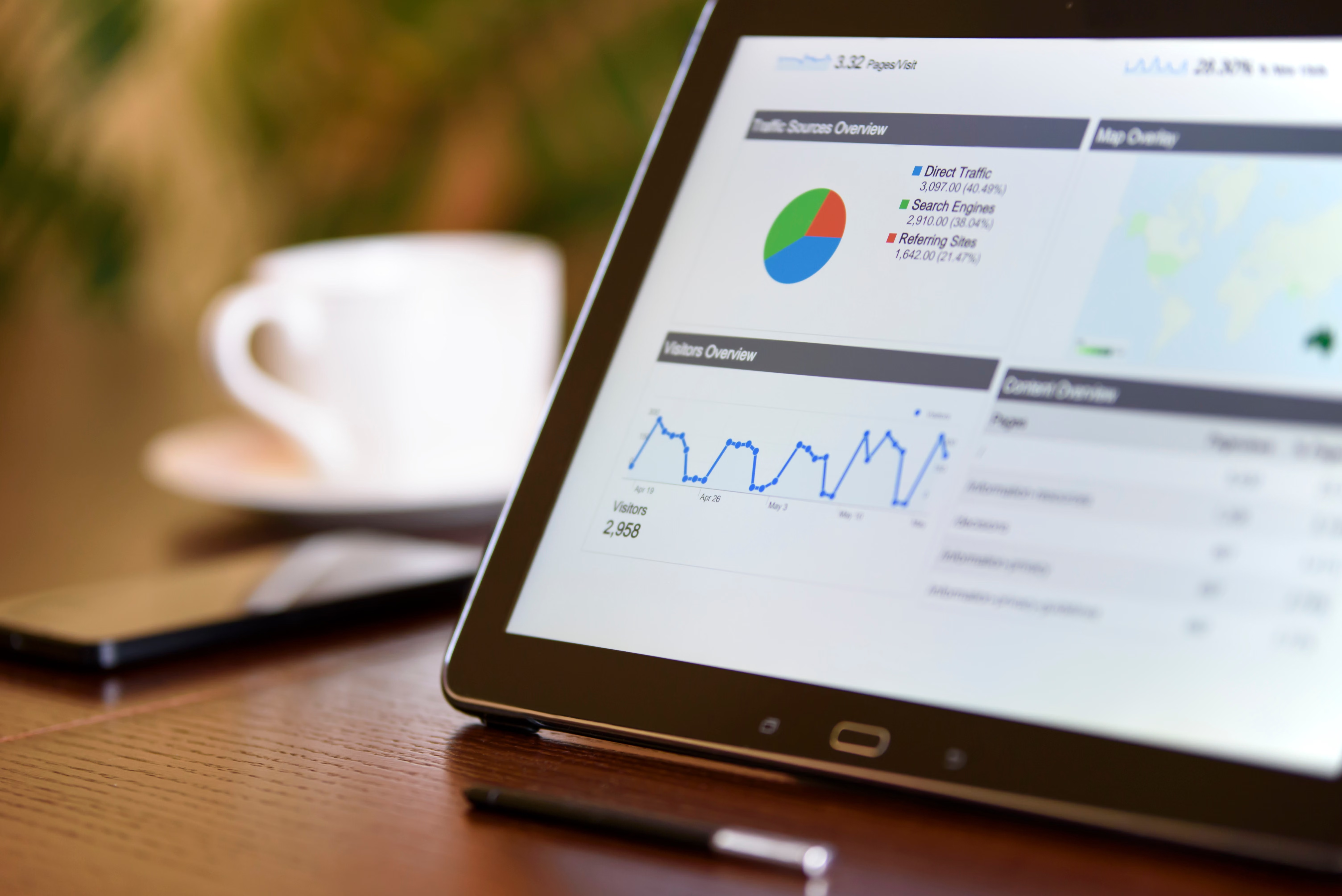
Marketers should also measure the right data. Useful metrics include quiz starts, completion rate, email capture rate, traffic source, click-through to product or service pages, and downstream conversions. Tools such as Google Analytics can help track this journey more clearly.
Best practices for creating quizzes that support growth
Keep the quiz focused on one clear objective. A quiz that tries to generate traffic, educate, entertain, and close a sale all at once often becomes less effective.
Use short, relevant questions. Make the result meaningful and specific. If you collect an email address, explain what the user will receive and why it is useful. Be transparent about data use and avoid misleading language.
Design the quiz page for speed, readability, and mobile use. A poor user experience can reduce completion rates and limit the value of the traffic you already have. Promote the quiz across blog content, social media, paid ads, and email only where the audience match makes sense.
Before launch, it can help to review the offer, page structure, and technical setup. If your website needs support beyond the quiz itself, Backlink Works provides resources for website growth and visibility, including a guide to backlink building for businesses improving their organic presence.
Useful checklist:
- Set one clear quiz goal
- Keep questions short and relevant
- Match the quiz to the audience stage
- Track completions and lead quality
- Test the landing page and result page
- Use follow-up emails or calls based on user answers
Conclusion
Quiz marketing can improve website traffic and lead generation when it is used as part of a thoughtful digital marketing strategy. It works best as a helpful, interactive content format that supports SEO, user experience, audience segmentation, and conversion optimisation.
Businesses that treat quizzes as a genuine problem-solving tool are more likely to see meaningful engagement than those that use them as gimmicks. With the right topic, clear promotion, and proper tracking, quizzes can become a valuable part of a website growth plan.
Frequently Asked Questions
How does quiz marketing help website traffic?
It can attract clicks through social sharing, email promotion, SEO-friendly content, and stronger engagement on-page. The quiz needs a relevant topic and a clear promotion plan.
Can quizzes improve lead generation for small businesses?
Yes. Quizzes can collect contact details in a more natural way, especially when the result feels useful and the questions are tied to the visitor’s needs.
Are quizzes useful for ecommerce marketing?
They are often useful for product matching, gift guides, and recommendation flows. They can help customers choose more confidently and move towards purchase.
Do quizzes work better with SEO or paid ads?
They can support both. SEO helps build long-term visibility, while paid ads can bring targeted traffic faster. Results depend on landing page quality, targeting, and optimisation.
- Sponsored Ad -





