
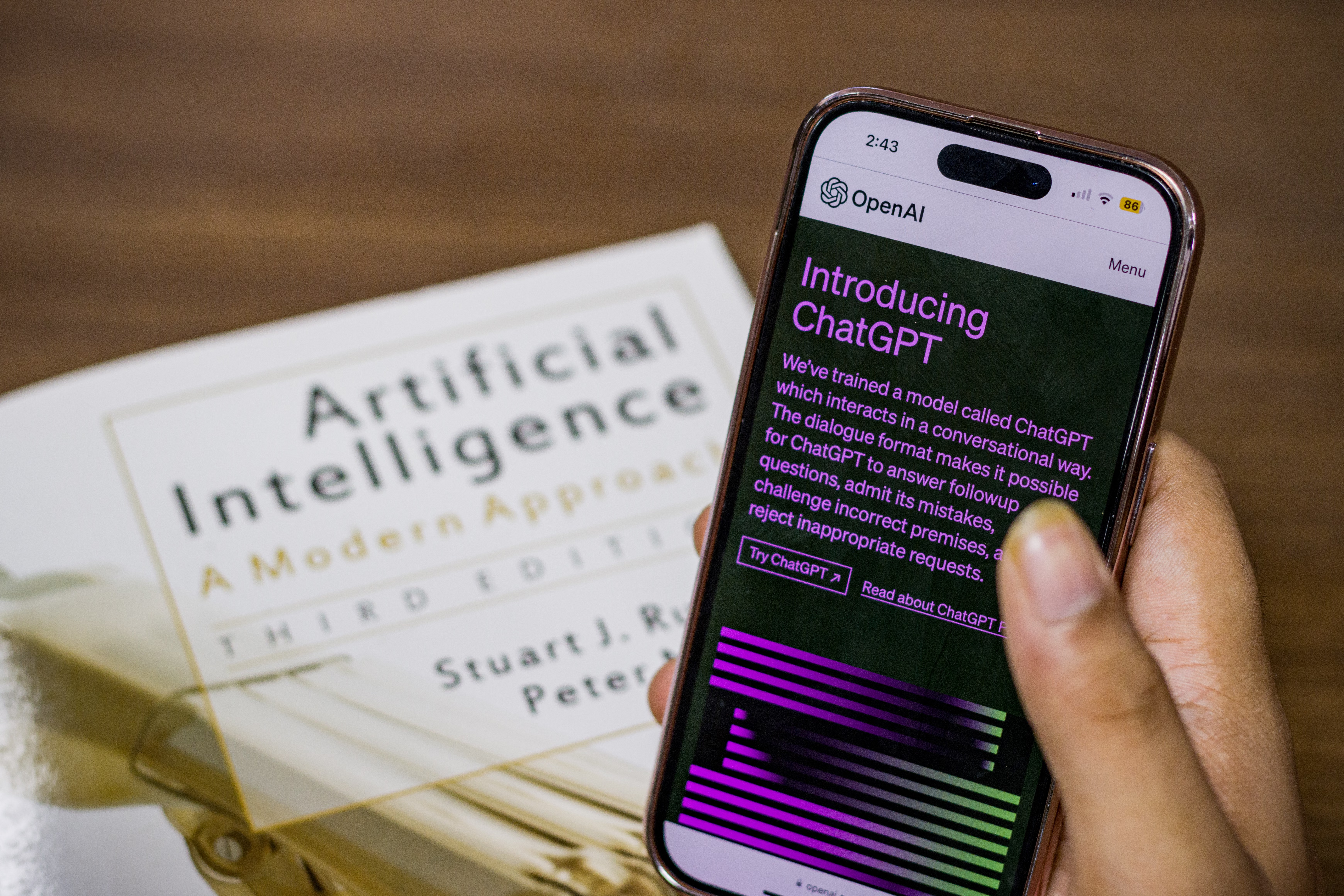
Google AI Overviews vs ChatGPT Search: Visibility Compared is becoming a practical question for anyone who depends on organic discovery. Both experiences sit within the wider move towards AI search, where answer engines summarise information rather than only listing blue links. That changes how users discover brands, how sources are selected, and how website visibility is measured.
For publishers, ecommerce stores, agencies, and small businesses, the key issue is not whether AI search replaces traditional SEO. It is how content, entities, technical access, and authority influence whether a page is easy for systems to understand, cite, or ignore. The answer is usually nuanced, and it varies by platform, query type, and presentation.
What AI search visibility actually means
AI search visibility is broader than a traditional ranking. A page may appear as a clickable citation, a text-only brand mention, or a source used to shape a generated answer without any direct referral traffic. In some cases, a brand may be visible in the answer layer but receive no measurable visit. In others, the AI experience may lead to a click, a follow-up query, or a later branded search.
That is why it helps to separate different outcomes. A traditional search ranking is not the same as an AI citation. A brand mention is not the same as a recommendation. A referral visit is not the same as an impression. These distinctions matter when you are trying to understand where visibility is happening and what it is worth.
Google AI Overviews vs ChatGPT Search: Visibility compared
Google AI Overviews are integrated into Google Search and aim to provide a generated summary with supporting sources for some queries. ChatGPT Search is an AI-assisted search and answer experience that can respond conversationally and may show sources depending on the query and product experience. They do not function identically, and their interfaces, data use, and citation presentation may change over time.
From a visibility perspective, Google AI Overviews are closely tied to search behaviour people already use for discovery, while ChatGPT Search often feels more like a dialogue. That means user intent can differ. On Google, the user may want a quick answer alongside standard results. In ChatGPT Search, they may ask follow-up questions and compare options in a more conversational way. A site can therefore be visible in one environment and less visible, or visible in a different form, in another.
Google has published guidance on helpful content, crawlability, and structured data in its documentation on AI features in Search. That does not create a guaranteed optimisation formula, but it is a sensible place to understand how Google describes these systems.
What influences selection, citations, and brand mentions
There is no public, universal rulebook for how every AI answer engine selects sources. However, visibility can depend on content quality, relevance to the query, crawlability, indexing, source authority, brand recognition, technical accessibility, online reputation, and the design of the platform itself. Different systems may also handle citations, summarisation, and source ordering differently.
For website owners, that means the basics still matter. Clear page structure, accurate information, distinct entity signals, and a useful page that genuinely answers a question can all help machines interpret the content. Entity optimisation, in simple terms, means making it easier for systems to understand who you are, what you offer, and how your pages relate to a specific brand, product, or topic.
Structured data can support this by clarifying page meaning, but it does not guarantee inclusion in generated answers. The same applies to author bios, organisation details, and consistent business information. They can help with understanding and trust, but they are not a switch you can turn on for AI citations.
How different platforms shape visibility
Google AI Overviews, ChatGPT Search, Perplexity, Microsoft Copilot Search, Gemini, and Claude may all surface information differently. Some may show more explicit sources, while others may rely more heavily on summarised responses. Some may feel closer to classic search. Others are more conversational. The output can also vary by query context, account type, region, and platform updates.
That means a practical visibility strategy should not assume one optimisation pattern works everywhere. For example, a product comparison page, a local service page, and a long-form educational article may each perform differently across platforms. A clear product page may be useful for commercial queries, while a tightly written guide may be more relevant for informational prompts. The goal is to make content understandable and helpful, not to force one format onto every page.
If you want to review your site’s current search foundations, a free website SEO audit can help identify technical and content issues that may affect both traditional search and AI-driven discovery.
Practical steps for GEO and AEO without overreaching
Generative Engine Optimisation (GEO), Answer Engine Optimisation (AEO), and LLM visibility are useful terms, but they are still developing. Different marketers use them differently. In practice, they usually point to the same broad idea: making content easier for answer engines and large language model systems to understand, trust, and potentially use.
Useful next steps are usually straightforward:
- Write clear, specific answers to common customer questions.
- Use accurate headings that match the page content.
- Keep business details, authorship, and organisation data consistent.
- Publish original information, not thin rewrites of existing pages.
- Use structured data only where it reflects what users can actually see.
- Earn credible mentions and links through genuinely useful content and outreach.
These actions support SEO, but they do not guarantee AI citations or recommendations. They are best treated as quality signals and discoverability improvements rather than shortcuts.
Measuring AI search traffic and visibility
Measurement is one of the hardest parts of AI search analytics. Some visits may appear as referral traffic, some as direct traffic, and some may be difficult to identify clearly. A citation in an answer does not always produce a click, and a click does not always mean the answer cited you.
Useful checks include branded search trends, landing page performance, referral sources, assisted conversions, and recurring query themes from customer enquiries or internal search. If you see your brand being mentioned more often in sales conversations, support tickets, or social discussions, that may also be a sign of wider visibility, even if it is not always neatly captured in analytics.
For search and analytics teams, combining Google Search Console, analytics platforms, and careful manual review is often more useful than chasing a single metric. The aim is to connect visibility with meaningful outcomes such as qualified visits, enquiries, and accurate brand representation.
Common mistakes to avoid
One mistake is treating AI content as if it can be published without human review. AI-assisted content can be efficient, but it still needs fact-checking, editing, and a clear editorial point of view. Another mistake is adding schema, FAQs, or headings and expecting that alone to produce visibility. These elements can help, but they are not enough on their own.
It is also unwise to chase fake authority through mass-generated mentions, manipulated reviews, or low-quality content at scale. Those tactics do not create lasting trust and can undermine the quality of your site. Traditional SEO is still relevant here: indexability, internal linking, helpful content, and strong page experience continue to matter for human users and search systems alike.
For brands building authority through content and links, Backlink Works offers broader backlink building guidance that can complement a sound visibility strategy without replacing the need for useful, original content.
Conclusion
Google AI Overviews vs ChatGPT Search: Visibility Compared is less about a winner and more about understanding how discovery is changing. AI-generated answers can bring new opportunities for brand visibility, but they also introduce uncertainty around citations, referral traffic, and source attribution. Different platforms may summarise the web in different ways, and those methods can change.
The most reliable approach is still to build strong content, maintain clean technical foundations, support clear entity signals, and measure what matters to your business. AI search may reshape how people find answers, but it does not remove the need for SEO, editorial quality, and real audience value.
Frequently Asked Questions
How is Google AI Overviews different from ChatGPT Search?
Google AI Overviews are part of Google Search, while ChatGPT Search is a conversational AI-assisted search experience. They may present sources and summaries differently, so visibility patterns are not directly interchangeable.
Can I optimise a page to be cited in AI answers?
You can improve clarity, relevance, accessibility, and authority, which may help discoverability. However, no method can guarantee citations or inclusion in any AI-generated answer.
Does structured data guarantee AI visibility?
No. Structured data can help search systems interpret page meaning, but it does not guarantee that a page will be selected, cited, or recommended in AI search results.
How should I measure success in AI search?
Look at a mix of signals such as referral traffic, branded searches, assisted conversions, brand mentions, and whether people are finding accurate information about your business. A single metric rarely tells the full story.
- Sponsored Ad -





