
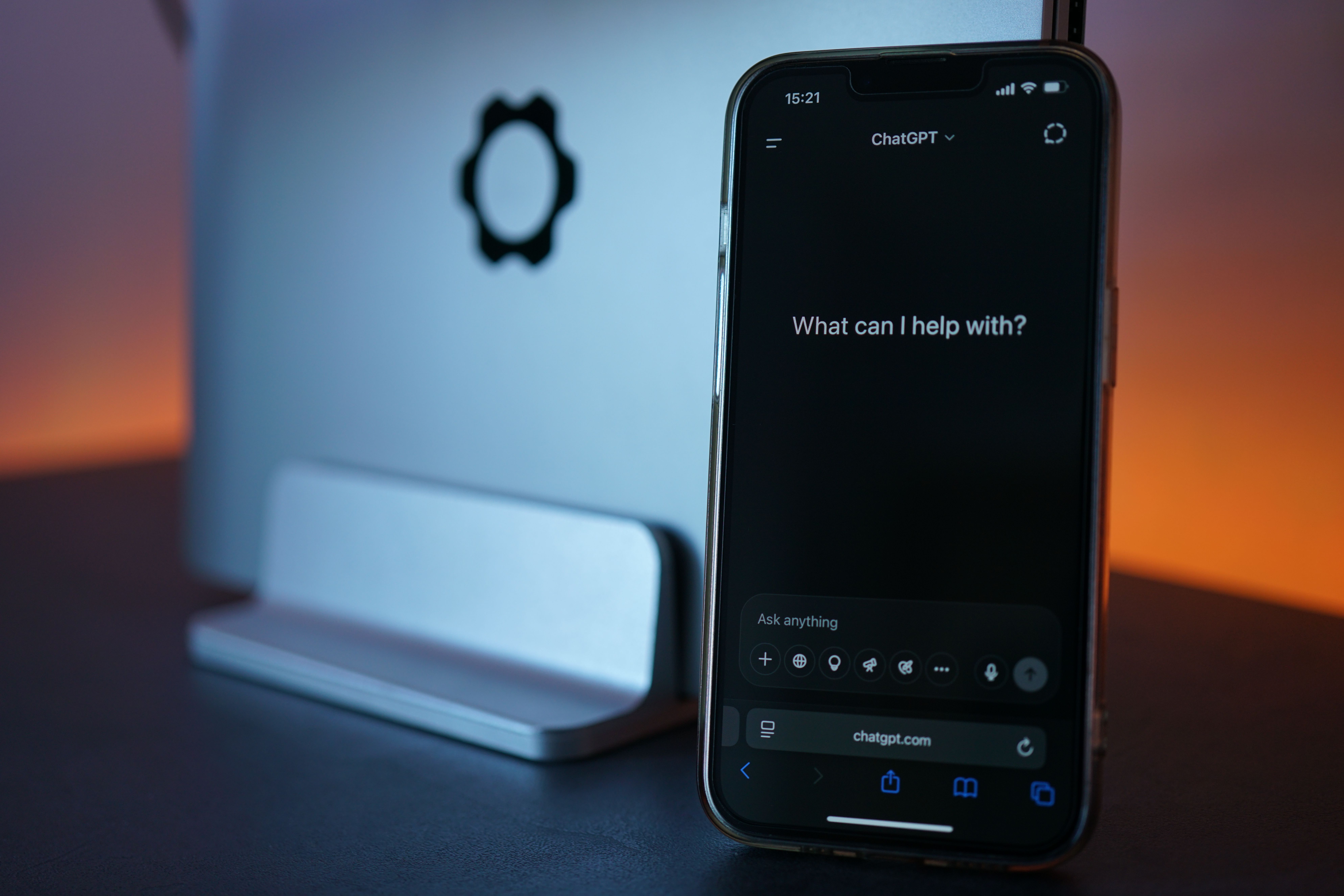
AI search is changing how people discover information, compare options, and click through to websites. In practical terms, How AI Search Affects Organic Traffic: A Practical Guide is really about understanding whether your content is still visible when search results are summarised by answer engines, not just listed in a traditional blue-link page.
That matters because AI-generated answers may reduce, redirect, or delay clicks depending on the query, the platform, and how the result is presented. For website owners, the goal is not to chase every new feature, but to make sure the site remains easy to find, easy to interpret, and useful enough for both people and machine systems.
What AI search changes about organic traffic
Traditional search usually presents a list of pages, giving users a choice of where to click. AI search and generative search can work differently: the system may summarise an answer, cite selected sources, or invite a follow-up question in the same interface. That can change user behaviour before a visit reaches your site.
This does not mean organic search is disappearing. It does mean that traffic may be distributed differently. Some queries still lead to clicks as users compare sources or seek detail. Other queries may be satisfied partly on the results page or inside an answer engine, especially for quick facts, comparisons, definitions, and “how do I” questions.
Different platforms also present information differently. Google AI Overviews, Google AI Mode, ChatGPT Search, Perplexity, Microsoft Copilot Search, Gemini, and Claude do not necessarily source or display information in the same way. Their interfaces, data sources, citation formats, and reporting options may also change over time.
AI citations, brand mentions, and traffic are not the same thing
One of the biggest mistakes in AI search analysis is treating every mention as a click, and every citation as an endorsement. A clickable citation is a link or source reference shown inside an answer. A text-only brand mention is simply your name appearing in the response. A recommendation suggests your brand or product as a choice. A referral visit is the traffic that actually reaches your website. A search impression is visibility in search results, while a traditional ranking is your position in a standard results list.
These signals overlap, but they are not interchangeable. A brand can be mentioned without receiving traffic. A page can receive traffic without being cited in the answer. And a citation does not necessarily mean the platform is endorsing the source. AI systems may combine information from multiple pages, and the citations shown for one query may not appear for a similar query.
That is why brand accuracy matters. If your name, product information, or core facts are repeated incorrectly across the web, those errors can shape how you appear in AI-generated answers. Monitoring recurring mentions, source context, and referral patterns is more useful than chasing vanity visibility alone.
How to strengthen visibility for generative search and answer engines
There is no universal formula for Generative Engine Optimisation, Answer Engine Optimisation, GEO, AEO, or LLM visibility. Those terms are still developing, and different marketers use them in slightly different ways. In practice, they usually point to the same idea: making content easier for search systems and AI tools to understand, trust, and cite where appropriate.
Start with clear entity signals. An entity is a person, business, product, or topic that can be understood consistently across the web. Use the same business name, descriptions, and contact details across your site, profiles, and listings. Add accurate author pages, a visible editorial policy, and source-backed information where relevant.
Structured data can help machines understand a page, but it does not guarantee citations or inclusion. Use it only when it matches visible content. Helpful page structure, descriptive headings, concise definitions, and specific answers can improve readability for both humans and retrieval systems.
For a broader SEO foundation, useful guidance such as a free website SEO audit can help identify crawlability, technical quality, and content gaps that also affect AI search discoverability.
Content quality still matters more than format alone
AI search does not reward thin content simply because it is well formatted. Content still needs to solve a real problem, be accurate, and reflect genuine expertise. AI-assisted content can be useful, but only when it is reviewed, edited, and checked by a human who understands the subject.
The main risks are familiar: factual errors, outdated advice, duplicated phrasing, weak sourcing, and a tone that does not match your brand. If you use AI to draft content, treat it as a starting point rather than a final product. Add original examples, product knowledge, customer insight, or practical steps that competitors cannot copy easily.
This is especially important for commercial pages, ecommerce descriptions, and service pages. AI search systems may evaluate page usefulness in context, but human visitors still decide whether your page feels credible enough to trust and act on.
Technical access, crawlability, and platform differences
AI search visibility can depend on more than content quality. Technical accessibility matters too. Search-engine crawlers, AI-related crawlers, training-related crawlers, and user-triggered retrieval systems are not the same thing. A page may be indexed by one system, accessible to another, and ignored by a third depending on policy, permissions, and product design.
Before changing robots.txt, meta tags, or server rules, check the current official documentation for the platform you are dealing with. For Google’s AI-related search features and broader search guidance, the Google AI features documentation is a sensible starting point. It is also worth reviewing crawlability, indexability, and helpful content guidance alongside it.
Do not assume that allowing one crawler guarantees visibility in AI-generated answers. Nor should you assume that blocking a crawler removes every mention of your brand from every system. The relationship between crawling, indexing, retrieval, and answer generation is more complex than a single on/off switch.
Measuring AI search traffic without over-reading the data
Tracking AI search traffic is useful, but it can be incomplete. Some visits may appear as referral traffic, some as direct traffic, and some may be difficult to classify cleanly in analytics. Referral traffic, landing pages, assisted conversions, and brand search trends can all help build a fuller picture.
Look for practical patterns rather than perfect attribution. Are certain pages getting more branded searches after being cited in answer-style results? Are users arriving on deep informational pages and then moving to product, contact, or enquiry pages? Are recurring prompts and topics showing up in support queries, sales calls, or search console data?
To connect search visibility with business outcomes, it helps to understand broader backlink building and authority signals as part of the wider discoverability picture. Strong SEO, credible mentions, and clean site architecture can support both traditional search and AI-assisted discovery, even if they do not guarantee any specific result.
Common mistakes to avoid
One common error is rewriting every page to sound like an answer snippet. That can flatten your content and make it less useful to real visitors. Another is overusing schema or FAQs in the hope that more markup will force inclusion. Structured data can clarify meaning, but it does not guarantee AI citations or rankings.
A third mistake is treating AI search as a replacement for SEO. Traditional optimisation still matters: useful content, crawlable pages, fast performance, sensible internal linking, and a clear site structure all remain important. If your site is hard to crawl or weak on content quality, AI search is unlikely to solve that problem for you.
Finally, avoid chasing fake signals such as invented brand mentions, mass-generated content, or deceptive tactics. They may create noise, but they do not build durable visibility.
Conclusion
AI search affects organic traffic by changing how users discover information and how often they need to click. The opportunity is not simply to “rank in AI”, but to build content and technical foundations that support visibility across search engines, answer engines, and conversational search experiences.
If you focus on clarity, accuracy, crawlability, entity consistency, and useful content for people, you improve your chances of being understood by both traditional search systems and AI-generated experiences. That is the most practical way to approach this shift: adapt thoughtfully, measure carefully, and keep your strategy grounded in real user value.
Frequently Asked Questions
Does AI search always reduce organic traffic?
No. Some queries may lead to fewer clicks because the answer is shown directly, while others can still drive traffic when users want detail, verification, or comparison.
Can structured data make my site appear in AI-generated answers?
Structured data can help explain your content, but it does not guarantee citation, recommendation, or inclusion in any AI search product.
How should I measure visibility in AI search?
Use a mix of referral data, landing page performance, branded search trends, assisted conversions, and recurring query themes. No single metric tells the whole story.
Is GEO or AEO replacing SEO?
No. These terms may be useful as shorthand for AI search optimisation, but they complement rather than replace established SEO, content strategy, and technical best practice.
- Sponsored Ad -





