
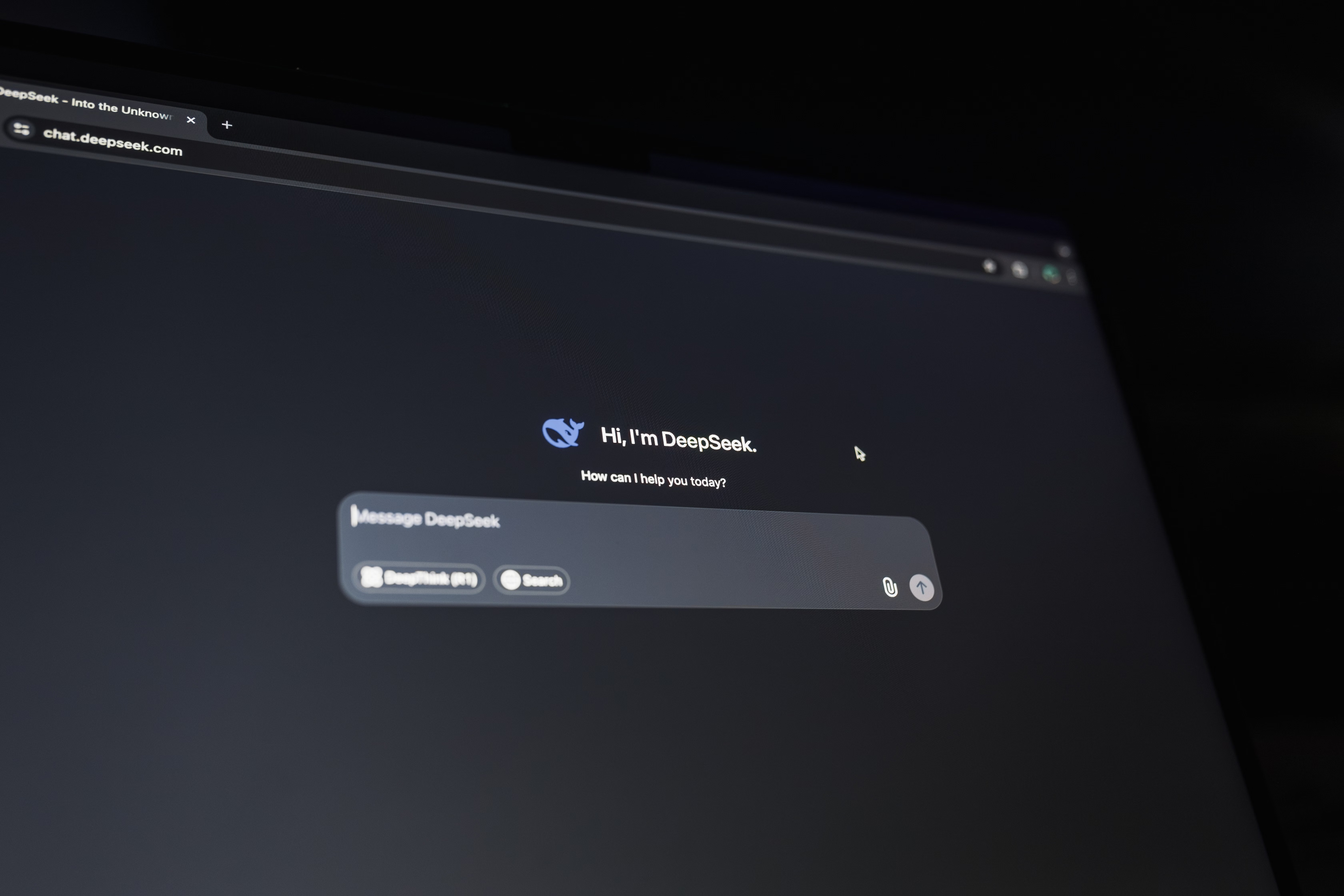
How AI Search Works: A Practical Guide for Agencies starts with a simple idea: search results are no longer limited to a classic list of blue links. AI search systems can interpret a query, retrieve relevant material, and generate a response that may combine information from several sources. For agencies, that changes how visibility is discovered, reported, and explained to clients.
This matters because generative search, answer engines, and AI assistants can shape the first impression of a brand before a user ever reaches a website. The goal is not to replace traditional SEO, but to understand how content, technical access, and brand signals may influence whether a page is used, cited, mentioned, or simply overlooked.
What AI search actually is
AI search is a broad term for search experiences that use large language models, retrieval systems, or both to produce conversational answers. Examples include Google AI Overviews, Google AI Mode, ChatGPT Search, Perplexity, Microsoft Copilot Search, Gemini, and Claude-based experiences where web access or answer generation is part of the product. These platforms do not behave identically, and their interfaces can change over time.
In practice, AI search may work more like an answer layer than a pure results page. A user asks a question in natural language, the system interprets intent, identifies likely useful sources, and then summarises or rewrites information. Some responses include clickable citations, some include brand mentions without links, and some may not show a source list in the same way traditional search does.
How AI-generated answers differ from traditional search
Traditional search engines usually present ranked links and allow the user to decide which page to open. AI-generated answers may reduce that list into a shorter response, add follow-up prompts, or combine multiple sources into one narrative. That can be helpful for research, but it also means the user journey may stop at the answer box rather than reaching your page.
For agencies, the main distinction is that visibility is not just about rank. A page can appear in organic search, be cited in an AI answer, be mentioned by name without a link, or contribute background knowledge without any visible attribution. These are related but different outcomes, and they should be measured separately.
Google has documented AI features and related search guidance in its official AI features documentation, which is a useful starting point for understanding the public framing of these experiences.
What influences visibility in AI search systems
No one outside the platforms knows every selection rule. Even so, there are practical factors that often matter across AI search and answer engines: content quality, relevance to the query, crawlability, indexing, page clarity, source authority, online reputation, brand recognition, and whether the information is easy for machines and humans to interpret.
Entity optimisation is also important. An entity is a clearly identified person, company, product, or topic that search systems can recognise across the web. Consistent business details, accurate author pages, clear contact information, and aligned references across profiles can help search systems understand what your site represents. This does not guarantee inclusion, but it can reduce ambiguity.
Structured data can support this process by making page meaning more explicit. Used properly, it helps describe organisation details, articles, products, or local business information in a machine-readable way. It should match visible page content and never be used to mislead. If your team uses WordPress or another CMS, ensure any schema reflects what users can actually see on the page.
AI citations, brand mentions, and traffic: what agencies should measure
When people talk about AI visibility, they often mix together several different outcomes. A clickable citation is not the same as a text-only brand mention. A brand mention is not the same as a recommendation. A recommendation is not the same as a referral visit. And an organic search impression is different again from a traditional ranking.
That distinction matters when reporting to clients. A mention in an AI answer may improve awareness without sending traffic. A citation may send a visit, but not always. Some platforms may also surface a source name while the user continues asking follow-up questions instead of clicking through.
Measurement should therefore combine referral traffic, landing page performance, assisted conversions, branded search interest, and recurring query themes. It is also worth checking whether traffic from AI-driven experiences appears as referral, direct, or unclassified in analytics, because reporting can vary by platform and implementation. For a practical baseline, agencies often start with a structured review using a free website SEO audit to identify crawl, content, and visibility issues before changing strategy.
What agencies should do before changing strategy
Before repositioning content for AI search, check the fundamentals. Is the site indexable? Can key pages be crawled without blocking important resources? Are titles, headings, internal links, and summaries clear? Do pages answer the query fully and accurately? Is the content written for readers first, rather than assembled only for a model?
AI-generated content can help with research, outlining, or drafting, but human review remains essential. Unchecked AI output may contain factual errors, outdated claims, repetition, or weak sourcing. Agencies should edit for accuracy, add original expertise, and preserve a consistent brand voice. Publishing more content is not the same as publishing better content.
Helpful content principles still apply. Strong pages usually explain topics plainly, use trustworthy sources, demonstrate first-hand knowledge where appropriate, and avoid padding. If your site covers services, products, or advice, make sure the page is genuinely useful to the person reading it, not just structured for machines.
Technical access, crawlability, and structured data
AI search depends on access to information in different ways. There are search-engine crawlers, AI-related crawlers, training-related crawlers, and user-triggered retrieval systems. These are not identical, and a setting that affects one does not necessarily affect all others. Changing robots.txt or server rules without understanding the crawler’s purpose can create unintended consequences, so check current official documentation before making changes.
Structured data should be treated as clarification, not a shortcut. It can help search systems identify organisation details, articles, products, or breadcrumbs, but it does not guarantee AI citations or better rankings. If your team is improving internal linking and broader site authority at the same time, that work can support discoverability across both traditional search and generative search. For agencies building that foundation, the ultimate guide to backlink building can help frame link strategy as part of wider visibility work rather than a standalone tactic.
Technical audits should also include canonical issues, duplicate pages, JavaScript rendering, page speed, and content access for important templates. None of these guarantee AI visibility, but they can improve the likelihood that systems understand and retrieve your content correctly.
Generative Engine Optimisation, AEO, and practical best practice
Terms such as Generative Engine Optimisation (GEO), Answer Engine Optimisation (AEO), LLM visibility, and AI SEO are still developing. Different marketers use them differently, and platforms do not publish a universal optimisation formula. In practice, these approaches usually sit alongside established SEO, digital PR, content strategy, and reputation management.
A sensible agency checklist is straightforward: publish accurate source-backed content, keep brand details consistent, improve crawlability, use structured data where appropriate, strengthen topical authority, earn credible mentions, and monitor how often branded queries or key pages appear in AI-driven experiences. Do not rely on schema alone, do not chase artificial authority signals, and do not assume every platform will treat content in the same way.
Conclusion
AI search is changing how people discover information, but it has not replaced traditional SEO. For agencies, the practical task is to build content and technical foundations that serve human readers while remaining understandable to search systems. That means clear writing, trustworthy sources, sensible structure, clean access for crawlers, and honest measurement of what AI visibility can and cannot tell you.
Used well, AI search can broaden how a brand is discovered. Used carelessly, it can create misleading expectations. The best approach is steady: improve the site, verify the data, watch the analytics, and adapt as platform features and reporting methods continue to change.
Frequently Asked Questions
What is the main difference between AI search and regular search?
Regular search usually gives a list of links for the user to explore. AI search often creates a direct answer, sometimes using several sources at once and sometimes adding citations or brand mentions alongside the summary.
Can a website be guaranteed to appear in AI-generated answers?
No. Visibility can improve with strong content, technical access, and brand authority, but no agency can guarantee inclusion, citation, or recommendation in any AI platform.
Does structured data make AI visibility more likely?
Structured data can help systems understand page meaning more clearly, but it does not guarantee selection in AI answers. It should always reflect the visible content on the page.
How should agencies track AI search traffic?
Start with referral data, landing page performance, branded search trends, and assisted conversions. Also review whether traffic appears as direct or unclassified, since reporting can vary by platform and analytics setup.
- Sponsored Ad -





