
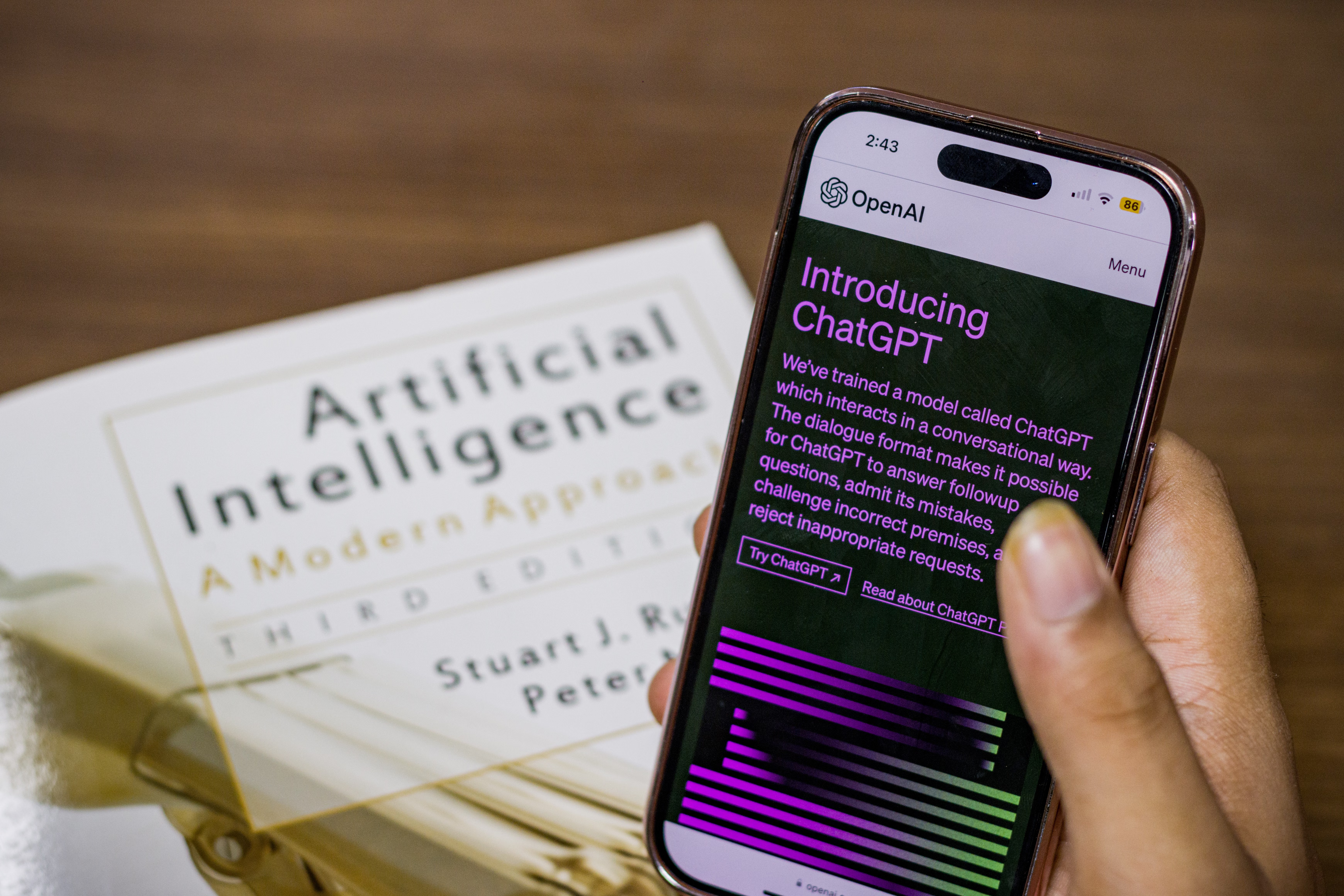
AI Search Analytics helps website owners track brand mentions, citations, and traffic across generative search experiences such as Google AI Overviews, Google AI Mode, ChatGPT Search, Perplexity, Microsoft Copilot Search, Gemini, and Claude. Rather than only asking where a page ranks in traditional results, this approach looks at how often a brand is named, which sources are cited, and whether AI-assisted search leads to meaningful visits.
This matters because AI-generated answers can present information differently from standard search listings. A query may produce a short summary, a cited source, a product suggestion, or a blended response built from several pages. That makes visibility harder to measure, but also more useful to understand if you want to improve discoverability, reputation, and qualified traffic.
What AI Search Analytics actually measures
AI Search Analytics is not one single metric. It is a practical way of observing how your site and brand appear in AI-driven search and answer tools. The main signals usually include clickable citations, text-only brand mentions, referral visits, and recurring query themes that may reflect user interest in your topics.
These signals are different from traditional search rankings. A ranking shows where a page appears in a list of results. A citation is a visible link or source reference in an AI answer. A brand mention may appear even without a link. A referral visit is actual traffic from an AI-enabled experience. None of these should be treated as the same thing.
For site owners, that distinction matters. A brand mention may support awareness without sending traffic. A citation may send visits, but it is not an endorsement. A referral may come through as direct or unclassified traffic depending on the platform and analytics setup. Monitoring all of them gives a more realistic picture of AI search visibility.
Why citations and brand mentions matter in generative search
Generative search and answer engines often try to respond in plain language, not just display blue links. That changes how people discover brands, compare options, and move into a site. If your content is used as a source, your brand may be introduced earlier in the journey than with a traditional click-through result.
However, different platforms may select, summarise, and attribute sources in different ways. Google AI Overviews, Google AI Mode, ChatGPT Search, Perplexity, Copilot, Gemini, and Claude do not function identically, and their interfaces and source presentation can change over time. A page that is cited for one query may not appear for another, even on the same topic.
This is why AI search analytics should focus on patterns rather than promises. Look for repeated mentions of your brand, the pages being cited, and the search themes that lead to visibility. That can inform content planning, digital PR, and technical SEO without assuming that any one tactic will produce guaranteed inclusion.
Content, entities, and structured data
AI systems rely on content quality, relevance, crawlability, indexing, source authority, query context, and technical accessibility. In practice, that means strong content still matters. Helpful pages with clear structure, accurate information, and visible authorship are easier for both people and machines to understand.
Entity optimisation means making your organisation, people, products, and topics easy to identify consistently across your website and the wider web. That includes using the same business name, clear contact details, accurate author profiles, and trustworthy source information. It does not guarantee AI visibility, but it can reduce confusion.
Structured data can also help. Schema markup can clarify page meaning for search systems, especially when it matches the visible content. It should be used accurately, not as a shortcut. Misleading or invalid markup can create quality issues rather than solving them. For official guidance on how Google explains AI-related features, the Google Search documentation for AI features is a useful reference.
How to measure AI search traffic without overclaiming
Measuring AI search traffic is still imperfect. Some visits may appear in analytics as referral traffic, while others may show as direct or unclassified traffic. Not every AI-assisted journey will be visible, and most analytics tools do not capture every answer engine interaction.
Start by reviewing landing pages that match informational, comparison, or product-intent queries. Compare those pages with referral sources, branded searches, and on-site engagement. If certain topics are repeatedly surfaced in AI answers, that may point to content that deserves updates, stronger sourcing, or clearer calls to action.
It also helps to connect visibility with business outcomes. A citation is useful only if it leads to relevant engagement, enquiries, newsletter sign-ups, or sales support. Track what happens after the click, not just whether a mention exists. If you use a broader SEO workflow, a free website SEO audit can help spot crawlability, content, and technical issues that may affect discoverability across search surfaces.
Practical checks before changing your AI search strategy
Before you adjust content for AI search, review the basics. Ask whether the page is indexable, whether the main information is easy to scan, and whether the content genuinely answers the user’s likely question. Check that important pages are accessible to crawlers, avoid broken internal links, and make sure your site structure supports discovery.
It is also worth checking your reputation signals. AI systems may lean on source authority and online trust signals, so weak or inconsistent brand information can make attribution harder. Reviews, press coverage, expert contributions, and credible mentions can all support recognition, but none of these should be fabricated or manipulated.
For technical teams, crawler access should be reviewed carefully. Search-engine crawlers, AI-related crawlers, training-related crawlers, and user-triggered retrieval are not the same thing, and blocking or allowing one does not guarantee a specific result. Before changing robots.txt or server rules, check current documentation and test carefully. You can also use the backlink building process guide to understand how broader authority-building fits into visibility work without replacing solid content and technical foundations.
Common mistakes to avoid
One common mistake is treating GEO, AEO, LLMO, or AI SEO as a replacement for traditional SEO. These terms are still developing, and they generally complement rather than replace established search optimisation. A page that is unclear, slow, thin, or inaccessible is unlikely to perform well in any search environment.
Another mistake is chasing AI mentions with low-quality tactics. Do not stuff keywords, publish mass-generated pages without review, or create fake brand signals. AI search systems can change, and deceptive tactics can damage both user trust and long-term visibility.
A third mistake is confusing visibility types. A brand mention is not the same as a citation. A citation is not the same as a recommendation. A recommendation is not the same as a referral visit. If you measure them separately, you get a clearer view of what AI search is actually doing for your site.
Conclusion
AI Search Analytics is best treated as an extension of SEO, not a replacement for it. The goal is to understand how your brand appears in generative search, which sources are referenced, and whether those interactions lead to valuable traffic. That requires practical measurement, careful technical maintenance, and content that serves real users first.
There is no guaranteed method to appear in Google AI Overviews, Google AI Mode, ChatGPT Search, Perplexity, Copilot, Gemini, or Claude. But websites with strong content quality, clear entity signals, sound technical foundations, and credible reputation signals are in a better position to be understood by both traditional and AI-assisted search systems as they continue to evolve.
Frequently Asked Questions
What is the difference between an AI citation and a brand mention?
A citation is a visible source reference, usually with a clickable link. A brand mention is text that names your brand without necessarily linking to it. They can appear together, but they should be measured separately.
Can AI search analytics show every visit from ChatGPT Search or Google AI Overviews?
No. Some visits may be visible in referral data, while others may be grouped into direct or unclassified traffic. Measurement is useful, but it is rarely complete.
Does structured data guarantee AI visibility?
No. Structured data can help explain your content to search systems, but it does not guarantee citations, rankings, or inclusion in any AI-generated answer.
Should I rewrite my content only for AI search?
No. Content should still be written for people first. Clear, accurate, helpful pages tend to support both human readers and search systems more effectively than content built only for automation.
- Sponsored Ad -





