
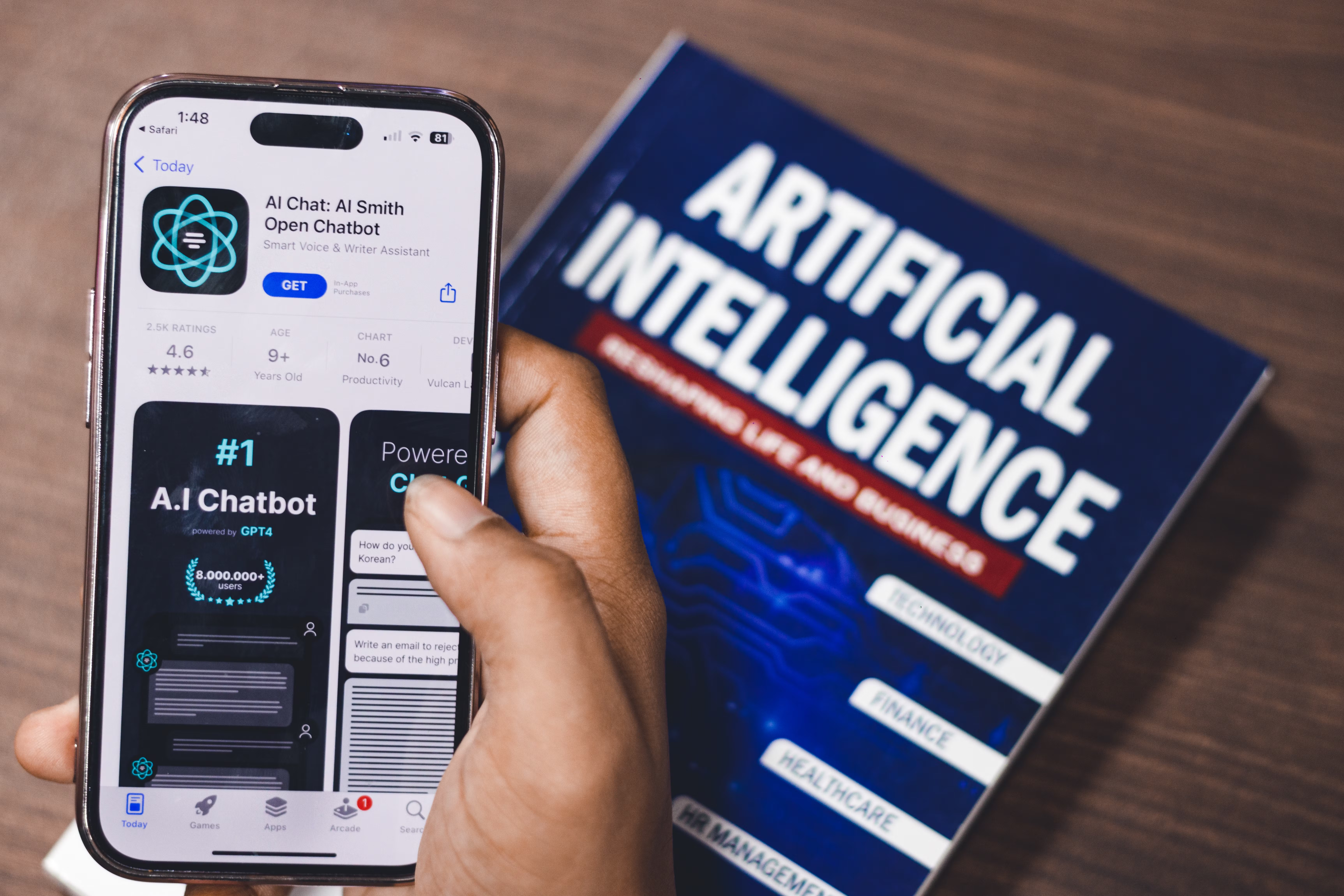
AI Search Marketing Strategy: A Beginner Guide to Generative Search is about preparing your website for a search experience where answers may be written, summarised, or assembled by AI systems rather than shown only as a classic list of blue links. For website owners, this changes how people discover content, compare brands, and move from search to a visit.
This does not replace traditional SEO. Instead, it adds another layer of visibility to think about: AI search, answer engines, brand mentions, citations, and whether your site is easy for systems to understand, trust, and access. The aim is to stay useful to human readers while making your content easier to interpret across changing search interfaces.
What generative search means for marketers
Generative search refers to search experiences that use AI to produce an answer, summary, or conversational response. You may see this in Google AI Overviews, Google AI Mode, ChatGPT Search, Perplexity, Microsoft Copilot Search, Gemini, and Claude-based experiences, although each platform works differently and may change over time.
Unlike a traditional search results page, a generative answer may combine information from several sources, highlight one or more citations, or answer a follow-up question in the same interface. That means your content may be discovered, quoted, mentioned, or skipped depending on query context, content quality, and how the platform retrieves information.
It is useful to think of generative search as a set of answer engines. Some users want quick summaries. Others want supporting sources, product comparisons, or a conversational route to a decision. Your content strategy should support those needs without sacrificing clarity or editorial quality.
Why AI search visibility matters
AI search visibility is about how easily a brand, page, or entity can be understood and surfaced in AI-generated answers. This can affect brand discovery, referral traffic, and user trust. A cited source may receive visits, but a text-only mention may not. A recommendation may influence consideration even without a click. These outcomes are not the same.
For this reason, AI citations, brand mentions, and traditional rankings should be measured separately. A page can rank well in organic search and still not appear in a generative answer. It can also be mentioned in a response without receiving direct traffic. The relationship between visibility and outcomes depends on the query, the platform, and the way the answer is presented.
If you are building a broader visibility strategy, a useful starting point is a technical and content review. A free website SEO audit can help identify crawlability, page quality, and content gaps that may also affect AI search discovery.
Generative Engine Optimisation and Answer Engine Optimisation
Generative Engine Optimisation (GEO), Answer Engine Optimisation (AEO), and related terms such as LLMO or AI SEO are still developing. People often use them to describe the practice of making content easier for large language models and answer engines to understand, cite, or summarise. These terms are not yet standardised, and different marketers use them in different ways.
In practical terms, these approaches usually overlap with strong SEO fundamentals: helpful content, clear structure, accurate information, internal linking, entity clarity, and technical accessibility. They also encourage content that answers questions directly, uses plain language, and supports claims with reliable context.
That said, GEO or AEO should not be treated as a replacement for SEO. Traditional SEO still matters because search engines remain a major discovery channel. Generative search is an additional layer, not a full substitute.
How to improve content for AI-generated answers
Good AI search content starts with quality. Pages should explain a topic clearly, show real experience where relevant, and avoid thin or repetitive copy. For ecommerce, that may mean detailed product pages, transparent specifications, and useful comparison content. For publishers, it may mean concise definitions, context, and original analysis. For service businesses, it may mean clear service pages, FAQs, and accurate business details.
Semantic search and entity optimisation are important here. Semantic search focuses on meaning and relationships, not just keywords. Entity optimisation means making your brand, products, authors, locations, and services easy to identify consistently across your site and elsewhere online. This includes consistent naming, accurate organisation details, and clear author profiles.
Structured data can help machines understand visible page content, but it does not guarantee selection or citation. Use schema only where it accurately reflects the page. For Google-specific guidance on structured data and AI features, the official Google guidance on AI features in Search is a sensible reference point.
A practical checklist for content updates:
- Answer the main question early and clearly.
- Use descriptive headings and concise paragraphs.
- Support claims with current, visible evidence.
- Show authorship, editorial responsibility, and contact details where relevant.
- Keep product, service, and organisation information consistent.
Technical access, crawlers, and structured data
AI search visibility also depends on technical accessibility. Search-engine crawlers, AI-related crawlers, training-related crawlers, and user-triggered retrieval are not the same thing. One system may rely on indexed web pages, another may use live retrieval, and another may draw from a different mix of sources. Blocking or allowing one crawler does not guarantee or prevent visibility everywhere.
That is why crawlability and indexability still matter. If important pages cannot be accessed, rendered, or indexed properly, they are less likely to be understood by search systems of any kind. Before changing robots.txt, meta robots tags, or server rules, check current official documentation and test carefully. If you are unsure, it is better to make measured changes than to assume access rules are universal.
For site owners who want a deeper SEO foundation that supports both search and AI discovery, a practical guide such as the ultimate guide to backlink building can be useful for understanding how authority, mentions, and discoverability fit together without relying on shortcuts.
How to measure AI search traffic and visibility
Measurement is still imperfect. Some AI-assisted visits may appear as referral traffic, some as direct traffic, and some may be difficult to separate clearly in analytics. Different platforms expose different reporting options, and those options may change.
Rather than chasing a single metric, look at a wider picture: referral visits, landing pages, enquiries, assisted conversions, branded search trends, and recurring questions from customers. Also monitor whether your brand is mentioned accurately, whether sources are cited correctly, and which topics keep appearing in AI-led conversations.
Useful comparison points include:
- Clickable citation: a visible link to a source.
- Text-only brand mention: your brand is named, but not linked.
- Recommendation: the AI suggests a product or brand.
- Referral visit: a user clicks through to your site.
- Organic search impression: your result is shown in traditional search.
These are related, but they are not interchangeable. A strong measurement approach helps you understand whether AI visibility is supporting business outcomes or simply increasing mentions.
Conclusion
AI search marketing is best approached as an extension of good SEO, not a replacement for it. The most reliable foundations still matter: useful content, technical accessibility, consistent entities, sound structure, and a credible brand presence. Those elements may help your site remain understandable as generative search systems continue to evolve.
Because platforms differ, and because AI features change frequently, there is no universal formula for inclusion or citation. The most practical approach is to build content that serves people first, supports machines second, and keeps improving through review, measurement, and editorial care. That is also where thoughtful SEO education and website growth advice, such as the guidance shared by Backlink Works, can support a wider visibility strategy without promising shortcuts.
Frequently Asked Questions
What is the difference between AI search and traditional search?
Traditional search usually presents a list of results. AI search may provide a written answer, summary, or conversation, sometimes with citations or source links. Both can work together in a broader discovery journey.
Can Generative Engine Optimisation guarantee citations in AI answers?
No. GEO, AEO, and related approaches may improve clarity and accessibility, but they cannot guarantee that a page will be cited, mentioned, or recommended by any AI platform.
Should I change my SEO strategy for ChatGPT Search, Google AI Overviews, or Perplexity?
Adjustments can be useful, but they should build on existing SEO rather than replace it. Focus on content quality, technical access, entity consistency, and the type of questions your audience actually asks.
How do I know if my website is visible in AI-generated answers?
Check for brand mentions, citations, referral visits, query patterns, and accurate source context. Because reporting is incomplete on many platforms, no single tool will show the full picture.
- Sponsored Ad -





