
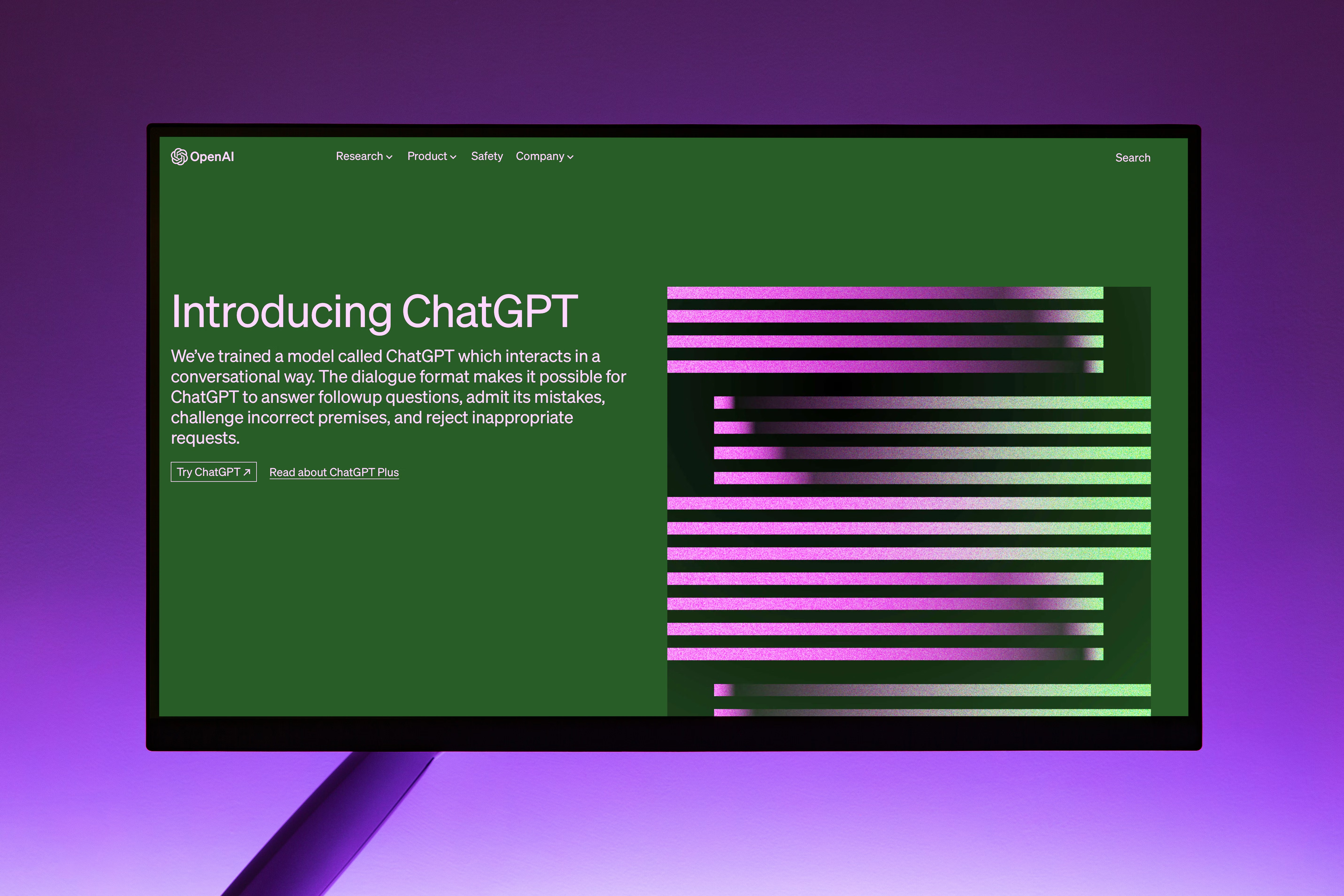
How AI Search Works: GEO Content Structure for Beginners is really about understanding how generative search systems find, interpret and present information. Instead of showing only a list of blue links, AI search experiences can summarise answers, cite sources, mention brands, or combine information from several pages into one response.
For website owners, that changes the job slightly. Traditional SEO still matters, but content now also needs to be clear enough for answer engines, structured enough for machines to understand, and trustworthy enough to be selected when systems like Google AI Overviews, ChatGPT Search, Perplexity, Microsoft Copilot Search, Gemini or Claude generate a reply.
What GEO content structure means
GEO stands for Generative Engine Optimisation. It is a broad term used by marketers to describe content work that aims to improve visibility in AI-generated answers. The term is not fully standardised, and different people use it in different ways. In practice, it usually overlaps with answer engine optimisation, semantic SEO, entity optimisation, and strong content structure.
For beginners, GEO content structure means organising information so it is easy for both humans and AI systems to read. That usually includes a clear topic, specific headings, direct answers, supporting detail, and accurate facts. It does not mean writing for machines only. A page that is useful to readers is still the best starting point.
Strong structure can help an AI system identify what a page is about, who it is for, and whether it is relevant to a question. But structure alone does not guarantee inclusion in any AI answer.
How AI search systems differ from traditional search
Traditional search engines typically return a page of ranked results, and users decide which link to open. AI search and generative search often work differently. They may produce a conversational response, display cited sources, suggest follow-up questions, or blend search results with model-generated wording.
That means visibility can happen in more than one way. A site may appear as a clickable citation, a text-only brand mention, a source used to support a summary, or a page that earns referral traffic from an AI interface. These are not the same thing. A citation does not always mean endorsement, and a brand mention does not always lead to a visit.
Because platforms differ, the same query may surface different sources in different products. Google AI Overviews, Google AI Mode, ChatGPT Search, Perplexity, Copilot, Gemini and Claude may each present answers in their own format and may update their interfaces over time. Their source selection and citation methods are not identical, and many details are not publicly documented.
Building content that AI systems can understand
For GEO and AEO, start with clarity. Make the page answer one main intent well. Use short paragraphs, descriptive subheadings, plain language and accurate definitions. If a topic is complex, explain it step by step instead of hiding the point in a long introduction.
Entity optimisation also matters. An entity is a clearly identifiable thing or person, such as a brand, product, location, or expert. Use consistent names, accurate organisation details, and clear author information. Where relevant, structured data can help machines understand page meaning, but it should reflect visible content and never be used to mislead.
For example, a guide on ecommerce returns should state the return window, exclusions, process and contact details in a straightforward way. That makes the page more helpful to users and more understandable to retrieval systems that may need to summarise it.
According to Google’s guidance on creating helpful content, pages should be made for people first, which remains a sensible principle for AI search as well.
Why crawlability, indexing and technical access still matter
If a page cannot be crawled or indexed properly, it is harder for any search system to discover it. That includes traditional search engines and AI-related systems that rely on web access, retrieval, or source indexing. Technical access is not a guarantee of visibility, but it is a basic requirement worth checking.
This is where SEO foundations remain important. Check robots.txt, meta robots tags, canonical tags, internal links, page speed, mobile usability and general indexability. If you change crawler access, do so carefully and test the impact. Different crawlers may serve different purposes, and not every AI platform uses the web in the same way.
It is also sensible to review whether important pages are easy to find through navigation and internal linking. If a key article is buried too deeply, both users and automated systems may struggle to reach it. For a practical starting point, a free website SEO audit can help identify technical issues that may affect discoverability.
AI citations, brand mentions and search traffic
AI visibility should be measured carefully. A brand can appear in an answer without receiving a click. A citation may send traffic, but not always. A direct visit may arrive without any obvious referral data, depending on the platform and analytics setup. This is why AI search traffic can be difficult to measure perfectly.
It helps to track several signals together: referral visits, landing pages, branded search demand, enquiry quality, assisted conversions, and recurring query themes. If your brand is mentioned often but traffic does not move, the mention may still support awareness even if it does not produce immediate clicks.
AI-generated answers can also contain errors or incomplete context, so monitor how your brand, products and advice are described. If a platform repeatedly misstates something important, the problem may be content clarity, source ambiguity, or outdated information on the web rather than a single ranking issue.
Practical GEO checklist for beginners
Use this as a simple content and SEO review before making changes for AI search:
First, confirm the page has one clear purpose. Second, make the opening answer the main question quickly. Third, support claims with up-to-date, verifiable information. Fourth, use headings that reflect what the section actually covers. Fifth, keep product, organisation and author details consistent across your site and profiles. Sixth, add structured data only where it matches the visible page content. Seventh, review whether important pages are crawlable, indexable and linked from relevant sections of the site.
If you publish AI-assisted content, review it before publishing. AI-generated drafts can be useful, but they can also introduce factual errors, repetition, weak sourcing or an off-brand tone. Human editing, fact-checking and original expertise remain essential. For more on building authority through links and digital visibility, the ultimate guide to backlink building can complement broader SEO strategy without replacing content quality.
Finally, remember that AI search optimisation is not a substitute for good SEO. It works best as a layer on top of clear content, technical health, reputation building and useful information.
Conclusion
AI search is changing how people discover brands, products and explanations online, but the fundamentals still matter. Clear structure, accurate information, crawlable pages, strong entity signals and useful content all support discoverability across traditional and generative search experiences.
For beginners, the best approach is not to chase every platform with a separate tactic. Instead, build pages that answer real questions well, are easy for search systems to process, and give users enough confidence to keep exploring your site. That creates a stronger base for SEO, GEO and long-term website visibility.
Frequently Asked Questions
What is the difference between GEO and traditional SEO?
Traditional SEO focuses on improving visibility in search engine results pages. GEO is a newer term for making content easier for generative AI systems and answer engines to understand, summarise and potentially cite. The two overlap heavily.
Can I guarantee my site will appear in AI-generated answers?
No. AI platforms do not publish a guaranteed inclusion process, and their outputs can vary by query, source quality, and interface changes. The best approach is to improve relevance, clarity, technical access and brand trust.
Do structured data and FAQs make a page more visible in AI search?
They can help clarify page meaning, but they do not guarantee citations or recommendations. Structured data should always match the visible content on the page and support user understanding rather than replace it.
How should I track AI search performance?
Look at referral traffic where it is available, branded search trends, key landing pages, enquiries, and recurring questions from users. AI visibility measurement is still incomplete, so combine multiple signals rather than relying on one metric.
- Sponsored Ad -





