
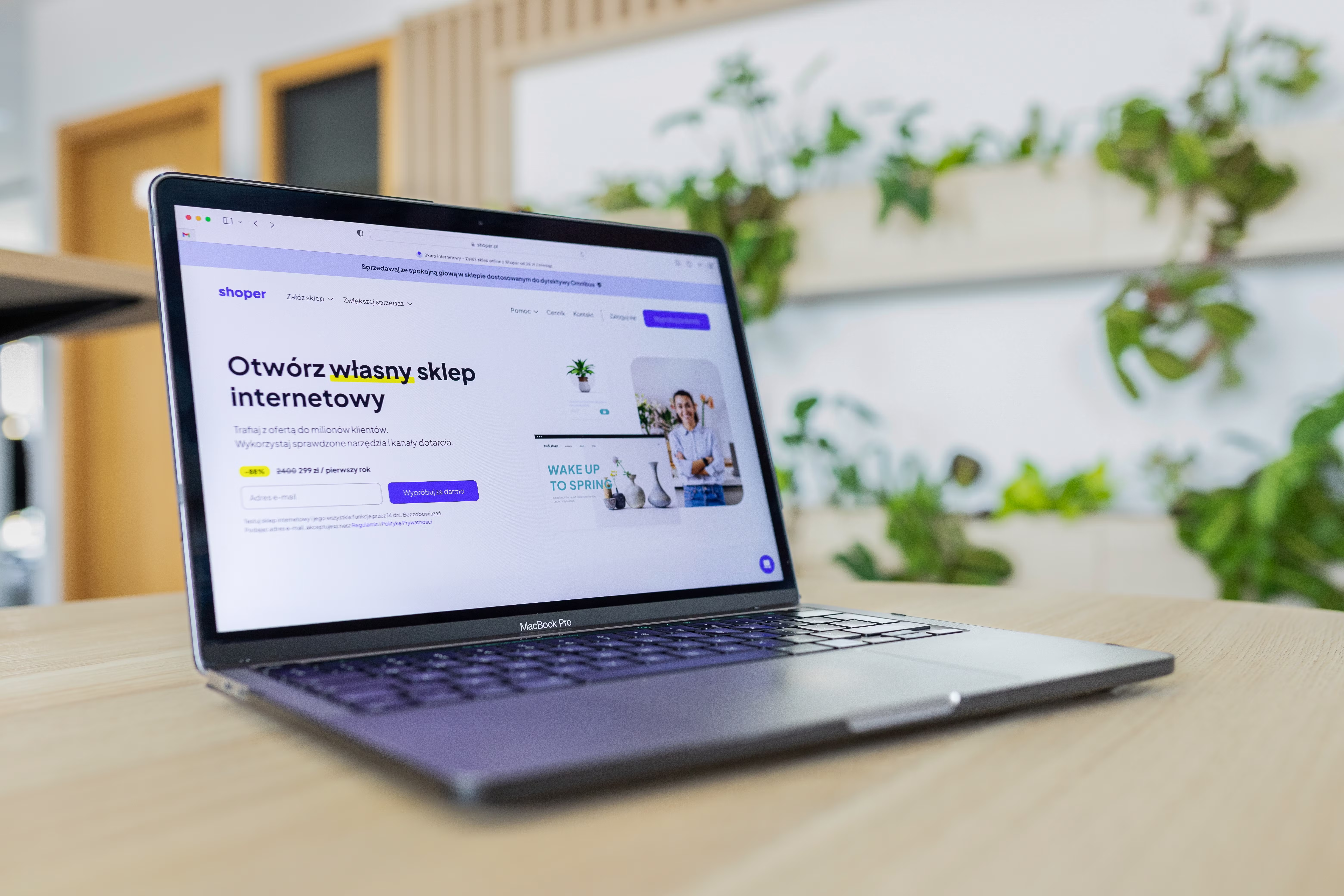
Clean code website design is about building a site that is simple to maintain, easy to navigate, and ready for search engines and users alike. It combines thoughtful structure, tidy content layout, responsive design, and performance-minded development so that a website feels clear on every screen size.
For website owners, this matters because design is not only about appearance. A well-structured site can support crawlability, mobile usability, accessibility, internal linking, page speed, and stronger user experience. Those elements do not guarantee results, but they do create better conditions for SEO and conversions over time.
What Clean Code Website Design Means
Clean code website design starts with clarity. Pages should have a logical hierarchy, predictable navigation, and a layout that helps visitors find what they need quickly. In practical terms, this means using consistent templates for service pages, product pages, blog posts, and landing pages rather than designing each page in a completely different way.
Clean code also refers to the build itself. Structured HTML, sensible class naming, lightweight scripts, and reusable components make a website easier to update. For WordPress website design, this can reduce maintenance issues and help teams publish content without breaking the layout.
From an SEO perspective, clean structure helps search engines understand the page. When headings, internal links, and content blocks are organised properly, crawlers can interpret the page more easily and users can scan it with less effort.
Why Structure Matters for SEO and User Experience
Website structure is one of the most practical parts of SEO-friendly website design. Search engines need to discover important pages, understand their relationships, and see which pages support a topic. Users need the same thing, only faster.
A clear structure can also improve trust. If a visitor lands on a business website and can immediately find the service, pricing, contact details, or product information, the site feels more professional and reliable. That can support lead generation and sales, depending on the offer and audience.
Good structure usually includes:
- A clear main navigation with limited top-level choices
- Logical page grouping for related services or products
- Descriptive page titles and headings
- Internal links that guide users to the next useful step
- Footer links for key pages and support content
If you are reviewing your current site structure, a free website SEO audit can help identify pages that are hard to find, poorly linked, or not aligned with search intent.
Responsive and Mobile-First Design Done Properly
Responsive web design ensures your content adapts to different screen sizes, while mobile-first design starts with the smallest screen and scales up. Both are essential because many users browse on phones first, especially for service businesses, blogs, and ecommerce websites.
Mobile-friendly design is not just about shrinking a desktop layout. Buttons need enough spacing, text needs to remain readable, forms need to be simple, and key content should appear early. Navigation should be usable with one hand where possible, and important actions should be obvious without overwhelming the screen.
For landing pages and product pages, mobile layout decisions can influence whether a visitor continues or leaves. If the page is cluttered, slow, or difficult to tap, even strong copy may struggle to perform. Results depend on traffic quality, offer clarity, page trust, and how well the design matches user intent.
Layout, Content Blocks, and Conversion-Focused Design
Clean code design is closely linked to conversion-focused design because layout affects how people process information. A well-organised page uses sections in the right order: headline, supporting explanation, proof points, benefits, visuals, and a clear call to action.
For a service page, that may mean a short summary at the top, followed by services, process, FAQs, and contact details. For ecommerce, product pages usually need strong imagery, clear pricing, shipping information, product details, and trust signals such as returns and support.
Useful layout practices include:
- Keeping paragraphs short and scannable
- Using headings to break up long content
- Placing key messages near the top of the page
- Making primary actions visually clear
- Reducing unnecessary distractions around the main goal
For businesses focused on search visibility and site quality, Backlink Works provides SEO education resources that can sit alongside a broader website improvement plan, rather than replacing design or content work.
Speed, Core Web Vitals, and Technical Performance
Website speed is part of the design process, not only the development stage. Large images, too many scripts, heavy page builders, and poor asset loading can slow down a site and weaken the user experience.
Core Web Vitals are useful signals to watch because they reflect loading, interactivity, and visual stability. A site that feels fast and stable is easier to use, especially on mobile connections. That said, performance should be improved carefully and measured over time rather than treated as a one-time fix.
Practical performance improvements often include image optimisation, reducing unnecessary plugins, using efficient caching, limiting third-party scripts, and keeping layouts lightweight. If you want to check specific performance issues, Google’s PageSpeed Insights is a helpful starting point for identifying opportunities.
Best Practices for Website Types: Business, Service, and Ecommerce
Different website types need different structure choices, even when the overall design stays clean and simple.
For business websites, the main goal is usually clarity. Visitors should quickly understand who you are, what you do, where you work, and how to contact you. The navigation should support that journey, not distract from it.
For service pages, the structure should answer common questions early. What is included? Who is it for? What happens next? What does the service solve? Clear answers improve usability and can reduce friction.
For ecommerce website design, product pages need stronger visual hierarchy. Shoppers should be able to compare products, understand variants, and find policies without hunting through the site. Filters, category structure, and product page layout all play a part in helping users move from browsing to purchase.
A simple checklist for cleaner website structure:
- Use one clear goal per page
- Keep the main navigation concise
- Link related pages together naturally
- Write headings that describe the content accurately
- Test mobile layouts before publishing
- Review page speed after major design changes
Conclusion
Clean code website design is not about making a site look minimal for its own sake. It is about building a clear, responsive, and performance-aware structure that supports users and search engines at the same time. When layout, content hierarchy, speed, and mobile usability work together, a website is easier to understand, easier to maintain, and more likely to support business goals.
If you are planning a redesign or reviewing an existing site, focus on structure before decoration. Start with navigation, content order, page speed, and mobile usability, then refine the visual design around those foundations.
Frequently Asked Questions
What is clean code website design?
It is a design approach that uses clear structure, reusable components, and simple layouts to improve usability, maintainability, and SEO support.
How does website design affect SEO?
Design affects crawlability, mobile usability, content structure, internal linking, accessibility, and speed, all of which can support SEO performance.
Is mobile-first design important for small business websites?
Yes. Mobile-first design helps ensure content, navigation, and calls to action work well on smaller screens where many visitors begin their journey.
What should I prioritise first in a redesign?
Start with structure, navigation, content layout, and performance. Visual polish matters, but it should support clear user journeys and page goals.
- Sponsored Ad -





