
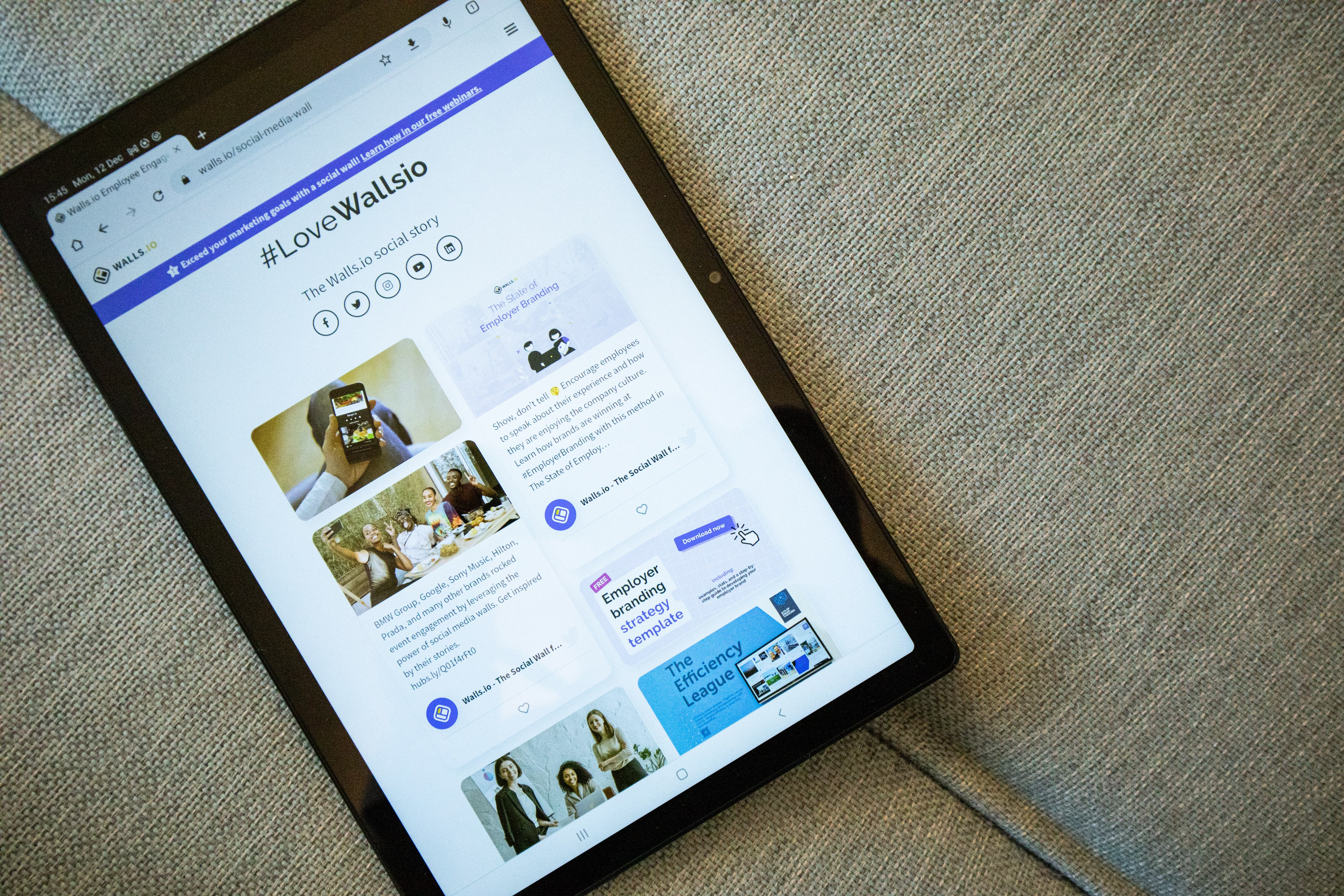
Website redesigns can improve a brand’s appearance, but a visual refresh alone does not guarantee a better website. If the new design slows pages down, weakens navigation, or makes content harder to scan, it can damage both user experience and search visibility.
For business websites, ecommerce stores, service pages, and WordPress sites alike, redesign choices affect how easily people find information, how quickly pages load, and how confidently they move towards an enquiry or purchase. Good design supports SEO through crawlability, mobile usability, content structure, accessibility, internal linking, and performance.
Why redesign mistakes affect speed and UX
A website redesign changes more than colours and fonts. It often affects templates, page layout, image handling, scripts, menus, content hierarchy, and mobile behaviour. Those details shape how visitors interact with the site and how search engines interpret it.
If a redesign makes a page harder to navigate or slower to use, people may leave before they explore key content. That is especially important for landing pages, service pages, product pages, and checkout flows, where clarity and speed can influence whether users continue their journey. Search engines also pay attention to mobile friendliness and performance signals, so design decisions can have technical SEO implications.
Overloading pages with heavy visuals and scripts
One of the most common redesign mistakes is adding too many large images, video backgrounds, animation effects, sliders, or third-party scripts. These elements can create a polished look, but they often increase load times and make the page feel sluggish.
On a product page, for example, multiple high-resolution images are useful, but they should be compressed and served efficiently. On a service page, a background video may look impressive on desktop while making the mobile experience frustrating. Good design balances impact with performance.
Before adding a visual element, ask whether it supports the user’s goal. If it does not improve clarity, trust, or engagement, it may be worth removing or simplifying. Tools such as PageSpeed Insights can help identify performance bottlenecks.
Poor mobile-first and responsive design choices
A redesign should be built for mobile users first, not treated as a scaled-down desktop layout. Common mistakes include tiny tap targets, overlapping sections, wide tables, cramped forms, and navigation menus that are difficult to use on smaller screens.
Responsive web design should adapt content to different devices without hiding important information. If a mobile user has to pinch, zoom, or scroll sideways, the page layout is not serving them well. This can be especially damaging for ecommerce website design, where users may be comparing products, reading specifications, or completing forms on a phone.
Mobile-first design also affects SEO-friendly website design because search engines assess mobile usability. A clean layout, readable font sizes, and well-spaced buttons help visitors move through the site more easily and reduce friction.
Weak website structure and confusing navigation
Many redesigns focus on the homepage while neglecting the site structure behind it. If menus are overcomplicated, labels are vague, or important pages are buried too deeply, users struggle to find what they need.
A strong website structure helps visitors understand where they are and what to do next. That means organising content into logical categories, using clear navigation labels, and linking related pages together. A business website, for instance, should make it easy to move from the homepage to services, case studies, contact details, and FAQs without unnecessary clicks.
Internal linking also matters for SEO and UX. It helps search engines crawl the site and helps users discover related content. A sensible redesign should preserve useful pathways rather than replacing them with a trend-led menu that looks tidy but adds friction.
Cluttered layouts and unclear content hierarchy
Another common mistake is trying to fit too much onto one page. When every section competes for attention, the user does not know what matters most. This weakens content clarity and can reduce engagement.
Good UI and UX design use spacing, headings, contrast, and visual grouping to guide attention. Important actions such as “Request a quote”, “Add to basket”, or “Book a consultation” should be easy to find. Supporting content should explain benefits, answer questions, and remove uncertainty without overwhelming the reader.
This is particularly relevant for landing pages and service pages. A redesign should present a clear value proposition, concise supporting copy, trust signals, and a direct next step. If the layout forces visitors to hunt for key information, conversion-focused design suffers.
Ignoring accessibility and readability
Design trends can sometimes work against accessibility. Low contrast text, overly decorative fonts, missing alt text, poor heading structure, and hidden focus states make websites harder to use for everyone, not just people with disabilities.
Accessibility is part of practical website design. It improves comprehension, supports keyboard and screen reader users, and often leads to cleaner content structure. That is useful for SEO as well, because well-structured content is easier to interpret and maintain.
Readability matters too. Long paragraphs, narrow line spacing, and dense blocks of text can make a page feel tiring. Break content into short sections, use descriptive headings, and keep important information above the fold where appropriate. For WordPress website design, this is often easier when templates are built with clear content blocks rather than overly complex page builders.
Forgetting to test before and after launch
Many speed and UX problems appear only after a redesign goes live. Layout shifts, broken links, missing redirects, changed page titles, and unused plugins can all create issues that were not obvious during development.
Before launch, review key templates on mobile and desktop. Check the homepage, service pages, product pages, contact page, and any important landing pages. Test forms, menus, buttons, checkout steps, and internal links. Also check that metadata, structured content, and image sizing have not been lost during the rebuild.
After launch, monitor analytics, search console data, and user behaviour. If a redesign changes how people move through the site, that feedback is valuable. You can also use a free website SEO audit to review structure, speed, and usability issues that may need attention.
Best practices for a redesign that supports speed and UX
A useful redesign is not just visually cleaner. It is easier to use, faster to load, and simpler to navigate. Keep these practical checks in mind:
- Use a mobile-first layout with responsive breakpoints.
- Compress and resize images before uploading them.
- Keep navigation simple and label pages clearly.
- Prioritise readable typography and strong contrast.
- Limit unnecessary animations, pop-ups, and external scripts.
- Preserve internal links and redirects from old pages.
- Test forms, menus, and checkout journeys on real devices.
If your redesign is part of a wider content and SEO strategy, it can help to review how pages are grouped and linked. Backlink Works Insights often treats design as part of overall site growth, not a separate layer from visibility or performance.
Conclusion
A website redesign should improve how a site looks and how it works. The most common mistakes are not usually dramatic; they are small design and structure decisions that quietly slow pages down or make them harder to use. Heavy media, weak mobile layouts, confusing navigation, cluttered content, and poor accessibility can all harm the experience.
When redesigns are planned around speed, clarity, mobile usability, and user intent, they are more likely to support SEO, trust, and conversions. The goal is not to make every page look different. It is to make the site easier to understand, easier to use, and more effective for the people it is meant to serve.
Frequently Asked Questions
How can a redesign affect SEO?
A redesign can affect crawlability, mobile usability, page speed, internal linking, and content structure, all of which influence how search engines understand a site.
What is the biggest UX mistake in website redesigns?
One of the biggest mistakes is making the site harder to navigate or scan. If users cannot quickly find what they need, engagement often drops.
Should mobile design come before desktop design?
Yes, in most cases. A mobile-first approach helps ensure the layout, navigation, and content remain usable on smaller screens.
How do I know if my redesign is too slow?
Check load times, Core Web Vitals, and real-user behaviour. If pages feel sluggish or users abandon key steps, the design may need simplification.
- Sponsored Ad -





