
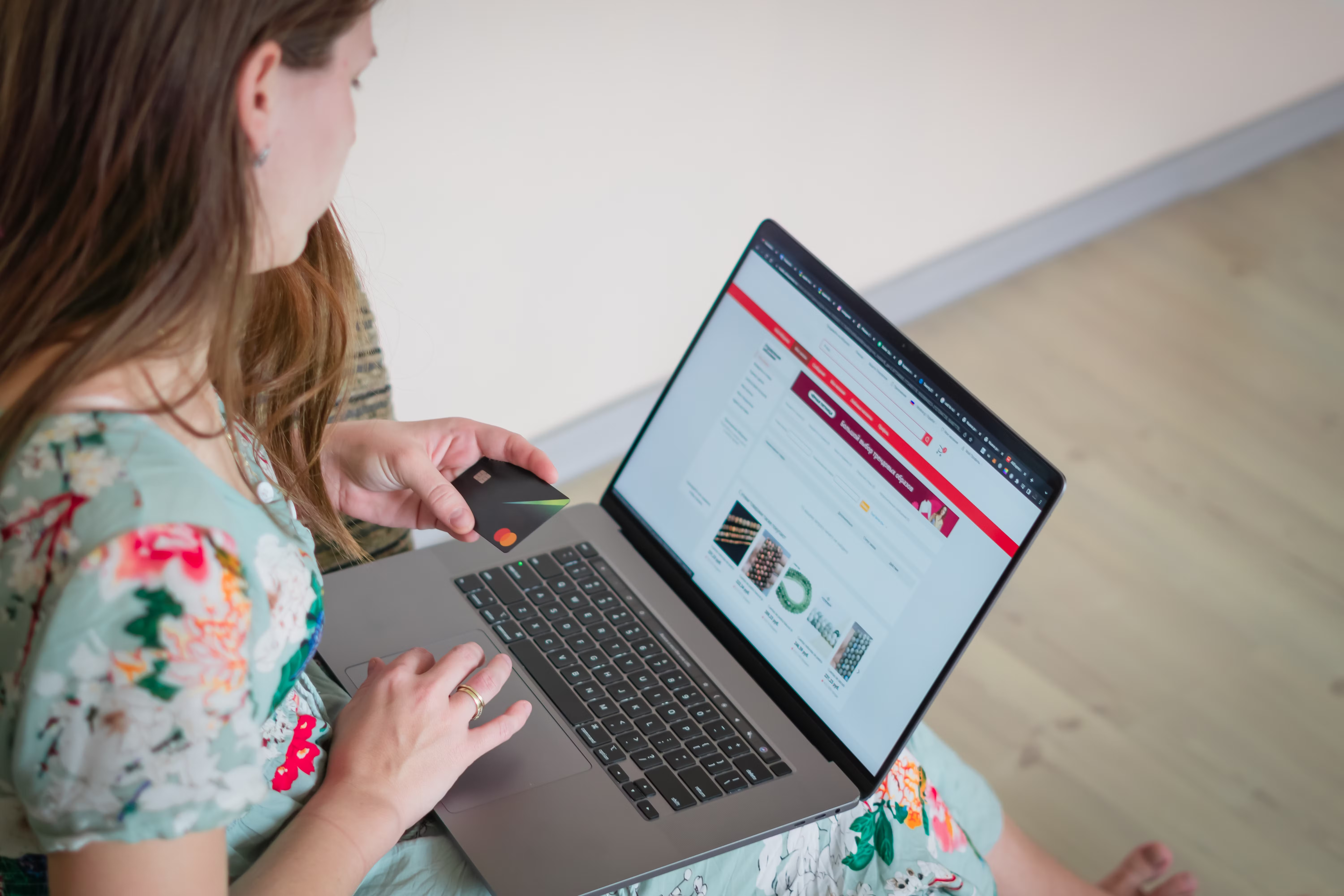
Ecommerce link building is one part of a wider SEO system, but it works best when it supports strong product pages, useful category pages, fast-loading templates, and clear site architecture. For online stores, the aim is not to chase links for their own sake. It is to earn relevant mentions that help search engines understand your brand, improve crawl paths, and support organic visibility for product and category pages.
When done properly, link building can complement ecommerce SEO efforts across Shopify, WooCommerce, and custom platforms. Results depend on product demand, competition, technical setup, content quality, user experience, authority, and consistent optimisation. It is also important to pair link building with solid on-page work, because links alone will not fix thin content, weak internal linking, duplicate product pages, or slow mobile experiences.
What ecommerce link building actually means
Ecommerce link building is the process of earning links from relevant websites to your store, product collections, guides, and brand pages. These links can help search engines discover pages more efficiently and can strengthen the authority of important sections of your site. For an online store, that usually means category pages, key product pages, buying guides, and editorial content that supports purchase intent.
It is worth distinguishing between useful links and low-value links. A link from a niche publication, supplier, review site, trade association, or helpful resource page is often more valuable than several weak links from unrelated sites. The goal is not volume at all costs. The goal is relevance, trust, and a natural profile that supports long-term organic traffic growth.
Build links around pages that deserve visibility
Before outreach, decide which pages should attract links. In ecommerce, the best targets are often category pages for commercial terms, product page SEO assets for high-intent products, and content pages that answer questions buyers actually ask. This approach supports online store SEO because it aligns links with pages that can rank and convert.
Category page SEO is especially important when you sell multiple products under a common theme. A well-structured category page can target a broader keyword set, introduce the collection clearly, and link internally to individual products. Product descriptions should be written to explain use, benefits, materials, dimensions, compatibility, and unique selling points without duplicating manufacturer copy.
If you need help strengthening the wider authority profile of your store, Backlink Works offers practical SEO education and link building resources that can support a more structured approach to off-page optimisation. For broader link strategy reading, see the link building guide.
Use content to earn links naturally
For ecommerce brands, link building works better when supported by content that deserves attention. That may include buying guides, comparison pages, care instructions, size guides, seasonal trend pieces, product use cases, or problem-solving articles. These assets help with ecommerce keyword research by capturing informational searches that lead buyers toward commercial pages.
A practical content strategy often includes one or two editorial pages that support each major category. For example, a store selling running shoes might publish a guide on choosing the right fit, a page on terrain-specific footwear, and a comparison of cushioning types. These pages can attract links from blogs, communities, and journalists while also passing internal authority to product and category pages.
To make those links count, use clear internal linking. Link from guides to category pages, from category pages to subcategories, and from related products to relevant alternatives. This helps distribute authority and improves ecommerce internal linking, crawlability, and user journeys.
Technical SEO issues that affect link value
Even strong links can be wasted if your store has technical problems. Ecommerce technical SEO influences whether search engines can crawl, index, and understand linked pages. Common issues include faceted navigation creating duplicate URLs, parameter-heavy filters, weak canonicals, and product variants that generate near-identical pages.
Duplicate product content is another frequent issue. If you reuse supplier descriptions across many stores or across many of your own product variants, links may not deliver full value because the page offers little unique context. Improve this by adding original descriptions, FAQs, sizing advice, comparison notes, and customer-focused details.
Out-of-stock product SEO also matters. If a product has earned links and still has search demand, avoid deleting the page too quickly. Consider keeping the page live with clear stock messaging, related alternatives, and internal links to similar products. That preserves value for both users and search engines.
It is also wise to monitor site performance. Core Web Vitals, mobile ecommerce SEO, and ecommerce website speed all affect user experience and can influence how well organic traffic performs once it arrives. For a technical overview, you can check Google’s SEO starter guide.
Shopify SEO and WooCommerce SEO considerations
Shopify SEO and WooCommerce SEO both benefit from the same principles, but the implementation details differ. Shopify users should pay close attention to collection structure, duplicate content from tags or filters, and the way product variants are handled. WooCommerce users often need to manage plugin overload, theme performance, and URL structures carefully so pages remain fast and easy to crawl.
In both platforms, keep your templates consistent. Use clear title tags, unique meta descriptions, descriptive headings, and strong on-page copy for each important product or category page. Make sure product schema markup is accurate, especially for price, availability, reviews, and variant details where relevant.
If you are auditing a store, a crawling tool can help reveal indexing issues, duplicate paths, and thin pages. For example, the Screaming Frog SEO Spider is commonly used to review large ecommerce sites for technical and internal linking problems.
Best practices for safe ecommerce link building
Safe ecommerce link building is about relevance and usefulness. Focus on partner mentions, digital PR, supplier and manufacturer relationships, editorial features, resource pages, and genuinely helpful content assets. These methods are more sustainable than shortcuts and less likely to create long-term risk.
Avoid spammy tactics such as paid link schemes, mass guest posts on unrelated sites, copied outreach templates at scale, or anchors that force exact-match commercial phrases. These approaches can weaken trust and create more problems than they solve. Instead, aim for natural anchors, varied link sources, and pages that genuinely deserve references.
A simple checklist can help:
- Map links to priority category and product pages.
- Fix duplicate content and thin pages before outreach.
- Improve internal linking from guides to money pages.
- Make mobile pages fast, readable, and easy to navigate.
- Use schema markup where appropriate for products and offers.
- Review out-of-stock pages instead of deleting them automatically.
Conclusion
Ecommerce link building works best as part of a broader SEO strategy, not as a standalone tactic. When your store has clear category page SEO, useful product descriptions, strong ecommerce content, and a technically sound platform, links can help reinforce authority and support organic traffic growth over time.
For store owners and marketers, the practical next step is simple: identify the pages that matter most, improve their content and usability, then build relevant links that fit the customer journey. That approach is more realistic, more sustainable, and more aligned with how online stores grow in search.
Frequently Asked Questions
What pages should an ecommerce store build links to?
Prioritise key category pages, high-value product pages, and helpful content that supports buying decisions.
Does internal linking matter as much as external links?
Yes. Internal linking helps distribute authority, improve crawlability, and guide users to relevant products and categories.
How do faceted navigation issues affect link building?
If filters create duplicate URLs, link value can be diluted and search engines may crawl unnecessary pages instead of important ones.
Can link building improve conversions as well as rankings?
It can support conversions indirectly by bringing better traffic, but results depend on product clarity, trust signals, pricing, speed, and checkout experience.
- Sponsored Ad -





