
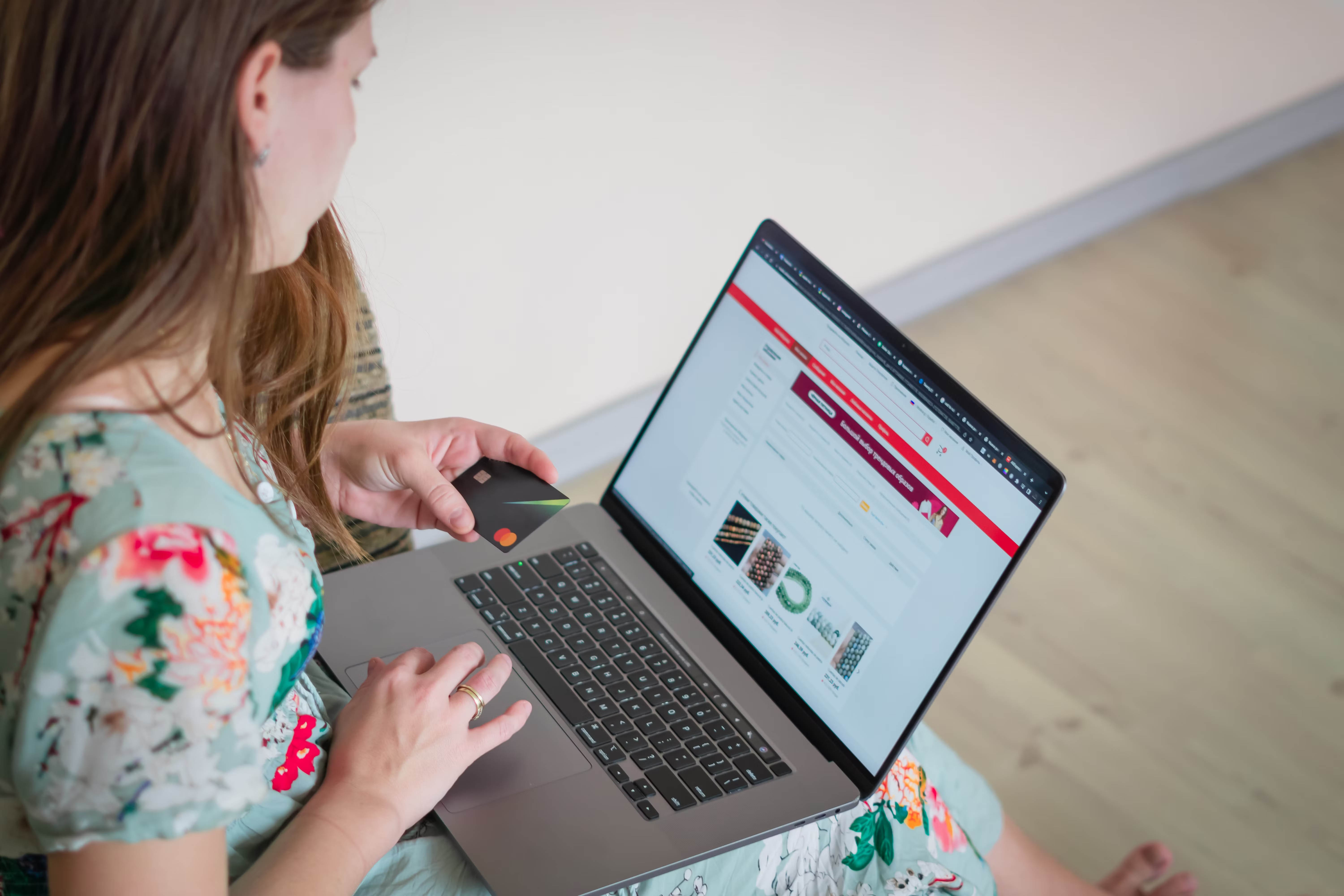
Ecommerce SEO ROI is not only about ranking pages. It is about whether your product and category pages attract the right searchers, support a strong user experience, and help those visitors move towards a purchase. For online stores, product page optimisation often plays a direct role in how much organic traffic a site can earn and how efficiently that traffic can convert.
That return depends on many factors: product demand, competition, site structure, technical setup, content quality, mobile usability, page speed, and how clearly your pages answer search intent. When these elements work together, product pages can become a reliable source of qualified organic visits rather than isolated pages with little search value.
What ecommerce SEO ROI means in practice
ROI in ecommerce SEO is the value you gain from search visibility compared with the time and resources invested. In simple terms, if your optimisation work improves how often product or category pages appear in search, and those pages bring in relevant visitors who are more likely to browse and buy, the work can be worthwhile.
Unlike paid ads, ecommerce SEO usually builds gradually. That means the value often comes from compounding improvements across the store: better indexing, stronger internal linking, more useful product descriptions, improved category pages, and cleaner technical performance. A store may not see dramatic changes overnight, but consistent optimisation can help increase discoverability across many products over time.
For a practical starting point, some brands use a structured audit before making changes. A free website SEO audit can help identify page-level issues that affect visibility, crawlability, and user experience.
Why product page optimisation drives organic traffic
Product pages matter because they sit closest to search demand and buying intent. People searching for specific items often want clear details, pricing, availability, delivery information, and trust signals. If your pages provide that information well, they are more likely to match search intent and support user engagement.
Strong product page SEO typically includes:
- Clear, unique product titles that reflect how customers search
- Useful product descriptions that explain benefits, features, and use cases
- Optimised images and descriptive alt text
- Structured data such as Product, Offer, and Review markup where appropriate
- Internal links to related products, categories, and guides
- Fast loading on mobile and desktop
These elements help search engines understand the page and help shoppers make faster decisions. That combination supports both organic traffic growth and conversions, although the final outcome still depends on the competitiveness of the niche and the quality of the site overall.
How to optimise product pages for search and users
Product page optimisation should serve two audiences at the same time: search engines and shoppers. The best pages are not written for algorithms alone. They answer buying questions clearly and avoid thin or repetitive copy.
Write product descriptions that add real value
Many stores rely on manufacturer descriptions, which can create duplicate product content across the web. Instead, write original descriptions that explain what makes the product useful, who it suits, and how it differs from alternatives. You do not need to overdo the copy; clarity is usually more effective than length for its own sake.
Where relevant, include dimensions, materials, compatibility, care instructions, and common questions. This supports ecommerce keyword research by naturally covering search terms and related phrasing without keyword stuffing.
Use schema markup where it fits naturally
Schema markup can help search engines interpret product information more accurately. Product pages may benefit from structured data for price, availability, review ratings, and brand details. This does not guarantee rich results, but it can improve how information is understood by crawlers.
Google’s own SEO Starter Guide is a useful reference for foundations such as crawlability, helpful content, and page structure.
Improve mobile ecommerce SEO and Core Web Vitals
Most shoppers browse on mobile, so mobile ecommerce SEO is essential. Product pages should load quickly, be easy to tap, and display key information without unnecessary clutter. Page speed affects both experience and performance, particularly on image-heavy pages.
Core Web Vitals are worth reviewing because slow or unstable layouts can reduce engagement. Compress images, avoid heavy scripts, and keep the most important content near the top of the page. Tools such as PageSpeed Insights can help identify practical performance issues.
Category page SEO and internal linking structure
Product pages do not work in isolation. Category page SEO helps stores rank for broader commercial terms and guides users into more specific product listings. A clear category hierarchy can also improve crawlability and help distribute authority across the site.
Use categories to target broader intent, then link to individual products and supporting content. Internal linking is especially important in ecommerce because it helps search engines discover pages and understand which ones are most important. For example, a buying guide can link to a relevant category, which then links to key products, sizes, or variants.
A practical content strategy may also include seasonal guides, comparison pages, and category introductions that explain selection criteria. This is useful for stores on Shopify or WooCommerce, where strong information architecture can improve both navigation and search visibility.
Technical SEO issues that can limit ecommerce ROI
Even excellent product content can underperform if technical SEO is weak. Ecommerce sites often face complications from faceted navigation, duplicate URLs, sorting parameters, and out-of-stock product SEO challenges.
Faceted navigation can create many near-duplicate pages if filters are indexed without control. That can waste crawl budget and dilute signals. Use canonical tags, sensible indexing rules, and careful parameter handling to prevent search engines from seeing too many low-value combinations.
Duplicate product content is another common issue, especially for stores with variant-heavy catalogues or supplier-fed descriptions. Unique copy, canonicalisation, and a consistent URL strategy help reduce confusion.
Out-of-stock product SEO also needs planning. If a product is temporarily unavailable, keep the page live where appropriate, explain the status clearly, and suggest alternatives. If the product is permanently discontinued, consider redirecting to the closest relevant replacement or category page rather than removing the page without a plan.
Platform considerations for Shopify and WooCommerce
Shopify SEO and WooCommerce SEO both depend on how the platform is configured. Shopify stores often need attention to collection pages, app scripts, and theme speed. WooCommerce stores may need more care around plugin bloat, server performance, and content templating. In both cases, regular technical checks are important.
If you are reviewing backlinks and broader authority alongside store optimisation, Backlink Works can be one place to learn about site growth approaches, but the real priority for ecommerce remains a clean, helpful, well-structured store experience.
Turning traffic into conversions without overcomplicating the page
Organic traffic only has value if the page helps visitors take the next step. Ecommerce conversions depend on traffic quality, pricing, offer clarity, trust signals, product clarity, page speed, reviews, and checkout experience. SEO can improve the traffic source, but the page still needs to support decision-making.
Keep the product page focused. Include the essentials near the top: product name, main image, price, key benefit, availability, and a clear call to action. Then support that with detailed information lower on the page. Add related products, FAQs, and reassurance content such as shipping, returns, and sizing guidance where relevant.
Do not try to force conversions with misleading urgency or exaggerated claims. A better approach is to remove friction, answer questions, and test layout changes based on user behaviour. Tools like Google Search Console can help you understand which queries drive impressions and clicks, while analytics can show where users drop off.
Best practices checklist for ecommerce SEO ROI
- Make product descriptions unique, clear, and useful
- Build strong category pages for broader search demand
- Use internal links to connect categories, products, and guides
- Control faceted navigation and duplicate URLs
- Check mobile usability and page speed regularly
- Add structured data where it accurately reflects page content
- Handle out-of-stock products with a clear SEO plan
- Review search data, engagement, and conversion behaviour over time
Conclusion
Ecommerce SEO ROI is strongest when optimisation improves both visibility and usability. Product page SEO, category page SEO, technical SEO, and content quality all influence how much organic traffic an online store can attract and how well that traffic can convert. There is no guarantee of rankings or revenue, but stores that invest in clear information, fast pages, and a logical site structure are usually better positioned for sustainable growth.
For ecommerce brands, the most effective approach is steady and practical: fix technical issues, improve product content, strengthen internal linking, and make the buying journey easier on every device. Over time, those improvements can support stronger organic traffic growth and a better return from SEO efforts.
Frequently Asked Questions
How does product page optimisation help ecommerce SEO?
It helps search engines understand the page and helps shoppers find the information they need to buy with confidence.
Should ecommerce stores focus on product pages or category pages first?
Both matter. Category pages often target broader terms, while product pages capture more specific buying intent.
What is the biggest technical SEO issue for online stores?
Common issues include duplicate content, faceted navigation, crawl inefficiency, and slow page speed.
Can SEO improve ecommerce conversions as well as traffic?
Yes, but results depend on page quality, trust signals, pricing, user experience, and checkout performance.
- Sponsored Ad -





