
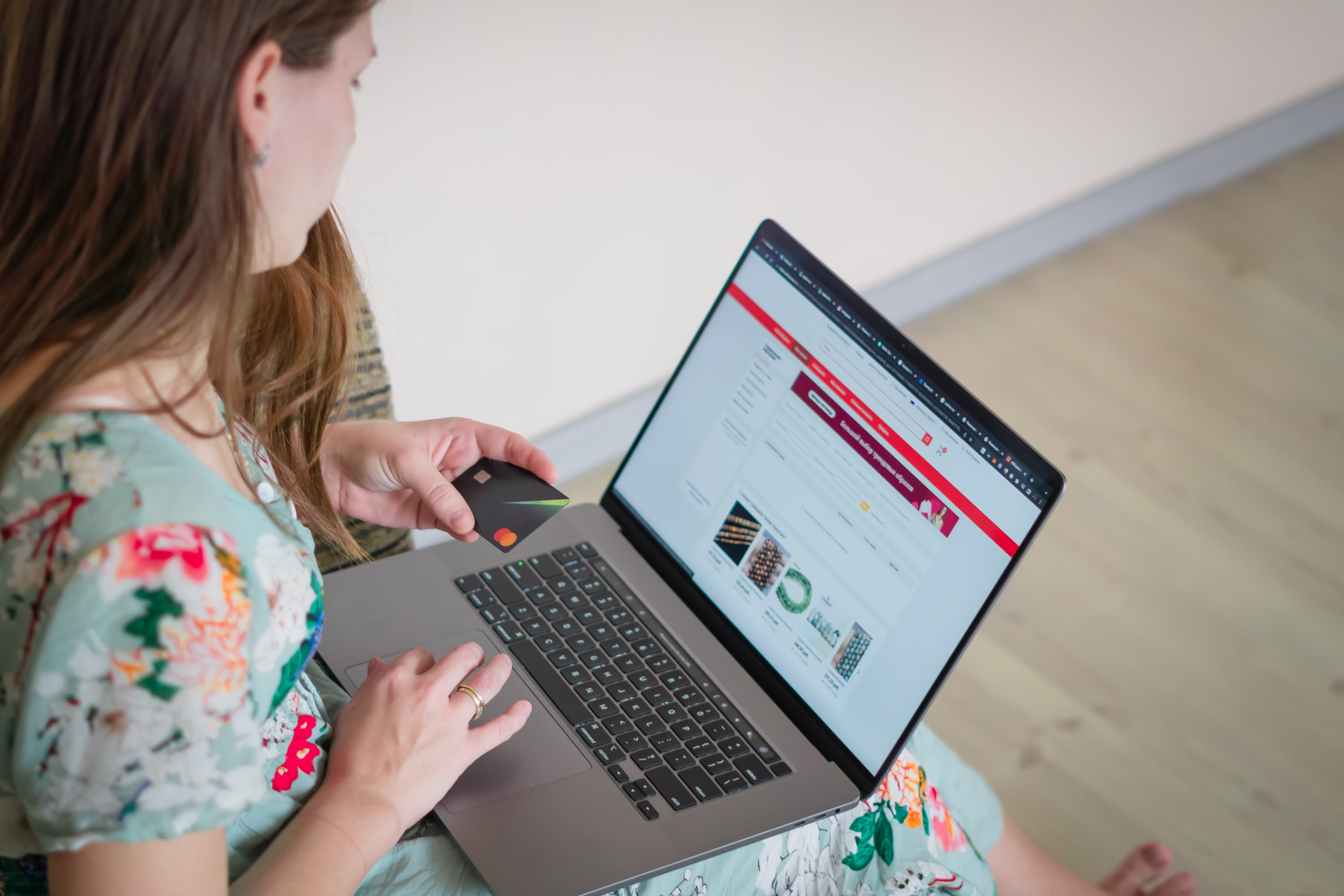
Session recording can be one of the most practical ways to understand how shoppers behave on a Shopify store. Instead of relying only on analytics reports, you can watch real browsing patterns, identify friction in product discovery, and spot issues that may be affecting both user experience and organic performance.
For ecommerce SEO, this matters because search visibility is only part of the job. If visitors land on a product or category page but struggle to find information, interact with filters, or complete checkout, the page may underperform over time. Session recording helps you see where that friction appears so you can improve both usability and conversion potential in a measured, data-led way.
What session recording tells you on a Shopify store
Session recording tools capture anonymised user journeys so you can review how people move through your store. On Shopify, this is especially useful for product pages, collection pages, search results, mobile navigation, and checkout steps. You are not looking for isolated mistakes only; you are looking for patterns.
For example, if many visitors scroll past the product description without expanding tabs, the content may not be structured clearly enough. If shoppers repeatedly click a filter that does not work well on mobile, that can indicate a navigation or faceted navigation issue. These signals help shape better ecommerce content strategy, stronger internal linking, and more useful page layouts.
Focus on the pages that influence organic visibility most
Not every recording deserves the same attention. Start with pages that matter most for ecommerce SEO: category pages, best-selling product pages, and landing pages that already receive search traffic. These pages often carry the most responsibility for product discovery and organic traffic growth.
On product page SEO, look for signs that shoppers cannot quickly identify price, delivery information, reviews, variants, or stock status. On category page SEO, watch how people use filters, sorting, and pagination. If users keep bouncing between pages or abandoning after a few clicks, the page structure may need work. This is also where duplicate product content, weak descriptions, and poor internal linking can become more obvious.
If you are comparing platforms, the same principles apply to Shopify SEO and WooCommerce SEO: clear templates, strong page hierarchy, and crawlable links usually make it easier for search engines and shoppers to understand your store.
What to look for in recordings without overreading them
Session recordings are most useful when you look for repeatable behaviour rather than one-off actions. A single shopper rage-clicking a button may not mean much. Ten similar sessions across mobile devices may point to a real issue.
Pay attention to:
- Repeated clicks on non-clickable elements
- High scroll depth with little interaction
- Confusion around size guides, filters, or variant selectors
- Drop-offs near shipping, returns, or delivery messaging
- Mobile users struggling with tap targets or sticky elements
These behaviours often overlap with ecommerce technical SEO issues. A page that feels clunky to use may also be slower, less mobile friendly, or harder for crawlers to interpret if the content is hidden behind scripts or poor structure. If you want a broader technical reference point, Google’s SEO Starter Guide is a useful starting place.
Using recordings to improve product pages, content, and schema
Session recording should feed into page improvement, not sit as a standalone insight tool. When shoppers hesitate on a product page, ask whether the page answers the questions they likely have. Product descriptions should be specific, readable, and useful. They should support the search intent behind the page, not simply repeat the product name.
This is also where ecommerce schema markup matters. If users rely on visible details such as price, availability, ratings, and variant information, your page should present them clearly. Structured data does not replace good page content, but it can help search engines better understand what the page offers. Always check that the information visible to users matches the structured data and the page content.
If recordings show shoppers leaving because a product is temporarily unavailable, think carefully about out-of-stock product SEO. In many cases, the best approach is to keep the page live, provide helpful alternatives, and avoid removing valuable links or content unnecessarily.
Best practices for Shopify tracking and testing
Shopify stores often use apps for heatmaps, session recording, and conversion tracking, but the tool is only as useful as the questions you ask. Set clear hypotheses before reviewing sessions. For example: “Are mobile users struggling to use the size selector?” or “Are category filters making it easier to discover products?”
When using recordings, keep privacy and compliance in mind. Mask personal data, avoid capturing sensitive information, and make sure your setup respects user consent requirements where relevant. Session recording should improve the user experience, not undermine trust.
It is also sensible to validate recording insights alongside analytics. Compare what you see in recordings with data from Google Search Console, site search reports, and ecommerce analytics. That combination helps you understand whether a problem is affecting only a few sessions or a broader segment of organic traffic.
If you are also running a site-wide review, a free website SEO audit can help you spot technical and content issues that may sit alongside behavioural problems.
Turn behavioural insights into SEO and conversion improvements
The real value of session recording is in what you change afterwards. If shoppers miss important content, improve heading structure and page layout. If they do not understand collections, refine category descriptions and internal linking. If mobile users struggle with navigation, simplify menus and make tap areas larger.
These changes can support ecommerce conversions, but they should be tested carefully. Conversions depend on traffic quality, pricing, offer clarity, trust signals, page speed, reviews, and checkout experience. Session recordings help you reduce friction, but they do not guarantee results. The aim is to make it easier for the right visitors to find the right products and complete their journey.
For speed-related issues, it is worth checking real-world performance with a tool such as PageSpeed Insights. Slow pages can make usability problems worse, especially on mobile ecommerce SEO where patience is often limited.
Conclusion
Session recording is a practical addition to ecommerce SEO work on Shopify stores. It helps you see how shoppers interact with product pages, category pages, filters, and checkout steps, so you can improve content, navigation, speed, and clarity in ways that support both user experience and organic growth.
Used well, it complements keyword research, schema markup, internal linking, and technical SEO. The best results usually come from consistent testing, careful interpretation, and steady page improvements rather than quick fixes. For teams building a long-term SEO process, Backlink Works publishes guidance that supports broader search visibility and site growth, without treating any single tactic as a shortcut.
Frequently Asked Questions
How many session recordings should I review on Shopify?
Review enough sessions to spot patterns, not just isolated behaviour. Start with key product and category pages, then look for repeated friction across device types.
Can session recordings improve SEO directly?
Not directly. They help you identify usability and content issues that can support better engagement, stronger page quality, and improved organic performance over time.
What should I watch for on mobile ecommerce pages?
Look for tap issues, hidden content, hard-to-use filters, slow interactions, and layouts that make product information difficult to scan.
Are session recordings enough on their own?
No. They work best alongside analytics, Search Console, page speed testing, and structured SEO reviews of product and category pages.
- Sponsored Ad -





