
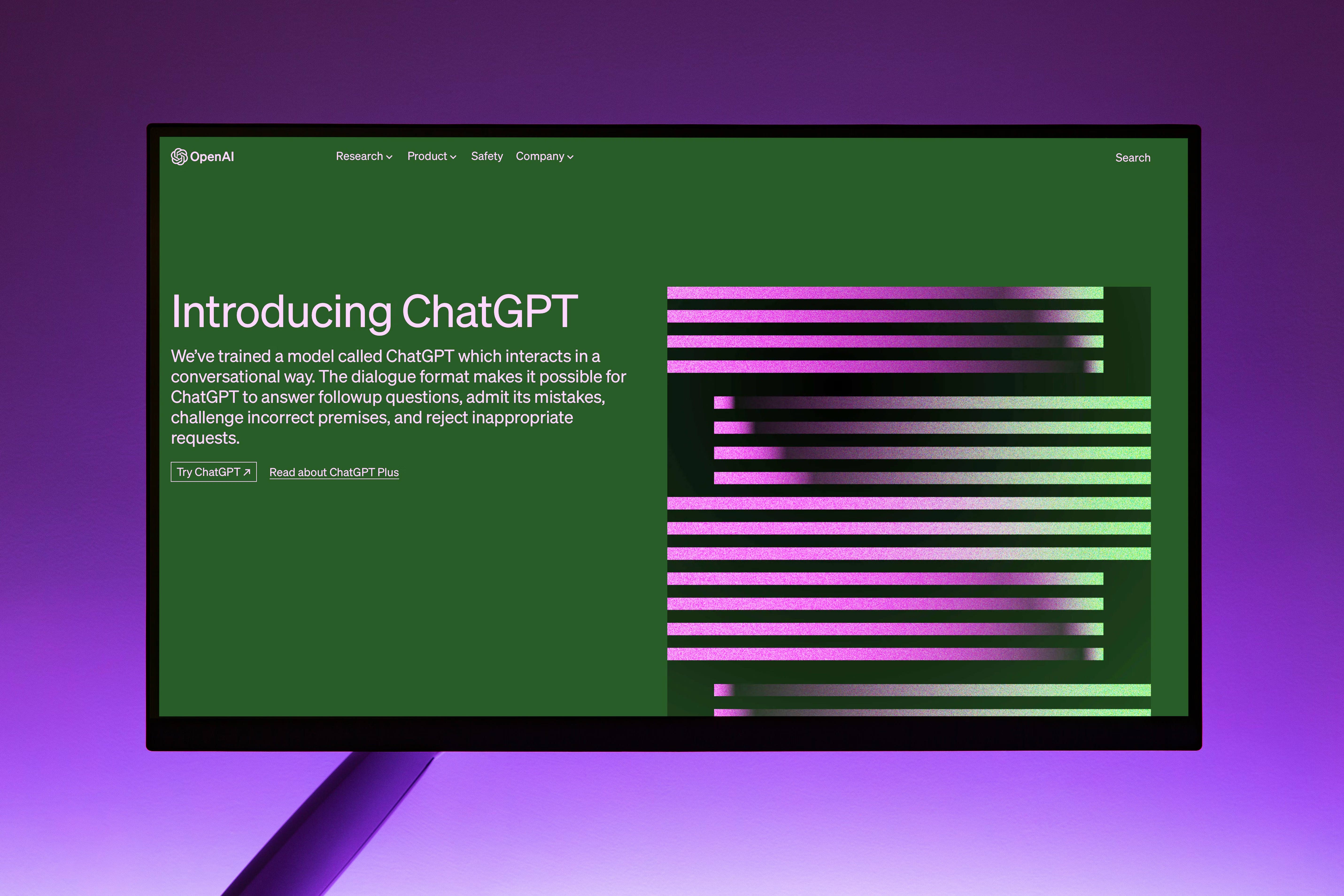
Google AI Mode Content Optimisation is about preparing your pages so they are easier for AI-driven search experiences to understand, summarise, and potentially cite. For beginners, that means thinking beyond blue links and considering how your content may appear in Google AI Overviews, Google AI Mode, ChatGPT Search, Perplexity, Microsoft Copilot Search, Gemini, Claude, and other answer engines.
This does not replace traditional SEO. Instead, it adds another layer: making content clear, well-structured, technically accessible, and trustworthy enough for both people and machine-assisted systems. The goal is not to force visibility, but to improve the chances that your site can be discovered, interpreted, and used in AI-generated answers where relevant.
What Google AI Mode Content Optimisation Means
Google AI Mode is part of a broader move towards generative search, where users can ask questions in natural language and receive a synthesised response rather than only a list of results. In that setting, optimisation is less about stuffing pages with phrases and more about helping search systems understand your entities, topics, and evidence.
Entity optimisation means making it obvious who you are, what you offer, and how your content connects to related subjects. For a local business, that might include consistent business details, service descriptions, and location signals. For a publisher or blogger, it may mean clear authorship, topical focus, and transparent sourcing.
Structured data can support this process by making page meaning easier to interpret. It should match visible content and never be used to mislead. Google’s official guidance on AI features in Search is a useful starting point if you want to understand how Google describes these experiences.
How AI Search Differs from Traditional Results
Traditional search usually presents a ranked list of pages. AI search and answer engines may combine information from multiple sources into a single response, then add citations, links, or follow-up suggestions depending on the platform and query. That means the same search can produce different source selections at different times.
This matters because a clickable citation, a text-only brand mention, a product recommendation, and a referral visit are not the same thing. A mention may improve awareness without sending traffic. A citation may show source attribution without implying endorsement. A referral visit is the only one that directly reaches your analytics as a session, and even then the source may not always be obvious.
Different systems also behave differently. Google AI Overviews and Google AI Mode do not necessarily surface the same pages in the same way as ChatGPT Search, Perplexity, Copilot Search, Gemini, or Claude. Features, interfaces, and source presentation can change over time, so cautious testing is better than assumptions.
The Foundations That Still Matter
Strong traditional SEO still supports AI search visibility. If a page cannot be crawled, indexed, or understood clearly, it is less likely to help users in any search experience. Helpful content, logical headings, descriptive links, and fast, usable pages remain important.
Think in terms of clarity. Answer the main question early. Use plain language. Add supporting detail where needed. Make sure important pages are linked internally so crawlers and readers can find them. If your site has technical issues, start with a basic review such as a free website SEO audit checklist before changing content strategy.
AI-generated answers can also reflect source authority and online reputation. That does not mean only large brands can appear, but well-known, well-cited, and consistently described organisations may be easier for systems to recognise. Backlink Works publishes SEO education and guidance that can help site owners think about these wider visibility signals without treating AI search as a shortcut.
Practical Content Changes That Help
Begin with your highest-value pages: service pages, category pages, key guides, and product pages. Ask whether each page clearly states what it is about, who it is for, and what evidence supports it. If the page is vague for a human reader, it is unlikely to be easy for an answer engine to summarise accurately.
Good AI content is still good content for people. That means useful examples, accurate facts, original insight, and a clear structure. If you use AI-assisted drafting, review every claim carefully. Hallucinations, outdated facts, duplicated phrasing, and unsupported statements can damage trust. Human editing remains essential.
- Use clear H2 and H3 headings that reflect real topics.
- Explain terms once, then use them consistently.
- Support key claims with reliable sources.
- Keep product, service, and organisation information accurate.
- Update content when policies, prices, or facts change.
If your site relies on links as part of its broader visibility strategy, it can help to understand how page authority and discoverability fit together. A practical overview such as the ultimate guide to backlink building can complement content work, even though links alone do not guarantee AI citations or rankings.
Technical Access, Structured Data, and Crawlability
AI search depends on more than wording. Search-engine crawlers, AI-related crawlers, training-related crawlers, and user-triggered retrieval all serve different purposes, and their access rules may differ. Allowing one does not guarantee visibility in every system, and blocking one does not remove every possible mention elsewhere.
Before changing robots.txt, server rules, or meta directives, check current official documentation and test carefully. If you manage a WordPress site or a larger content stack, make sure key pages are indexable, canonical tags are correct, internal links are crawlable, and pages do not hide important information behind scripts that are hard to render.
Structured data should reflect what is already visible on the page. It can help machines classify content such as articles, products, local businesses, or profiles, but it does not guarantee selection in AI-generated answers. Invalid or deceptive markup may create quality problems. Google’s SEO Starter Guide remains a sensible reference for the basics.
Measuring AI Search Visibility Without Guesswork
AI search analytics are still developing, so measurement can be incomplete. Some visits may appear as referral traffic, some as direct traffic, and some may be hard to classify depending on the platform and your analytics setup. You should not assume every AI mention becomes a visit, or that every visit came from an AI system.
Useful signals include referral sessions from known sources, landing pages that attract branded queries, recurring questions in search consoles, changes in assisted conversions, and recurring mentions of your brand or products in answer engines. You may also want to monitor whether your name, service, or content is described accurately.
For this stage, it helps to combine analytics with search data. Google Search Console, general web analytics, and brand monitoring can show whether your content is being discovered, engaged with, or referenced. If you want to connect backlink strategy with broader visibility planning, the backlink building process guide can provide a practical framework for SEO-led authority building.
Common Mistakes to Avoid
One common mistake is writing only for machines. AI systems change, but human readers remain the real audience. Another is assuming that FAQ blocks, schema markup, or a higher word count alone will secure AI citations. They may help clarity, but they are not magic signals.
A second mistake is chasing fake authority. Do not manufacture mentions, reviews, forum posts, or citations. Do not stuff pages with repetitive phrases or hide text for crawlers. These tactics can damage trust, confuse users, and create long-term problems.
Finally, do not treat Generative Engine Optimisation, Answer Engine Optimisation, LLM visibility, or AI SEO as a replacement for normal search strategy. These terms are still evolving and are used differently across the industry. They can complement SEO, but they do not remove the need for quality content, technical health, and real brand credibility.
Conclusion
Google AI Mode Content Optimisation is best approached as a practical extension of solid SEO, not a separate shortcut. Focus on helpful content, clear entities, crawlable pages, accurate structured data, and honest measurement. That gives your site a stronger foundation for both traditional search and AI-generated answers.
Because AI search systems, citation methods, and interfaces may change, the safest strategy is to build pages that are useful now and resilient later. If your content serves real users well, it is far better placed to be understood by evolving search systems.
Frequently Asked Questions
What is the main goal of Google AI Mode content optimisation?
The aim is to make your content easier for AI-assisted search systems to understand, summarise, and use where relevant, while still serving human readers well.
Does structured data guarantee inclusion in AI answers?
No. Structured data can clarify meaning, but it does not guarantee a citation, ranking, or recommendation in Google AI Mode or any other AI search experience.
How is AI search traffic measured?
It is usually measured indirectly through referral traffic, landing pages, branded search behaviour, conversions, and monitoring of brand mentions or citations. Reporting is often incomplete.
Should I rewrite all my pages for AI search?
Not usually. Start with important pages that already matter to your business, then improve clarity, accuracy, structure, and technical accessibility before expanding further.
- Sponsored Ad -





