
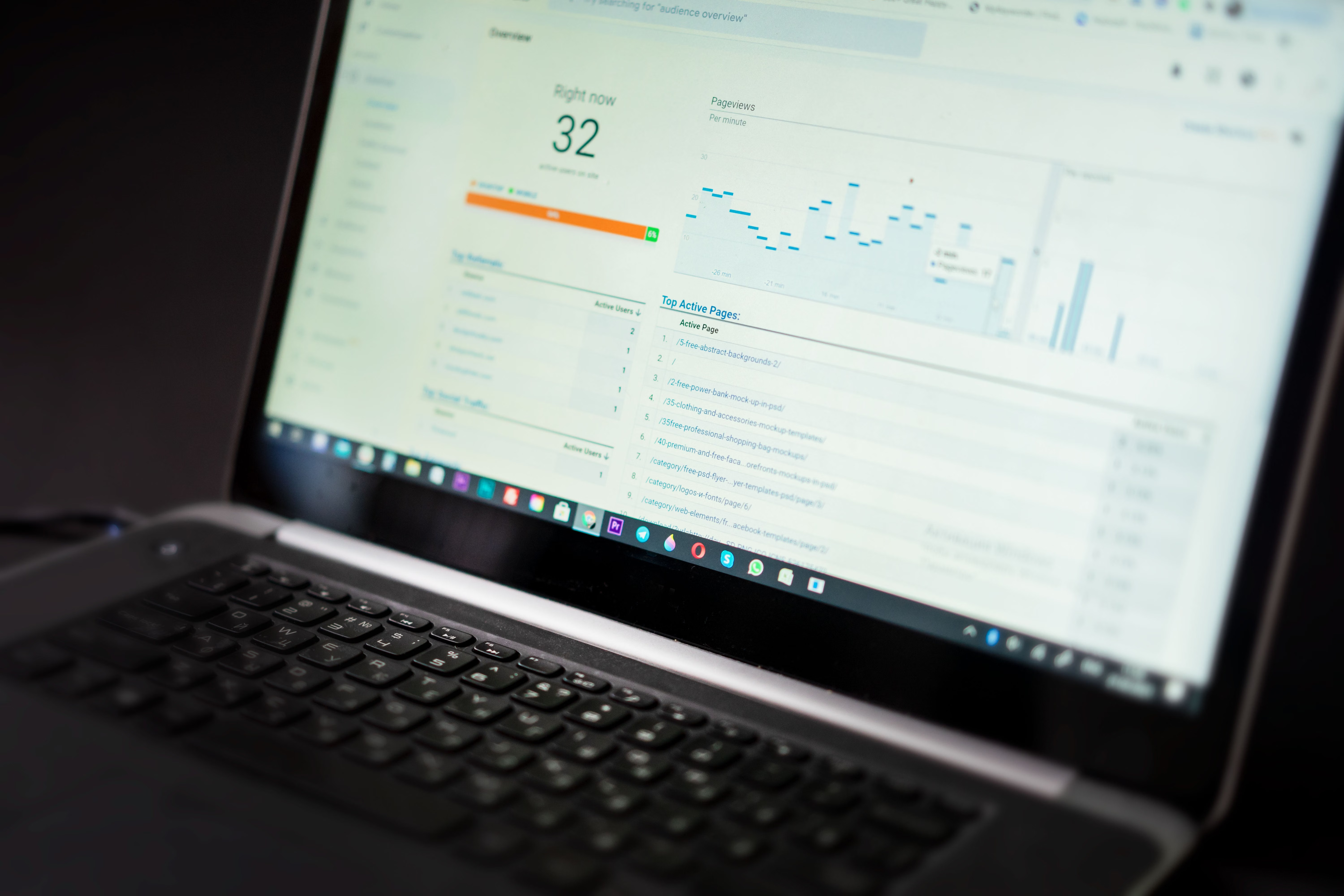
Google Search Central is where website owners, SEOs and developers look for guidance on how Google Search works, what it expects from websites, and how to improve visibility in organic results. When guidance changes, even without a dramatic announcement, it can affect how teams plan content, technical fixes and site architecture.
For SEO professionals, the key question is not just what Google says, but what those changes mean in practice. Search performance is shaped by a mix of crawlability, indexing, content quality, page experience, structured data, internal linking and authority signals. Understanding Search Central updates helps you prioritise the right work and avoid outdated tactics.
What Search Central updates usually signal
Search Central updates often reflect a clearer explanation of existing ranking and indexing systems rather than a brand-new algorithm. They may highlight how Google evaluates helpful content, crawl access, link handling, JavaScript rendering, structured data or page quality. Even when the wording is subtle, the practical message can be important.
In SEO terms, these updates often indicate where Google wants webmasters to focus. That may mean making content easier to understand, ensuring pages are technically accessible, or removing barriers that stop search engines from interpreting a site correctly. For most websites, the lesson is to align with Google’s documentation rather than chase short-term workarounds.
If you are reviewing site quality as part of a broader SEO process, a free website SEO audit can help identify technical and content issues that may limit search visibility.
Why these changes matter for rankings and visibility
Google ranking systems continue to reward pages that satisfy user intent, load reliably and provide clear value. Search Central guidance helps explain what “good” looks like from Google’s perspective. When that guidance becomes more explicit, it can influence how teams approach content SEO, local SEO, ecommerce categorisation and WordPress site management.
For example, if Google gives stronger emphasis to helpful content or crawlable links, pages with thin copy, excessive duplication or poor navigation may struggle to perform. If guidance around structured data becomes more detailed, rich results may depend more heavily on correct implementation and validation. If page experience or rendering issues are highlighted, slower or script-heavy sites may need performance work.
For ongoing benchmarking, it is sensible to compare content and technical changes against Google’s own guidance in the SEO Starter Guide.
Technical SEO: crawlability, indexing and rendering
Technical SEO remains one of the biggest areas affected by Search Central guidance. If Google clarifies how it discovers and processes pages, that can change how you manage robots rules, canonical tags, sitemaps and JavaScript. The core principle is simple: search engines need to access the right pages, understand them correctly and avoid wasting crawl resources on duplicates or blocked content.
Website owners should check whether important pages are indexable, whether internal links point to canonical URLs, and whether content depends too heavily on client-side rendering. For large ecommerce websites, this is especially important because product filters, faceted navigation and variant pages can create crawl noise. For WordPress sites, plugin conflicts, theme scripts and poorly managed archives can also create technical drag.
Search Console remains one of the most useful places to monitor these issues, especially for coverage, indexing and enhancement reports. It can show whether Google is discovering your key pages and whether it is encountering technical problems that need attention.
Content SEO, helpful information and AI search behaviour
Search Central guidance increasingly points website owners towards content that is genuinely useful, original and easy to navigate. That matters in a search landscape where AI-generated summaries, richer search features and stronger answer-style results can reduce the visibility of weak or repetitive pages.
The practical takeaway is to build content that answers a specific search intent better than competing pages. That means using clear headings, avoiding fluff, including first-hand expertise where relevant and making sure the page satisfies the user quickly. It also means refreshing outdated content where necessary rather than endlessly publishing new pages with overlapping topics.
Content teams should also think about search visibility beyond classic blue links. Visibility can now be influenced by whether a page is cited, summarised or surfaced in different search experiences. While you cannot control every format, you can improve your chances by publishing clear, well-structured and trustworthy content.
Local SEO and ecommerce implications
Local businesses and ecommerce sites often feel Search Central changes in different ways. For local SEO, clear business details, consistent location information and accurate service pages remain essential. If guidance emphasises trust, page clarity or structured data, local landing pages should reflect real-world location signals rather than generic text copied across branches.
For ecommerce SEO, product pages and category pages need special attention. Search engines need to understand pricing, stock status, shipping information and product distinctions. If Google updates its documentation around product structured data or page quality, stores should make sure that their templates support accurate, up-to-date information.
Retailers should also review how internal links support discovery. Important category pages should not be buried, and out-of-stock products should be handled in a way that protects both user experience and search equity.
Search Console, performance and WordPress checks
Search Console updates are often as valuable as ranking changes because they help website owners diagnose what Google is seeing. If performance reports, indexing tools or enhancement reports change, use them to prioritise fixes. Look for page types that are underperforming, indexed inconsistently or generating errors that affect impressions and clicks.
Website performance is another major factor. Slow pages, layout shifts and heavy scripts can harm engagement and make crawling less efficient. Tools such as PageSpeed Insights are useful for finding practical performance improvements, especially on WordPress sites where themes and plugins can add unnecessary weight.
If your site runs on WordPress, keep SEO plugins, themes and caching tools updated, but test changes carefully. A well-configured setup should make it easier to manage titles, meta descriptions, schema and indexing controls without creating conflicts or duplicate content.
What website owners should do next
The best response to Search Central guidance is a measured review of site fundamentals. Start with the pages that matter most for traffic and conversions, then work outward. Focus on crawlability, content usefulness, internal linking, performance and structured data before making smaller cosmetic changes.
Useful next steps include reviewing Search Console data, checking whether key pages are indexable, improving weak content, and auditing category or location pages for clarity. If link authority is part of your broader SEO strategy, make sure it supports strong page structure rather than replacing it. Backlink Works also publishes SEO education resources that can support broader planning, but the core priority should always be site quality and technical soundness.
Key takeaways
- Search Central updates are best treated as guidance for better SEO decisions, not shortcuts.
- Technical SEO, content quality and performance remain central to organic visibility.
- Search Console is essential for spotting indexing and enhancement issues.
- Local and ecommerce sites should review structured data, page clarity and internal links.
Conclusion
Google Search Central updates matter because they help explain how search works and what Google expects from websites. Whether the focus is crawlability, content quality, structured data, AI search behaviour or performance, the practical goal is the same: build pages that search engines can access easily and users can trust.
For SEO teams, the smartest approach is to use these updates as a checklist for ongoing improvement. Sites that stay aligned with Google’s guidance are usually better placed to adapt to ranking changes, maintain stable visibility and support long-term search growth.
Frequently Asked Questions
What is Google Search Central?
It is Google’s official resource for search documentation, guidance and technical explanations for website owners, developers and SEOs.
Do Search Central updates change rankings directly?
Not always. Some updates are clarifications, but they can still influence SEO priorities and how websites are optimised.
What should I check after a Search Central guidance change?
Review crawlability, indexing, content quality, internal links, structured data and page performance.
How can small businesses use this guidance?
They can improve key pages, fix technical issues, and make sure their content is clear, accurate and easy to find in search.
- Sponsored Ad -





