
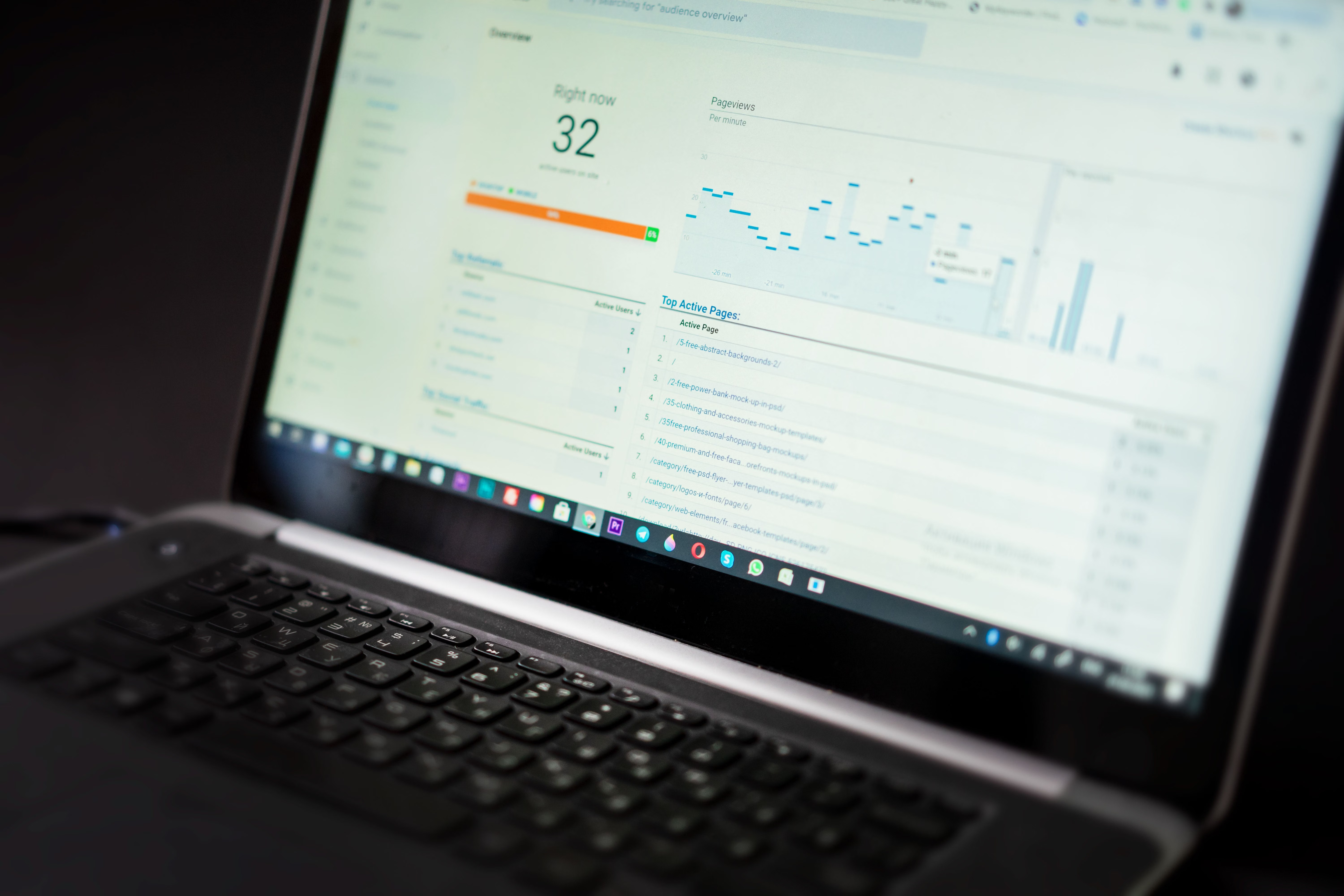
Google Search Console’s local reporting can be easy to overlook, but it matters for anyone trying to understand how location-based visibility is changing. For businesses with physical premises, service areas, or multi-location sites, local data often reveals whether pages are being surfaced for the right searches, in the right places, and on the right devices.
For marketers, the key point is not just whether a local listing appears. It is whether Search Console, Google Business Profile signals, page content, structured data, and technical SEO are working together to support visibility in local search results. That makes local updates in Search Console important for SEO analysis, reporting, and practical optimisation.
What Google Search Console local updates mean in practice
Search Console is mainly designed to show how Google sees and serves your site in search. When local performance is discussed, it usually refers to changes in reporting, indexing signals, or the way location-relevant pages are interpreted rather than a standalone “local SEO dashboard”.
For website owners, this means local visibility needs to be tracked through a combination of Search Console data, page performance, crawl status, and local landing page quality. If a page targets a city, branch, or service area, its appearance in search can depend on how clearly Google can understand the intent, relevance, and structure of that page.
Why local search visibility is becoming more complex
Local search is no longer just about matching a business name to a place. Google increasingly relies on context, entity understanding, page usefulness, mobile experience, and location relevance to decide what to show. That affects map results, local packs, and organic results that support local intent.
AI-assisted search experiences and evolving ranking systems also make query interpretation more nuanced. A search for a service near a user may return different results depending on wording, location signals, page quality, and how well the business profile aligns with the website. For SEO professionals, this means local optimisation should not be treated as a separate task from technical SEO or content strategy.
Key changes marketers should pay attention to
One important shift is that local pages are judged more like high-value landing pages. Thin location pages, duplicated city templates, and unclear service coverage can struggle to perform well if they do not add unique value. Search Console may not call this out directly, but the effects often show up in impressions, clicks, and indexing behaviour.
Another factor is crawl and index quality. If local pages are hard to discover, blocked by internal linking issues, or weakened by duplicate content, Google may not surface them consistently. Marketers should also pay attention to how often local pages appear in branded versus non-branded searches, because this can show whether Google understands the page as genuinely relevant for local intent.
Structured data matters too. Business, address, opening hours, and service information can support clearer interpretation of a page, especially for ecommerce stores with physical locations, franchises, or click-and-collect options. A useful place to review Google’s guidance is the official Google Search Central documentation, which remains the clearest reference for search best practice.
How this affects rankings, indexing, and local content quality
Local search visibility is closely tied to content quality. A strong local page should explain what the business offers, where it operates, who it serves, and why that location matters. Pages that simply swap out place names rarely provide enough value to stand out.
Indexing can also become a problem when businesses scale quickly. Multi-location brands often create many pages at once, but if those pages are too similar or poorly linked, Search Console may show uneven coverage. This can lead to some locations earning traffic while others remain almost invisible in organic results.
For ecommerce sites, local updates matter when inventory, fulfilment, or store pages are involved. A product search can have local intent if users expect collection, nearby availability, or same-day fulfilment. In those cases, local signals should be integrated into category pages, store pages, and internal linking.
What website owners should check in Search Console
Start with page indexing and performance reports. Look for location pages with low impressions, declining clicks, or inconsistent coverage. If a page is indexed but not performing, the issue may be content quality, intent mismatch, or weak internal support rather than a technical fault.
Next, review queries that bring users to local pages. Search terms can reveal whether Google understands the page as a service area page, branch page, or general informational page. If the query mix looks too broad or off-topic, the page may need clearer location signals and better on-page copy.
You should also check mobile usability and page experience. Local search often happens on mobile devices, where slow loading, cluttered layouts, and difficult navigation can reduce engagement. Tools such as PageSpeed Insights can help identify performance issues that may be affecting both user experience and search visibility.
Practical actions for local SEO teams
Improve each location page so it contains specific, useful information rather than template text. Include opening hours, service details, parking or access notes where relevant, local FAQs, and unique copy that reflects the branch or service area.
Strengthen internal linking from the homepage, service pages, and supporting content to the most important local landing pages. This helps Google discover the pages and understand their importance within the site structure. If your site has many branches or service areas, a careful backlink and page architecture strategy can support that work; Backlink Works has a useful free website SEO audit resource for checking technical and content issues.
For WordPress sites, make sure location pages are easy to manage, indexable, and not duplicated by tags, archives, or weak page builder settings. If your SEO plugin generates structured data or breadcrumbs, review those settings to ensure they support local relevance rather than add noise.
Key takeaways: improve unique local content, monitor indexing, strengthen internal links, and keep performance and structured data under review. If your site relies on local traffic, these steps are often more useful than chasing short-term ranking changes.
What to watch next in local search
Local SEO is increasingly tied to broader search systems rather than one isolated feature. That means updates in Search Console reporting, ranking systems, AI-driven search experiences, and page quality signals can all influence how local pages perform.
Marketers should focus on trends rather than isolated fluctuations. If local pages are gaining impressions but losing clicks, the issue may be snippet quality or intent mismatch. If pages are not being indexed reliably, the issue may be crawlability or duplicate content. If rankings move but conversions do not, the landing page may not be matching the local intent well enough.
The best approach is steady improvement: make pages more useful, keep technical foundations clean, and review Search Console data regularly. That gives businesses a better chance of staying visible as local search evolves.
Conclusion
Google Search Console local updates, whether they appear as reporting changes, indexing shifts, or changing visibility patterns, should be treated as a signal to review how well your local pages serve search intent. The businesses most likely to benefit are those that combine clear location content with technical discipline and a strong site structure.
For SEO teams, the main lesson is simple: local visibility depends on more than a pin on a map. It comes from content quality, crawlability, page experience, and a coherent local strategy that Search Console can help you monitor.
Frequently Asked Questions
How can Search Console help with local SEO?
It shows how local pages are performing in search, including impressions, clicks, and indexing status.
What should I check first for underperforming location pages?
Start with indexing, query relevance, internal links, and whether the page has genuinely unique local content.
Do structured data and business details matter for local visibility?
Yes, they help Google understand your business, services, and location relevance more clearly.
Can technical SEO affect local rankings?
Yes. Crawlability, page speed, mobile usability, and internal linking can all influence local search performance.
- Sponsored Ad -





