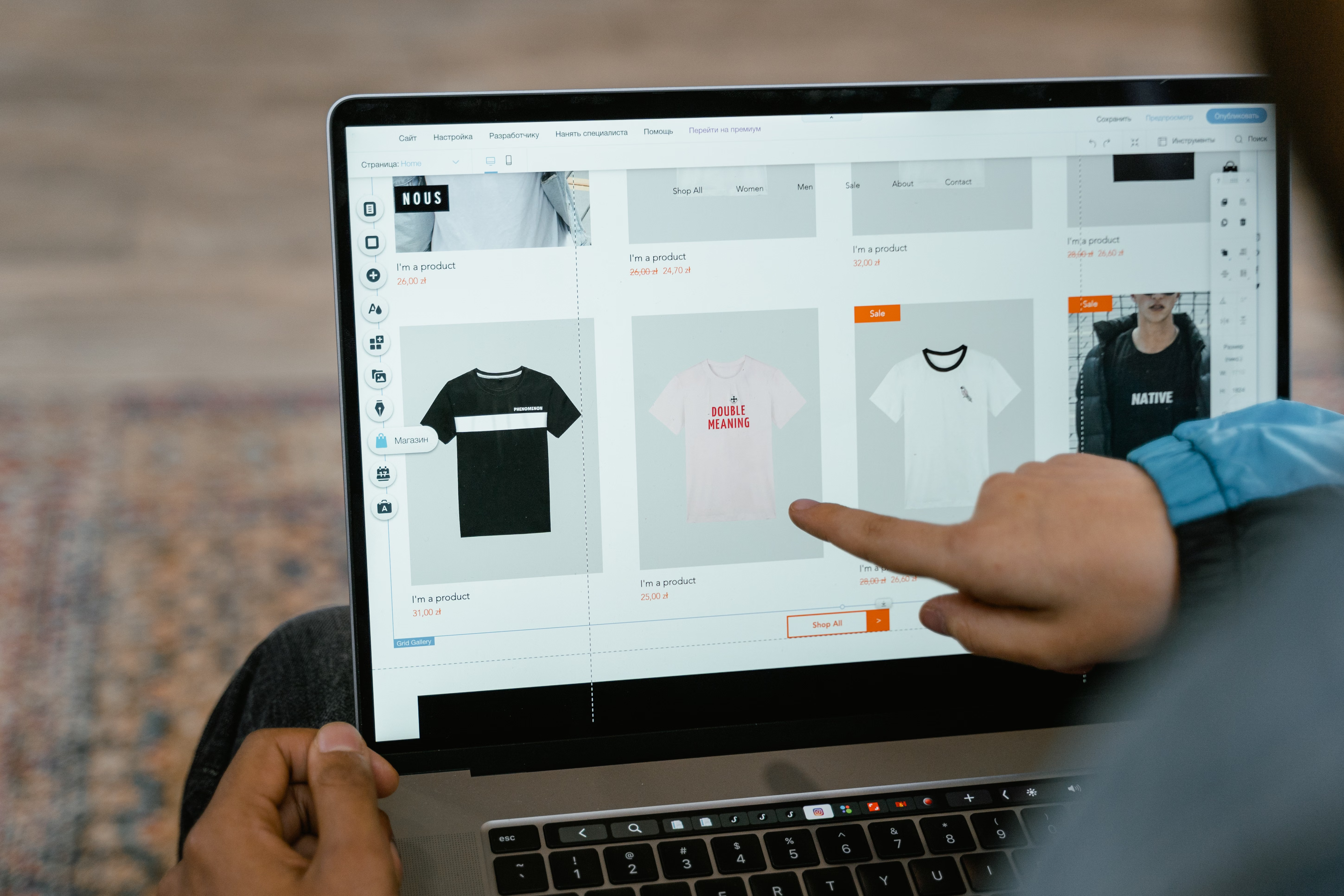
Duplicate product content is a common issue in Shopify SEO audits, especially for stores with similar variants, collection filters, tag pages, or multiple URLs leading to the same product. It can make crawling less efficient, dilute relevance signals, and create confusion for search engines trying to decide which page should rank.
The good news is that most duplicate content problems in Shopify can be identified and fixed with a clear technical process. When handled properly, you improve product page SEO, category page clarity, internal linking, and overall organic visibility without relying on risky shortcuts. Results depend on your store structure, content quality, competition, and how consistently you apply the fixes.
Why duplicate product content matters in Shopify SEO
Duplicate content does not always mean a penalty, but it can still weaken ecommerce SEO performance. If the same or very similar product copy appears across multiple URLs, search engines may split crawling and indexing signals between pages. That makes it harder for a strong product page or category page to stand out.
In Shopify stores, duplication often appears through product variants, collection paths, filtered URLs, tagged pages, or copied manufacturer descriptions. This is especially relevant for stores with many similar items, large catalogues, or faceted navigation. If search engines spend time on low-value duplicates, they may crawl fewer important pages such as best-selling products, category hubs, or content-led landing pages.
Duplicate content can also affect user experience. Shoppers may see repeated descriptions across products, which reduces trust and makes pages feel less helpful. Strong ecommerce content strategy should support discovery, clarity, and conversions, not just rankings.
Common sources of duplicate product content in Shopify
Before fixing the issue, it helps to identify where duplication comes from. In Shopify, common causes include:
- Product pages accessible through multiple collection URLs
- Variant URLs or parameter-based URLs creating near-duplicate versions
- Collection filters and sorting options generating crawlable duplicates
- Manufacturer or supplier descriptions used across many stores
- Tag pages, search pages, and internal site search results indexed by mistake
- Similar products with only colour, size, or minor feature differences
These issues are not always obvious from the front end. A technical audit should check how Google can crawl pages, which URLs are indexed, and whether canonical tags are pointing to the correct version. If you use tools such as Google Search Console, look for duplicate URL patterns, indexing anomalies, and pages that are discovered but not selected as canonical.
How to fix duplicate product content in Shopify
The first step is to decide which version of each page should be the main one. For product pages, this is usually the cleanest canonical URL. For category pages, it is the most useful collection page with the strongest search intent and internal links. Once that is clear, you can apply the right fix.
Use canonical tags correctly
Canonical tags tell search engines which URL should be treated as the primary version. Shopify usually handles canonicalisation reasonably well, but it is worth checking when variants, collections, or filter parameters create duplicates. A well-structured canonical approach helps consolidate signals without removing pages from the store.
Improve unique product descriptions
One of the most effective fixes is writing original product copy. Avoid copying supplier text where possible. Focus on specific use cases, materials, dimensions, benefits, care instructions, and buying guidance. Unique product descriptions help search engines understand relevance and give shoppers better reasons to choose one item over another.
If several products are similar, create content that distinguishes them clearly instead of repeating the same wording. This is especially important for ecommerce keyword research, because the wording should match the actual search intent behind each product and category.
Control indexed filter and tag pages
Faceted navigation is useful for shoppers, but it can create many thin or duplicate pages if not managed carefully. In most stores, filtered URLs should not compete with main collection pages unless they have a clear search purpose. Review your noindex rules, canonical settings, and internal links so that only valuable filter combinations are discoverable.
Consolidate overlapping product and category pages
If several pages target the same keyword, they may cannibalise each other. Combine weak pages where possible, or use one stronger category page supported by related products and internal links. Category page SEO works best when collection pages have clear copy, logical subcategories, and helpful product grouping.
Handle out-of-stock products carefully
Duplicate content can become more complicated when products go out of stock. Rather than deleting pages too quickly, decide whether to keep the page live, improve it with alternative suggestions, or redirect it to the closest relevant replacement. This supports ecommerce website continuity and avoids losing useful links or indexed relevance.
If you want a structured audit approach, a free website SEO audit can be a useful starting point for spotting technical and content issues that affect online store SEO.
Shopify-specific fixes versus WooCommerce considerations
Shopify and WooCommerce handle duplicate content differently, but the underlying principles are similar. In Shopify, many duplication issues come from how collections, variants, and filters generate URLs. In WooCommerce, duplication is often linked to plugins, category archives, pagination, and product attributes.
For Shopify SEO, pay close attention to collection structures, canonical tags, and indexing controls for filters. For WooCommerce SEO, review category architecture, archive pages, and plugin-generated URLs. In both cases, the goal is the same: keep crawlable pages valuable, unique, and easy to understand.
It also helps to work with clean, crawlable internal links. Google’s guidance on links that can be crawled is a useful reference when reviewing navigation, filters, and product linking patterns.
Technical checks that support better product visibility
Duplicate content is only one part of ecommerce technical SEO. If your product pages are slow, poorly structured, or awkward on mobile, fixing duplication alone will not be enough. Core Web Vitals, page speed, and mobile ecommerce SEO all affect how usable your store feels and how efficiently search engines can process it.
Use a structured audit checklist:
- Check canonical tags on product, collection, and variant URLs
- Review robots.txt and noindex settings for low-value pages
- Test key product and category pages for page speed issues
- Make sure schema markup reflects the main product details accurately
- Audit internal links so the strongest pages receive consistent support
- Review duplicate meta titles and descriptions as well as body copy
For page speed and mobile performance, tools such as PageSpeed Insights can help identify layout shifts, render delays, and other issues that may affect user experience and conversions. Faster pages do not guarantee better rankings, but they often improve usability, especially on mobile devices.
Best practices for ongoing ecommerce content strategy
Fixing duplicate product content should be part of a wider ecommerce content strategy, not a one-time task. As your catalogue grows, new duplicates can appear through seasonal products, bundles, new variants, or marketplace imports. Build processes that make uniqueness easier to maintain.
Good practice includes creating original product templates, writing category copy that supports search intent, and planning internal links between collections, guides, and related products. This can help search engines understand site hierarchy while also helping users move naturally from discovery to purchase.
At Backlink Works, this kind of audit usually fits into broader work on online store SEO, technical clean-up, and content planning. The aim is not to chase quick wins, but to improve the quality and clarity of the site over time.
Conclusion
Duplicate product content in Shopify SEO audits is best treated as a structural and content issue, not just a copy problem. By improving canonicals, writing unique product descriptions, managing filter pages, and strengthening internal linking, you can make your store easier to crawl and more useful to shoppers.
The most effective fixes depend on your platform setup, catalogue size, competition, and page quality. Focus on clear priorities: the right pages indexed, better content on high-value products and categories, and a site structure that supports organic traffic growth without creating unnecessary duplication.
Frequently Asked Questions
Why does Shopify create duplicate product content?
Shopify can create duplicate content through collections, variants, filters, and tag pages that lead to similar or repeated URLs.
Should I noindex duplicate product pages?
Only if the page has little value for search or users. In many cases, canonical tags or consolidation is a better first step.
Do unique product descriptions really help SEO?
Yes, because they make pages more specific, useful, and easier for search engines to understand. They also improve shopper confidence.
Can duplicate content affect conversions as well as SEO?
Yes. Repeated or thin content can reduce trust and make it harder for shoppers to compare products clearly.
- Sponsored Ad -