
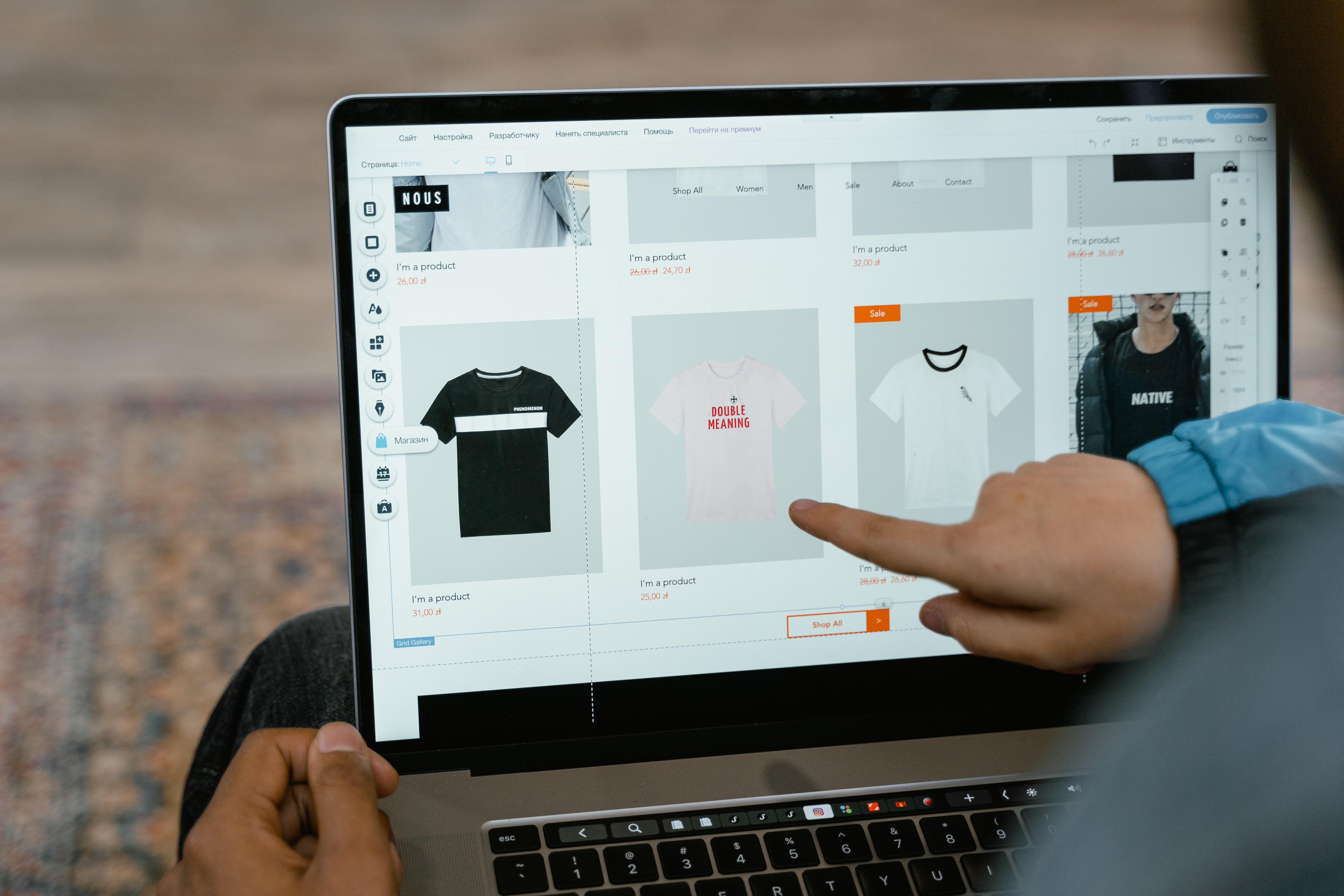
Infinite scroll can create a smoother browsing experience for ecommerce stores, especially on mobile. Instead of clicking through page numbers, shoppers keep loading more products as they scroll. That can help product discovery and reduce friction, but it can also create serious SEO problems if it is not implemented carefully.
The main issue is simple: search engines do not browse pages the same way people do. If your category pages, filters, and products depend too heavily on endless scrolling, you may make it harder for search engines to crawl, index, and understand your store. For ecommerce SEO, that can affect category page visibility, product discovery, internal linking, and long-term organic traffic growth.
Why infinite scroll can be risky for ecommerce SEO
Infinite scroll is not automatically bad for SEO. The problem is how it is built. If additional products load only through JavaScript and do not have crawlable URLs, search engines may miss important pages. That means some products may never be discovered properly, and category pages may not pass enough internal linking signals.
This matters for online store SEO because ecommerce sites depend on a clear structure. Product pages need visibility, category pages need to be crawlable, and search engines need a logical path through your site. If the page keeps changing without distinct URLs or accessible pagination, it becomes harder to manage indexing and content relevance.
Google’s guidance on crawlable links is a useful reference when planning site architecture and internal linking: Google Search Central’s advice on crawlable links.
Mistake 1: hiding products behind JavaScript-only loading
A common mistake is letting the page load more products visually while search engines can only see the first batch. If the extra items are fetched through scripts without accessible URLs, they may not be crawled reliably. This is a particular concern for Shopify SEO and WooCommerce SEO when themes or plugins add fancy scrolling without considering indexability.
The fix is to ensure every important product and category state has a crawlable URL. In some cases, hybrid implementations work best: infinite scroll for users, with paginated URLs in the background for search engines and crawlers. That way, product page SEO and category page SEO are supported without sacrificing user experience.
Best practice
Make sure category pages can still be reached through standard links and that search engines can access all important products without needing to trigger a scroll event.
Mistake 2: weakening internal linking and category structure
Internal linking is one of the most important signals in ecommerce technical SEO. It helps search engines understand which pages matter most and how your catalogue is organised. With infinite scroll, it is easy for product links to become buried in a constantly changing feed, especially if the page does not expose stable links or category paths.
That can reduce the SEO value of your category pages and make it harder for users to move between related products. For ecommerce content strategy, this is also a missed opportunity. Category descriptions, collection introductions, and featured subcategory links can support relevance and guide shoppers to deeper pages.
If you are reviewing your store’s authority and link structure, a site audit can help identify crawl issues and internal linking gaps. Backlink Works offers a free SEO audit resource that can be useful as a starting point: free website SEO audit.
Best practice
Use clear category hierarchies, prominent links to important subcategories, and consistent anchor text that reflects real product intent rather than generic labels.
Mistake 3: creating duplicate or thin category pages
Infinite scroll often overlaps with faceted navigation, filtered collections, and sort options. If each combination creates a near-identical page, you can end up with duplicate product content and thin indexable pages. This is especially common in large ecommerce catalogues where filters for size, colour, brand, or price create many URL variants.
Not every filtered page should be indexed. In fact, many should be kept out of search results to avoid diluting relevance. The challenge is deciding which pages deserve visibility. Core categories, high-intent subcategories, and commercially valuable filters may be worth indexing, while low-value combinations usually are not.
Good ecommerce keyword research helps here. It can show whether shoppers search for a broad category, a specific product type, or a filtered variation. That should influence which pages you optimise and index, rather than relying on the scroll experience alone.
Mistake 4: ignoring mobile experience and Core Web Vitals
Infinite scroll is often used to improve mobile ecommerce SEO because it feels faster than tapping through pages. But if it is not well built, it can hurt website speed, stability, and engagement. Heavy scripts, delayed content loading, and layout shifts can affect Core Web Vitals and make browsing feel frustrating.
On mobile, the experience matters even more. Users may lose their place as content loads, the back button may behave unpredictably, or the page may become slow on weaker connections. Those issues can affect conversions as well as organic traffic growth because people are less likely to continue browsing if the page feels unstable.
It is worth testing your category pages with a performance tool such as PageSpeed Insights to check how scrolling behaviour affects loading and responsiveness.
Best practice
Prioritise fast loading, stable layouts, and smooth browsing. A good mobile experience should support both usability and discoverability.
Mistake 5: overlooking product visibility and out-of-stock handling
With infinite scroll, shoppers may never reach certain products if loading stops early or if the page becomes overloaded. That is a problem for smaller catalogues where every product page matters. It is also risky when products go out of stock, because those pages still need a strategy.
Out-of-stock product SEO should be handled carefully. If a product is temporarily unavailable, keep the page live where appropriate and explain alternatives, restock timing, or similar items. If a product is permanently removed, redirect it to the nearest relevant category or replacement page. Infinite scroll should not hide these decisions or make them harder to manage.
Product descriptions also matter here. Clear descriptions, accurate attributes, and strong supporting content help search engines and shoppers understand the offer. That is useful whether your store runs on Shopify, WooCommerce, or a custom platform.
How to use infinite scroll without hurting SEO
The goal is not to remove infinite scroll from every ecommerce site. The goal is to implement it in a way that supports crawlability, indexing, and usability. A balanced setup usually includes crawlable paginated URLs, clear category pages, accessible links to products, and structured data where relevant.
Schema markup can also help search engines interpret product information more clearly. Product, Offer, Review, and AggregateRating schema should be accurate and visible on the page. Infinite scroll should not interfere with that markup or make it impossible to associate key content with the right URL.
For stores building broader authority and search visibility, Backlink Works also covers technical and content-led SEO topics that complement ecommerce optimisation, including its backlink building guide. Link building will not fix poor site structure, but it can support stronger category and product visibility when the technical foundation is sound.
Conclusion
Infinite scroll can improve browsing, especially on mobile, but it should never replace a clear SEO-friendly site structure. Ecommerce stores need crawlable category pages, indexable product URLs, sensible internal linking, and careful handling of filters, schema, and out-of-stock pages. Without those foundations, a smooth user interface can still leave search engines struggling to understand your store.
The best approach is to treat infinite scroll as a user experience feature, not a substitute for technical SEO. Test how your pages load, check how search engines reach your products, and review whether your category structure still supports discovery. With the right setup, you can improve browsing without sacrificing organic visibility.
Frequently Asked Questions
Is infinite scroll bad for ecommerce SEO?
Not by itself. It becomes a problem when products and category pages are not crawlable, indexable, or internally linked in a clear way.
Should Shopify stores use infinite scroll?
They can, but only if the theme preserves crawlable URLs, accessible category structure, and good mobile performance.
How does infinite scroll affect product page SEO?
If product links are hidden or difficult for crawlers to reach, some product pages may receive less visibility and weaker internal linking support.
What is the safest way to combine infinite scroll and SEO?
Use infinite scroll for users, but keep crawlable paginated URLs, strong category architecture, and clear links to important products.
- Sponsored Ad -





