
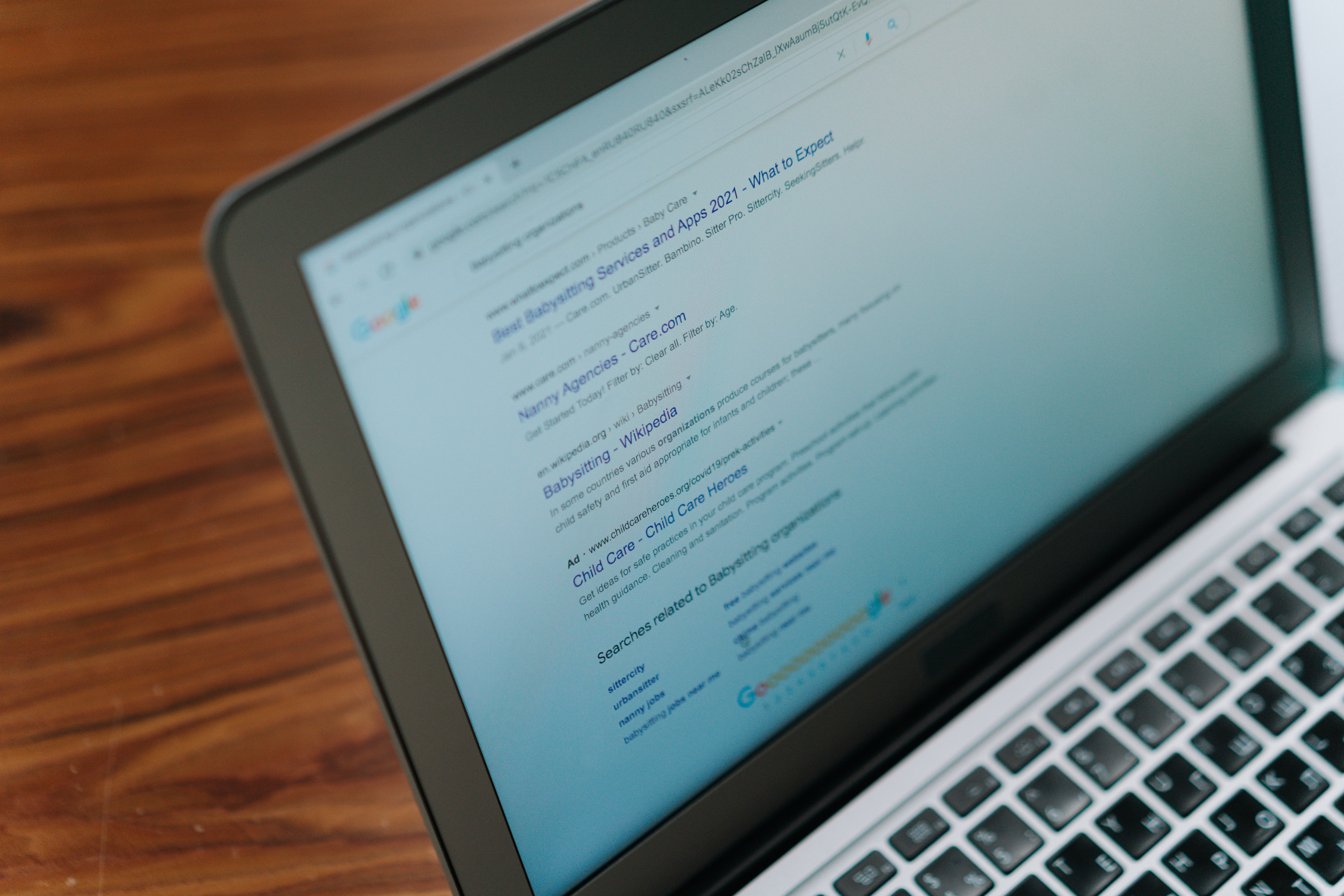
Korean link building can support safer Google SEO growth when it is approached with relevance, quality, and patience. For website owners, bloggers, agencies, and businesses targeting Korean audiences or Korean-language search visibility, the goal is not simply to collect backlinks, but to earn and place links that look natural, useful, and trustworthy.
In practice, the safest results usually come from content-led outreach, local relevance, strong anchor text discipline, and careful backlink checking. If you want to understand the wider process behind this approach, the backlink building guide is a useful starting point for learning how link acquisition fits into long-term SEO.
What Korean Link Building Means
Korean link building refers to earning backlinks from Korean websites, Korean-language publications, local directories, industry blogs, community resources, and relevant business pages. It may also include links from globally relevant sites that have a clear Korean audience or strong topical connection to your niche.
The main advantage is relevance. If your website serves Korean users, or if you want stronger visibility for Korean queries, links from sources that reflect that audience can help search engines better understand your site’s context. However, location alone is not enough. A weak link from an unrelated site is still weak, even if it is in Korean.
A safe strategy combines topical relevance, editorial placement, and real usefulness. That means links should appear where a genuine reader would expect them, not in obvious spam placements or low-value pages designed only to pass authority.
Why Link Quality Matters More Than Volume
Google evaluates backlinks as signals of trust and relevance, but not all backlinks carry the same value. A small number of strong, relevant links is usually more useful than a large batch of poor links. This is especially important in Korean SEO, where natural language, local context, and editorial quality can vary widely from site to site.
When assessing quality, consider these factors:
- Topical relevance to your page or business
- Real editorial placement within useful content
- Natural anchor text that matches the surrounding sentence
- Healthy domain reputation and real traffic signals
- Reasonable outbound link patterns without obvious manipulation
If you are checking authority and trust signals while researching prospects, tools such as Ahrefs can help you review referring domains, anchor text patterns, and site quality more effectively.
Safe Korean Link Building Strategies
The safest Korean link building strategies are based on real value. Instead of chasing shortcuts, focus on methods that create a reason for another site to reference you. This keeps your backlink profile more natural and reduces risk.
Earn links through useful content
Create content that answers practical questions for Korean readers, such as local industry guides, how-to articles, checklists, glossaries, or comparison pages. If your content genuinely helps users, it is easier for bloggers, publishers, and communities to reference it naturally.
Use local outreach carefully
Reach out to Korean bloggers, niche publications, and business communities with a clear reason to link. Personalised outreach works better than mass emailing because it shows that you understand the site, audience, and context.
Build citations and profile links sparingly
Business listings, professional profiles, and local citations can support brand discovery, but they should not dominate your backlink profile. Use them as part of a broader strategy, not as the whole strategy.
Support link discovery and indexing
Even good links may take time to be crawled and counted. If you want to understand indexation support and how link discovery works, the page on backlink indexing is relevant for learning how search engines may find and process new backlinks over time.
For a structured view of safe creation methods, Backlink Works also offers practical learning material through its backlink building process resource, which can help beginners understand how links are typically earned and checked.
Anchor Text and Dofollow Balance
Anchor text matters because it helps search engines interpret what a page is about. In Korean link building, the safest anchor text is usually descriptive but not over-optimised. Exact-match keyword anchors used too often can make a backlink profile look unnatural.
A balanced profile normally includes a mix of:
- Branded anchors
- URL or naked links
- Natural descriptive phrases
- Occasional partial-match anchors where context fits
Dofollow links can pass SEO value, while nofollow links may still help with discovery, referral traffic, and brand visibility. A natural backlink profile often includes both. The key is not to chase one type exclusively, but to earn links that make sense in the real world.
Practical Checklist
Before placing or pursuing a Korean backlink, use this simple checklist to judge whether it is worth your effort.
- Is the linking site relevant to your niche or audience?
- Does the content around the link add real value?
- Does the anchor text sound natural in the sentence?
- Would a genuine reader click the link?
- Does the domain look active and credible?
- Is the link part of a real article, resource page, or useful mention?
- Will the link support long-term visibility rather than short-term manipulation?
If you need help reviewing whether your website is ready for safer off-page SEO, a free website SEO audit can be a sensible first step before planning larger link campaigns.
Common Mistakes to Avoid
Many backlink problems come from trying to move too fast. Korean link building is no different. The most common mistakes usually involve low-quality placements, poor relevance, and unnatural patterns.
- Buying links from irrelevant sites purely for volume
- Using the same anchor text too often
- Ignoring whether the page is indexed or crawled properly
- Chasing links from sites with no real audience
- Mixing SEO with spammy automation or hidden placements
- Assuming one backlink will solve ranking problems on its own
It is also wise to avoid any supplier or tactic that cannot clearly explain how the links are placed. If you are learning what safe acquisition should look like, Google-safe backlinks is a useful reference for understanding the difference between cautious link building and risky shortcuts.
Best Practices for Safe Growth
Safe growth in Korean SEO comes from consistency, relevance, and restraint. The objective is to build a backlink profile that looks like it developed naturally because your content and brand deserved attention.
Follow these best practices:
- Match your links to pages that deserve references
- Keep the link profile varied across domains and formats
- Prioritise Korean-language relevance where appropriate
- Use outreach that is personal and selective
- Monitor new links for indexing, quality, and anchor distribution
- Revisit older content so it stays link-worthy
For marketers who want a broader educational view, Backlink Works can serve as a practical backlink building resource when comparing safe link ideas, workflow steps, and educational materials.
Conclusion
Korean link building strategies work best when they are built around trust, relevance, and long-term usefulness. Focus on links that make sense to real readers, keep anchor text natural, and pay attention to whether the backlink profile looks healthy rather than aggressive. This approach is more sustainable and far safer for Google SEO growth.
If you stay disciplined and avoid spammy shortcuts, Korean backlinks can support stronger organic visibility, better brand recognition, and more credible search signals over time. The aim is not to force rankings, but to earn them through quality and consistency.
Frequently Asked Questions
What makes a Korean backlink safe for SEO?
A safe Korean backlink comes from a relevant, credible site and appears naturally within useful content. It should fit the topic, use sensible anchor text, and come from a page that real readers would find valuable. Safety is about editorial quality, not just language or location.
Do Korean backlinks need to be dofollow to help?
Not always. Dofollow links can pass stronger SEO signals, but nofollow links still have value for visibility, discovery, and referral traffic. A healthy backlink profile usually includes a mix of both. What matters most is relevance, trust, and natural placement.
How long does it take for backlinks to support rankings?
There is no fixed timeline. Search engines may need time to crawl, index, and evaluate the link and the page it points to. Results also depend on your content quality, competition, and the strength of your overall SEO. Backlinks are one part of a wider process.
Should beginners buy backlinks for Korean SEO?
Beginners should be cautious and learn the basics first. If buying links is considered at all, the focus should remain on relevance, transparency, and safety. Avoid mass packages, hidden placements, and unrelated sites. Educational resources such as the link building FAQ can help clarify common concerns.
- Sponsored Ad -





