
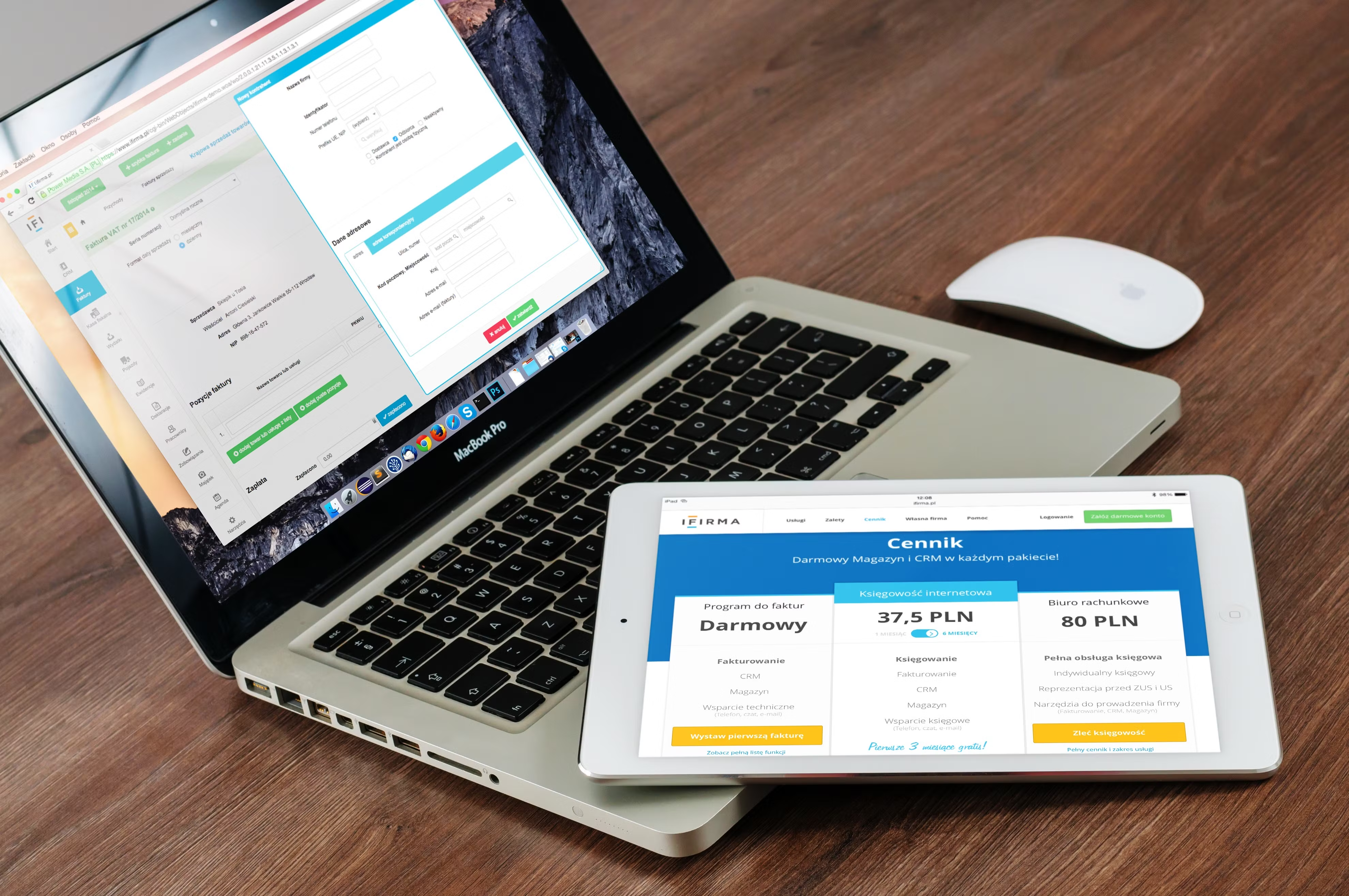
SaaS website design is about more than looking polished. For software businesses, the website needs to explain the product clearly, help people compare options quickly, and make it easy to take the next step. Good design supports search visibility, user trust, and conversion performance at the same time.
When the structure, layout, speed, and content work together, a SaaS site can serve both people and search engines well. That means better crawlability, stronger mobile usability, clearer page journeys, and a smoother experience from homepage to pricing, feature, and contact pages.
What SaaS website design should achieve
A SaaS website has a practical job: explain what the product does, who it is for, and why it is worth exploring further. Visitors often arrive with different levels of intent. Some are researching broadly, while others are comparing features, pricing, or integrations. The design should support all of these journeys without confusion.
For SEO, that means building a site that search engines can crawl and understand easily. For UX, it means reducing friction and making information easy to scan. For conversions, it means clear calls to action, strong page hierarchy, and enough trust signals to help people move forward.
If you are reviewing a SaaS site from the ground up, a free website SEO audit can help you spot gaps in structure, performance, and content clarity before redesign decisions are made.
Build a structure that supports SEO and user journeys
Website structure is one of the most important design decisions you can make. A SaaS site should usually have a clear hierarchy such as homepage, product or features pages, use cases, pricing, integrations, resources, and contact or demo pages. This helps users find answers quickly and helps search engines understand how the site is organised.
Keep navigation simple and predictable. Avoid packing too many items into the main menu, especially if some pages are only loosely connected to the product. Use internal links to guide visitors from broad pages to more specific ones, such as from a feature overview to a related use case or product page. This supports discovery and gives each page a stronger purpose.
For content layout, use headings, short sections, and visual spacing to make pages easier to scan. SaaS buyers rarely read every word immediately. They skim first, then go deeper if the page is useful. Clear structure helps both behaviour and search performance.
Design pages around intent
Different page types should serve different goals. A homepage should explain the offer quickly. A pricing page should remove uncertainty. A product page should show how the software works. A service or enterprise page may need more detail, reassurance, and proof. When each page matches its intent, the whole site becomes easier to use and easier to optimise.
Make mobile-first and responsive design a priority
Most SaaS visitors will check the site on more than one device, so responsive web design is essential. A layout that works on desktop but breaks down on mobile can damage both usability and search performance. Google also evaluates mobile usability, so a mobile-first approach is a practical SEO choice as well as a UX one.
Start by designing for smaller screens. Make sure text is readable without zooming, tap targets are large enough, and sections stack logically. Avoid layouts that rely too heavily on hover states, sidebars, or dense multi-column blocks that become awkward on mobile. Keep forms short and easy to complete, especially on demo or trial sign-up pages.
Mobile-first design also affects conversions. If a pricing table is hard to compare or a button disappears below a crowded fold, visitors may leave before they understand the offer. Good mobile design makes the next step obvious and easy.
Improve speed, Core Web Vitals, and technical usability
Website performance affects both experience and SEO. Slow pages can frustrate users, especially on product-heavy SaaS sites with animations, large images, video backgrounds, or multiple scripts. Core Web Vitals are useful indicators because they reflect loading, responsiveness, and visual stability.
Design choices can improve speed without stripping the site of personality. Use compressed images, lightweight animations, and fewer unnecessary scripts. Avoid overcrowded hero sections that load multiple large assets at once. Keep fonts sensible, and test how each element behaves on slower connections.
For developers and marketers, performance tools such as PageSpeed Insights can help identify whether layout, media, or code issues are affecting user experience. If your SaaS site is built on WordPress, choose a well-maintained theme and keep plugins focused on function rather than visual clutter. A clean build often performs better than a feature-heavy one.
Use UX and UI to clarify the offer and build trust
UX is about how the site works; UI is about how it looks and feels. For SaaS websites, both should support clarity. Visitors should understand the product value proposition within a few seconds, and the design should guide them towards the most relevant next action.
Keep messaging consistent across the site. If the homepage promises simplicity, the product and pricing pages should reinforce that message rather than introduce a different tone or structure. Use buttons consistently, label them clearly, and avoid vague phrases such as “Submit” when “Book a demo” or “Start free trial” is more helpful.
Trust signals also matter. These may include customer logos, security information, support details, transparent pricing, testimonials from real customers, and links to documentation or help content. The aim is not to overstate results, but to reduce uncertainty. Conversion results still depend on traffic quality, offer relevance, page clarity, and testing.
Keep forms and calls to action simple
Long forms can reduce sign-ups if they ask for too much too soon. Ask only for what is necessary at each stage. For example, a demo request may need a name, work email, and company name. A trial form may need even less. Test form length carefully rather than assuming more fields will improve lead quality.
Apply best practices to ecommerce, product, and service pages
SaaS websites often combine several page types. Some have ecommerce-style checkout flows, while others rely on product pages or service pages to support lead generation. The principles are similar: make the page easy to understand, easy to scan, and easy to act on.
Product pages should explain features, benefits, use cases, and integrations without overwhelming the reader. Use concise sections, visual examples, and comparisons where appropriate. If pricing is available, present it clearly and explain what is included. If the product is complex, break information into digestible blocks rather than one long wall of text.
Service pages and landing pages should focus on one goal at a time. Avoid extra navigation that distracts from the main action if the page is designed for a specific campaign or audience segment. Landing pages work best when the offer, copy, and layout all support one clear next step.
For site owners planning broader growth work, Backlink Works offers educational resources on website visibility and structure, but the focus should always remain on practical improvements rather than shortcuts.
Common mistakes to avoid
One common mistake is designing for aesthetics before clarity. A visually striking homepage is not enough if visitors cannot quickly understand what the software does. Another issue is hiding important pages too deep in navigation, which makes both users and search engines work harder.
Other mistakes include slow-loading media, overcrowded layouts, vague calls to action, poor mobile spacing, and using different styles across similar pages. It is also a mistake to treat design as separate from SEO. Content structure, internal linking, accessibility, and performance are all part of website design.
If you want to improve site architecture over time, it can help to review how content is connected. A useful starting point is understanding the backlink building process, because strong internal and external linking habits often begin with well-organised content and clear page relationships.
Conclusion
Effective SaaS website design brings together SEO, UX, mobile usability, speed, and conversion strategy. The goal is not just to create a good-looking site, but to build a website that helps visitors understand the product, trust the brand, and take meaningful action.
When you focus on structure, responsive design, page speed, content layout, and user intent, you create a stronger foundation for long-term growth. Small improvements to navigation, page hierarchy, and clarity can make a noticeable difference to how the site performs for both users and search engines.
Frequently Asked Questions
What makes a SaaS website SEO-friendly?
An SEO-friendly SaaS site is easy to crawl, mobile-friendly, fast, well structured, and supported by clear content and internal linking.
Why is mobile-first design important for SaaS websites?
Mobile-first design helps pages work well on smaller screens, which improves usability and supports search visibility and engagement.
How can website design improve SaaS conversions?
Clear layouts, simple calls to action, strong trust signals, and focused landing pages can help visitors understand the offer and take the next step.
Should SaaS websites use WordPress?
WordPress can work well for SaaS websites if the theme, plugins, and content structure are chosen carefully for speed, flexibility, and maintainability.
- Sponsored Ad -





