
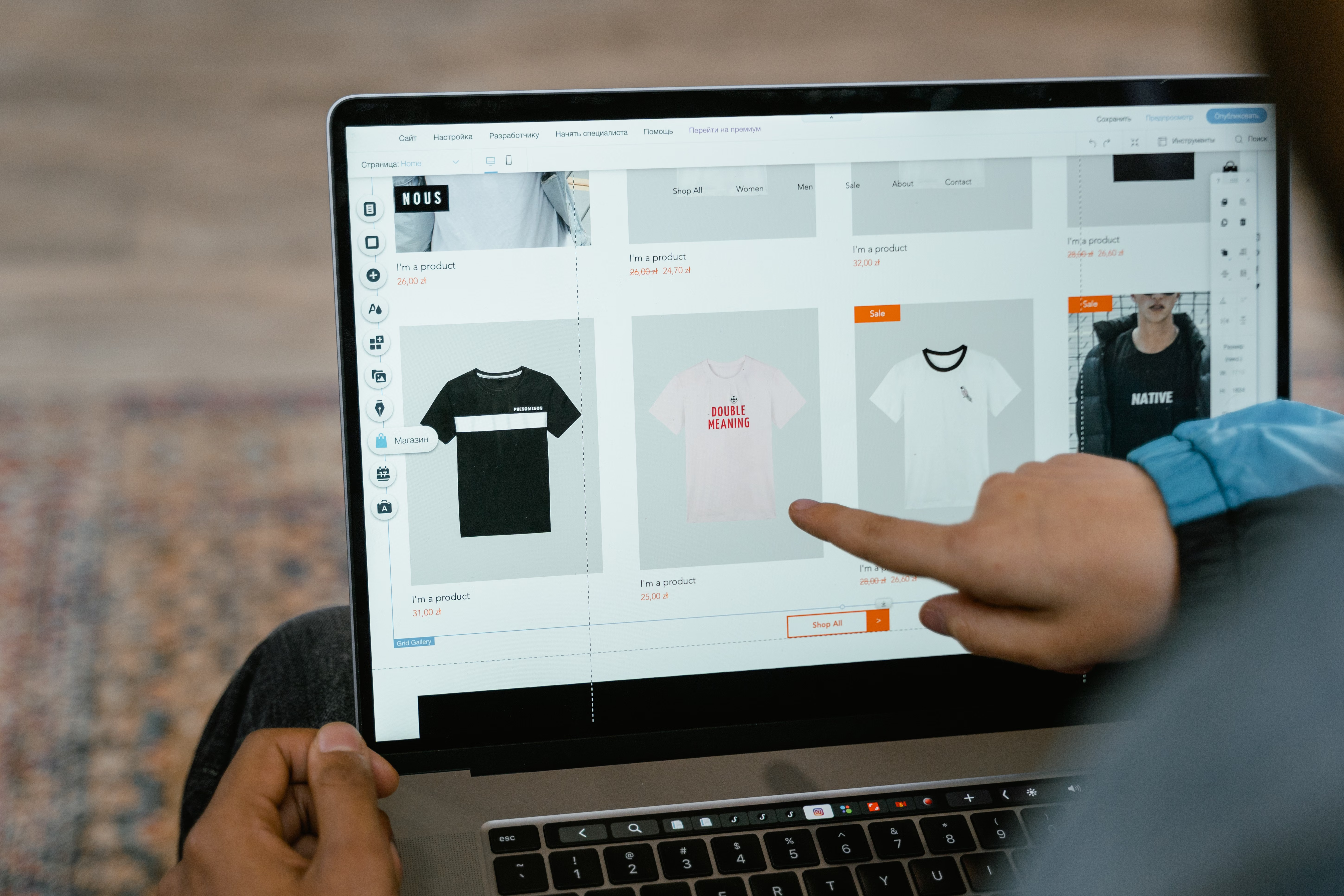
Shopify category pages do more than organise products. They help search engines understand your store structure, guide shoppers towards relevant collections, and support organic traffic growth across your ecommerce site. A strong internal linking setup can make category pages easier to crawl, more useful to visitors, and better connected to important product and content pages.
If you manage a Shopify store, an internal linking checklist is one of the most practical ways to improve category page SEO without relying on risky tactics. The aim is simple: help users find the right products faster and help search engines discover the pages that matter most. Results depend on site quality, content depth, competition, technical setup, and ongoing optimisation.
Why internal linking matters for Shopify category page SEO
Internal links pass context between pages. For ecommerce sites, that context helps search engines see which collection pages are central, which products belong together, and how your store is structured. This is especially important when you have a large catalogue, seasonal ranges, filters, or multiple product variants.
Category pages often target broader search terms than individual product pages. They can capture demand at the research and comparison stage, while product pages support more specific intent. Linking between them gives users a clear path through the buying journey and supports ecommerce user experience.
Internal linking also helps with crawlability and indexing. If a category page is buried too deeply in the site, or only accessible through filters, it may be harder for search engines to find and prioritise. A sensible linking structure helps reduce orphan pages and strengthens topical relevance across your store.
Start with a clear category structure
Before you add links, make sure your category hierarchy makes sense. Shopify stores often perform better when collections are grouped around how customers search, not just how the business organises inventory internally. That usually means clear parent categories, logical subcategories, and descriptive names.
For example, a clothing store might use a main category such as Women’s Jackets, with supporting collections like Waterproof Jackets or Puffer Jackets. Those related collections should link to each other where it improves navigation and relevance, rather than forcing users through unrelated paths.
Good structure also supports ecommerce keyword research. If a collection targets a valuable head term, supporting links from related content and product pages can reinforce its importance. This can be useful for Shopify SEO and WooCommerce SEO alike, because the principle is the same: organise pages around search intent and shopper behaviour.
Checklist for internal links on collection pages
Use the following checklist when reviewing Shopify category pages:
- Link to the most relevant parent and child collections.
- Use descriptive anchor text that matches the destination page theme.
- Link from category descriptions to useful buying guides, sizing pages, or comparison content where relevant.
- Add links from related products back to their main collection page.
- Include links to best-selling or priority collections in your main navigation and footer where appropriate.
- Check that filters and faceted navigation do not create unnecessary duplicate paths.
- Avoid repeating the same links across every page if they do not add value.
Anchor text should be natural and specific. For example, “waterproof women’s jackets” is clearer than “click here”. The goal is to help both users and search engines understand page relevance without over-optimising.
If you want a broader technical review of your site structure, a free website SEO audit can help identify internal linking gaps alongside other ecommerce SEO issues.
Link category pages to products, content, and supporting pages
A category page should not exist in isolation. It should connect to product pages, buying guides, FAQs, shipping information, and other support content that helps shoppers make decisions. This is useful for ecommerce content strategy because it gives search engines more signals about topic depth and page purpose.
Category pages can link to a short intro paragraph, relevant sub-collections, and editorial content such as “How to choose the right running shoes” or “How to pick the correct mattress size”. These links help with product discovery and can improve trust by answering common questions before purchase.
Product pages should also link back to the main category. This creates a bidirectional structure that strengthens page relationships and reduces the chance of isolated product URLs. It also helps users move from specific product detail to wider browsing when they want to compare options.
Handle faceted navigation and duplicate content carefully
Faceted navigation is often necessary for ecommerce websites, but it can create SEO problems if handled badly. Filters for size, colour, price, brand, or material may generate many URLs that are very similar. That can dilute internal link equity and produce duplicate or thin pages.
For Shopify stores, the main task is deciding which filtered pages should be indexable and which should stay out of search results. Not every filter combination needs to rank. In many cases, the best approach is to keep core collection pages indexable, while using technical controls and sensible linking to limit duplication.
This is also relevant to duplicate product content. If multiple product variants or collection paths create near-identical pages, internal links should point users and crawlers towards the preferred version. Use canonical thinking, clear taxonomy, and consistent linking to support ecommerce technical SEO.
For official guidance on crawlable links and search-friendly site structure, Google’s documentation on crawlable links is a useful reference.
Consider page speed, mobile usability, and Core Web Vitals
Internal linking can affect user experience, especially on mobile. Overloaded menus, too many links above the fold, and cluttered collection pages can make browsing harder. In ecommerce, that matters because shoppers often move quickly between categories, filters, and product pages.
Shopify category pages should stay light, fast, and easy to use. If internal links are buried in heavy scripts or hidden in poor mobile layouts, they may be less useful for users and crawlers. That can also affect Core Web Vitals indirectly by making the page feel slower or harder to interact with.
It is worth checking page speed regularly using tools such as PageSpeed Insights. Speed alone will not drive rankings, but it supports better browsing, stronger engagement, and more stable ecommerce conversions when combined with relevant content and a clean linking structure.
Practical best practices for Shopify store owners
A useful internal linking strategy should be deliberate, not random. Review your top category pages and ask whether each one has enough links from relevant places across the site. If a page matters commercially and targets a valuable keyword, it should be easy to reach in a few clicks.
Use a mix of navigation links, contextual links in category copy, product cross-links, and supporting editorial content. Keep the structure intuitive for shoppers first, then make sure it supports search engines. This is especially important for stores trying to improve organic traffic without relying on paid channels.
Backlink Works publishes SEO education resources that can help store owners understand broader site architecture and authority-building. For example, the backlink building process guide is useful if you are aligning internal linking with wider off-page SEO work.
Also remember that internal linking is only one part of ecommerce SEO. Product descriptions, schema markup, category copy, website speed, mobile layout, and trust signals all influence performance. For stores with out-of-stock product SEO challenges, linking decisions should also help users find alternatives or the main category rather than dead ends.
Conclusion
A Shopify internal linking checklist for category page SEO should support both search visibility and shopper experience. The best setups make category pages easy to crawl, help product pages gain relevance, and guide users through a sensible buying path.
Focus on clear category hierarchy, useful contextual links, careful handling of faceted navigation, and clean mobile-friendly layouts. Over time, these improvements can support stronger organic visibility, better on-site discovery, and more consistent ecommerce growth. As with all SEO, results depend on quality execution, competition, site health, and ongoing testing.
Frequently Asked Questions
How many internal links should a Shopify category page have?
There is no fixed number. Use enough links to help users and search engines understand the page, but avoid clutter. Relevance matters more than volume.
Should category pages link to product pages?
Yes. Linking to relevant product pages helps users browse efficiently and strengthens the relationship between collections and individual items.
Can internal links help with duplicate category content?
They can help clarify which page should be treated as the main version, but they should be combined with proper technical controls such as canonicals and indexation management.
Do internal links improve ecommerce conversions?
They can support conversions by improving product discovery and reducing friction, but results depend on traffic quality, pricing, trust signals, page speed, and checkout experience.
- Sponsored Ad -





