
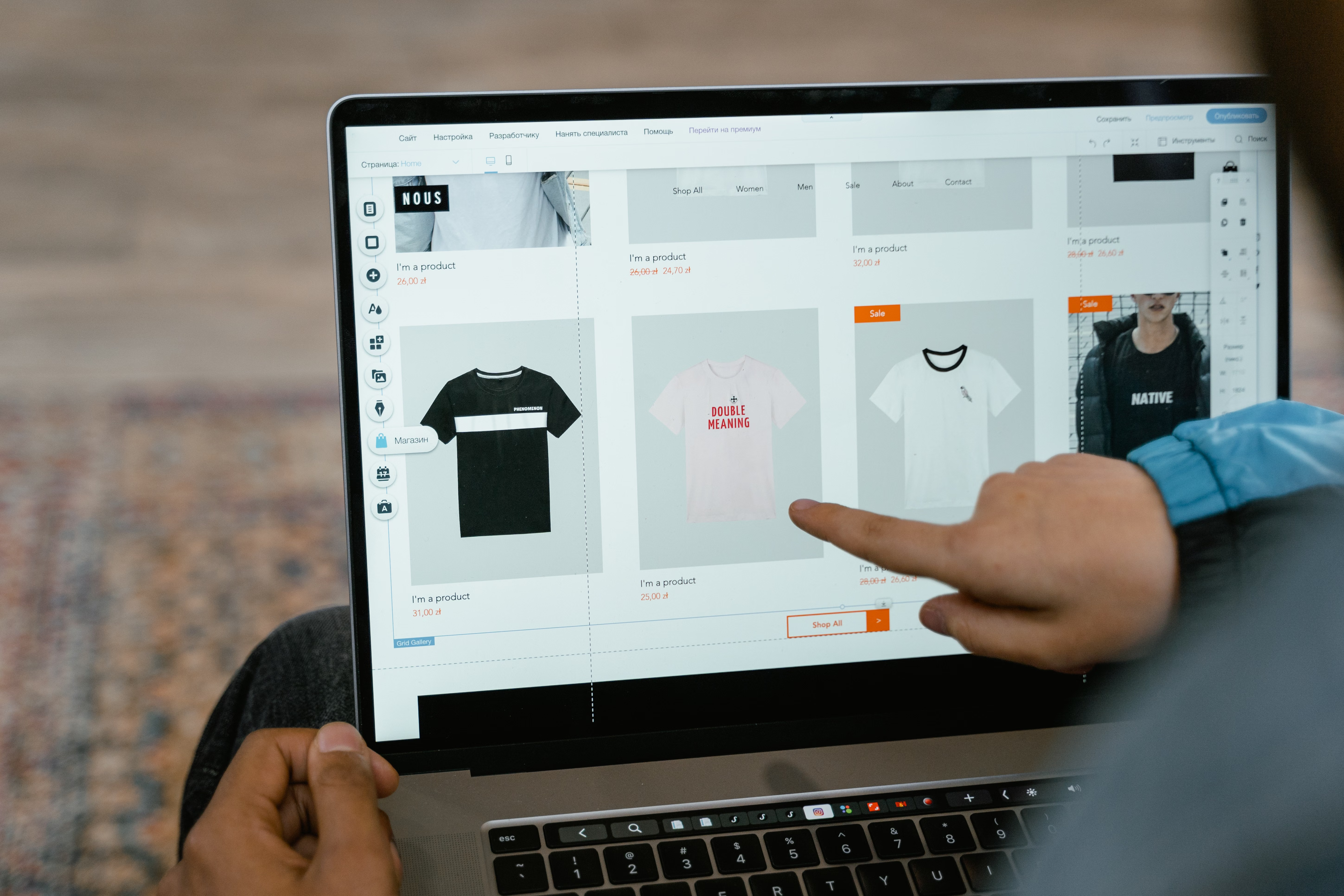
Page indexing is one of the most important foundations of ecommerce SEO. If your Shopify or WooCommerce pages are not indexed properly, they cannot appear in search results, which limits product discovery, category visibility, and long-term organic growth.
For online stores, indexing is not just about getting pages into Google. It is about making sure the right pages are indexed, low-value pages stay out of the index, and search engines can understand your store structure, product content, and category hierarchy clearly.
What Page Indexing Means for Ecommerce Stores
Indexing is the process of search engines storing a page in their database so it can appear in search results. For ecommerce websites, this usually includes category pages, product pages, brand pages, buying guides, and sometimes FAQs or comparison content.
The challenge is that ecommerce platforms often generate many URLs from filters, variants, tags, and sorting options. Without careful technical SEO, search engines may crawl unnecessary pages while missing the ones that matter most. That is why indexing decisions should support your site structure, keyword strategy, and user journey.
Prioritise the Pages That Drive Search Value
Not every page on a store should be indexed. Your main category pages, core product pages, and useful supporting content usually deserve the most attention because they are the pages most likely to match commercial search intent.
For Shopify SEO, this often means keeping collections clean, strengthening product descriptions, and making sure essential pages are linked from navigation and internal links. For WooCommerce SEO, it often means managing category archives, product tags, and plugin-generated pages so only useful URLs are indexable.
A practical way to think about this is simple: index pages that help customers choose, compare, or buy. Keep thin, duplicate, or low-intent pages out of the index unless they have a clear role in your content strategy.
Control Duplicate and Low-Value URLs
Duplicate product content is a common indexing problem in ecommerce. It can appear through product variants, filter combinations, pagination, tag archives, or copied manufacturer descriptions. Search engines may then struggle to decide which version should rank.
Use canonical tags where appropriate, avoid indexing faceted navigation URLs that create near-duplicate content, and review how your platform handles collection filters, product attributes, and search results pages. On WooCommerce, this may also mean being selective with taxonomy pages. On Shopify, it often involves controlling collection parameters and app-generated URLs.
If multiple URLs show the same or very similar content, choose the strongest canonical version and make sure internal links point to it consistently. This helps consolidate relevance and makes crawling more efficient.
Improve Product and Category Page SEO
Product page SEO and category page SEO are both central to indexing performance. Search engines need clear signals about what each page is about, how important it is, and how it fits within the wider store.
For product pages, write specific descriptions that explain features, materials, sizes, use cases, and benefits in natural language. Avoid copying supplier text where possible. For category pages, add concise introductory copy that helps search engines and users understand the range, without pushing the main products too far down the page.
Internal linking matters here too. Link from categories to best-selling products, from products back to parent categories, and from guides to relevant commercial pages. This supports crawlability and helps spread authority across the site. If you want to review broader link-building strategy alongside on-site SEO, the ultimate guide to backlink building can provide useful context.
Technical SEO Setup for Shopify and WooCommerce
Technical SEO affects whether pages are discovered, crawled, and indexed efficiently. Start with a clean XML sitemap, sensible robots directives, canonical tags, and a clear site architecture. Make sure your important pages are reachable within a few clicks from the homepage.
In Shopify, watch out for automatic collections, tag pages, app-created pages, and duplicate paths caused by filters. In WooCommerce, check your theme and plugins for category archive issues, pagination problems, and indexable parameter URLs. Both platforms can also create thin pages through search pages, author archives, or internal filter combinations that rarely deserve indexation.
Google’s own SEO Starter Guide is a useful reference for basic crawl and indexing principles, especially if you are auditing a store for the first time.
Support Indexing with Speed, Mobile Usability, and Schema
Page indexing does not happen in isolation. Site speed, Core Web Vitals, and mobile usability all influence how efficiently search engines can process your store and how well users engage with it once they arrive.
Large product images, heavy scripts, and too many apps or plugins can slow down Shopify and WooCommerce stores. That can hurt crawling efficiency and reduce the quality of the user experience, particularly on mobile ecommerce sessions. Use tools such as PageSpeed Insights to spot performance issues, then focus on image compression, script reduction, and layout stability.
Schema markup also helps search engines understand product details such as price, availability, review information, and variants. This does not guarantee rich results, but it can improve clarity when applied correctly. Structured data is especially useful when product and category pages need stronger context for indexing and visibility.
Handle Out-of-Stock Pages and Faceted Navigation Carefully
Out-of-stock product SEO is often overlooked. If a product is temporarily unavailable, it may still deserve to stay indexed if it has search demand, backlinks, or a strong chance of returning. In that case, keep the page live, explain the stock status clearly, and offer related products or category links.
If a product is permanently discontinued, consider whether it should redirect to the closest relevant replacement, category page, or successor product. Avoid sending users to irrelevant pages, as that weakens trust and hurts conversion potential.
Faceted navigation also needs control. Filters such as size, colour, brand, and price can create many URL combinations. Unless these combinations are intentionally targeting search demand, they should usually be blocked from indexing or canonicalised to the main category page. This prevents crawl waste and duplicate content issues.
Best Practices Checklist for Organic Growth
Use this simple checklist to support better indexing and stronger ecommerce SEO:
- Index your main category pages and core products first.
- Write unique, helpful product descriptions.
- Keep category pages focused and easy to navigate.
- Use canonical tags to manage duplicate URLs.
- Limit indexing of filter, tag, and search result pages.
- Make important pages easy to reach through internal links.
- Improve mobile usability and load speed.
- Add relevant product schema where appropriate.
- Review out-of-stock and discontinued products carefully.
For stores that need a broader crawl and backlink review as part of their SEO work, a free website SEO audit can be a practical starting point.
Conclusion
Shopify and WooCommerce page indexing best practices are about helping search engines focus on the pages that matter most for shoppers and revenue potential. When your store has a clean structure, strong product and category content, controlled duplicate URLs, and a fast mobile-friendly experience, it becomes easier for organic traffic to grow over time.
There is no shortcut that works for every store. Results depend on competition, site quality, content depth, technical setup, user experience, authority, and consistent optimisation. A measured approach to indexing gives your store a better chance to earn visibility for the right searches and support sustainable ecommerce growth.
Frequently Asked Questions
Should all Shopify and WooCommerce pages be indexed?
No. Only pages that add clear SEO and user value should usually be indexed, such as main categories, key products, and useful supporting content.
How do I stop filter pages from being indexed?
Use a combination of canonicals, robots rules, and careful site structure. The exact method depends on your platform, theme, and filter setup.
Do product descriptions affect indexing?
Yes. Unique, detailed product descriptions help search engines understand page purpose and reduce the risk of duplicate content.
What should I do with out-of-stock products?
If the product may return, keep the page live and helpful. If it is gone permanently, redirect it to the closest relevant alternative.
- Sponsored Ad -





