
Social traffic can be one of the most useful sources of website visits when it is planned properly. It is not just about posting more often on social media; it is about using social channels to guide the right people towards valuable content, useful landing pages and clear next steps.
For businesses, this matters because social traffic can support brand visibility, content discovery, lead generation and customer acquisition at the same time. When it is linked to SEO, analytics and conversion optimisation, it becomes part of a broader digital marketing strategy rather than a standalone activity.
What Social Traffic Means in Digital Marketing
Social traffic is the website traffic that comes from social media platforms such as LinkedIn, Facebook, Instagram, X, Pinterest or YouTube. These visits often begin with a social post, video, comment or paid promotion that encourages a user to click through to your site.
Used well, social traffic does more than increase page views. It can introduce your brand to new audiences, bring people into your email list, support ecommerce sales and help service businesses generate enquiries. It can also send useful signals to search engines by increasing engagement with your content, although it should never be treated as a replacement for SEO.
Build a Social Strategy Around Website Goals
The biggest mistake businesses make is posting content without a clear purpose. If your goal is website visits and leads, each social channel should support a specific page, offer or content theme. That could be a blog article, a product category page, a lead magnet, a webinar sign-up or a booking page.
Start by deciding what each platform is best used for. LinkedIn may suit B2B thought leadership and service enquiries. Instagram may work better for visual product discovery. Facebook can support community, retargeting and local business visibility. YouTube and short-form video can drive interest and trust before a user visits your website.
It also helps to match the content format to the audience stage. Educational posts, how-to videos and checklists are useful for early-stage awareness. Product comparisons, case studies and testimonials are better for users closer to conversion. For more structured site growth support, some teams combine social planning with an SEO audit to check whether the destination pages are ready to convert traffic into leads.
Create Content That Encourages Clicks
To grow website visits from social media, your content must give people a reason to leave the platform. That means using clear hooks, useful angles and a strong match between the post and the destination page. Vague promotions rarely perform as well as content with a specific benefit.
Examples include:
– A blog post that answers a common industry question
– A landing page that offers a free guide or consultation
– A product page that solves a specific problem
– A local service page that explains availability, pricing or process
Strong social content usually has one main idea. Avoid trying to say too much in a single post. Instead, use a focused message and a concise call to action such as “read the guide”, “compare options”, “book a call” or “see the full checklist”. This improves clarity and helps you measure what drives traffic and enquiries.
Use SEO and Content Marketing to Support Social Traffic
Social traffic works best when your website content is easy to find, easy to read and useful enough for users to stay. That is where SEO-driven marketing and content marketing play an important role. If your site already answers search intent well, social visitors are more likely to trust the page and take action.
Good practice includes writing clear page titles, using descriptive headings, answering questions directly and keeping the page structure simple. Make sure your content is useful to both social visitors and search visitors. A blog post can educate, a service page can reassure, and a product page can reduce hesitation.
It is also worth checking whether your social content reflects your wider SEO topics. If your site is building authority around a subject, social posts can promote related articles, guides and landing pages. This helps create a joined-up online marketing strategy rather than isolated campaigns. If you are developing a longer-term content and backlink approach, the guide to backlink building can help you see how authority and content support each other.
For official guidance on search-friendly content, Google’s SEO Starter Guide is a useful reference.
Turn Social Visitors into Leads and Customers
Traffic alone does not grow a business unless the website encourages action. Once visitors land on your site, the page needs a clear next step. This is where conversion optimisation matters. A good page should load quickly, explain the offer clearly and reduce friction.
For lead generation, this might mean adding a short form, a booking button, an email capture box or a downloadable resource. For ecommerce, it might mean stronger product descriptions, trust signals, reviews and a simpler checkout flow. For local business marketing, it might mean clear service areas, click-to-call buttons and visible contact details.
Paid social and PPC can support this process, but results depend on targeting, budget, ad quality, landing page performance, competition and tracking. Social ads work best when the offer is relevant and the destination page is built for conversions. Organic social can do the same over time, although it usually takes consistent effort and testing.
Measure Performance and Improve the Path to Conversion
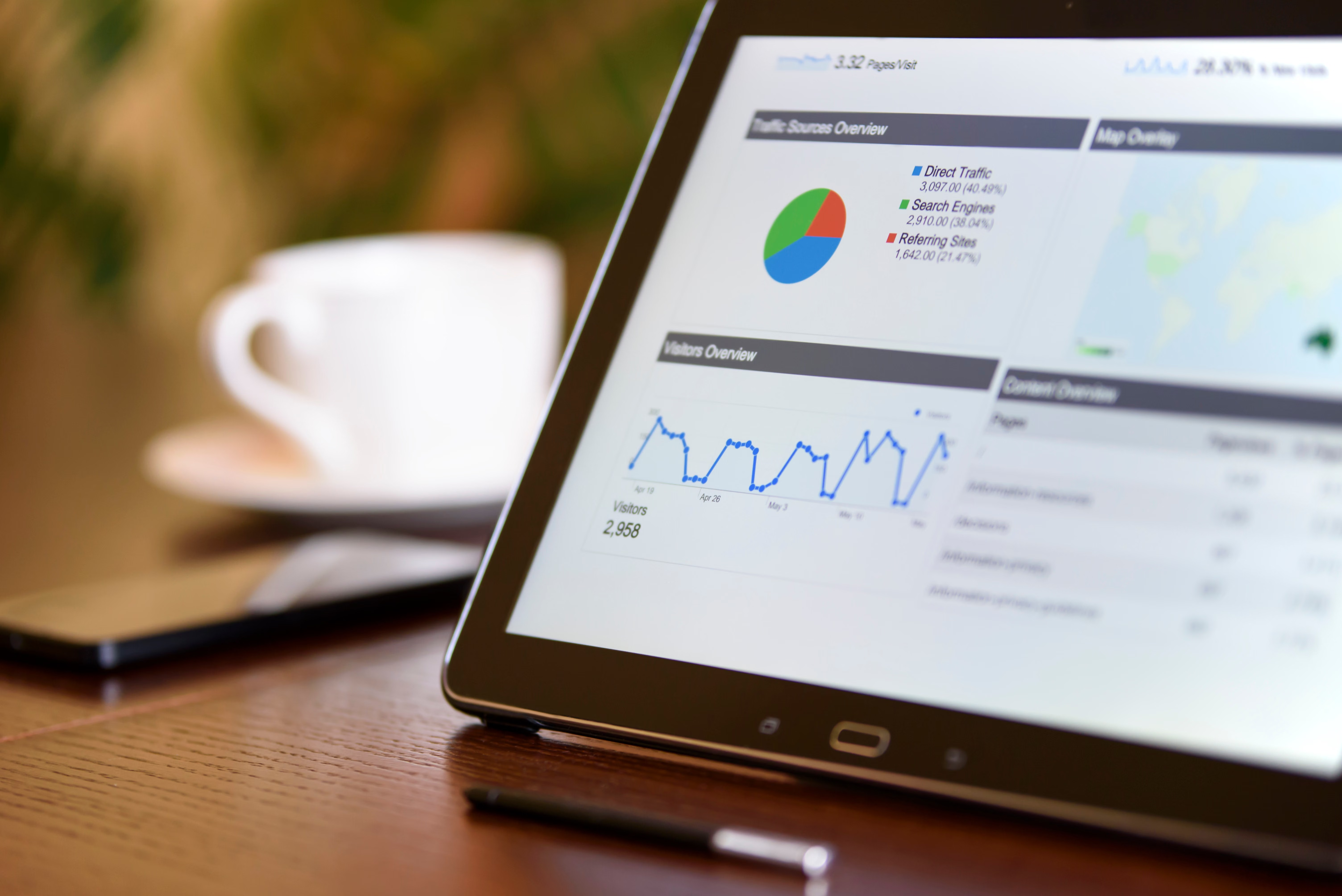
Analytics is essential if you want social traffic to contribute to website growth. Without tracking, you may know that people are visiting, but not which posts, platforms or pages are producing meaningful engagement or leads.
Track metrics such as sessions from each channel, time on page, bounce rate, click-through rates, form completions and assisted conversions. Look for patterns in the content that performs well. Are how-to posts driving more visits than promotional posts? Are mobile users dropping off at a certain stage? Are visitors from one platform more likely to convert than another?
Tools such as Google Analytics can help you understand the full journey from social click to on-site action. You can also use heatmaps or session recordings to find friction points in key pages. If a page gets traffic but few leads, it may need clearer messaging, stronger proof, a better offer or a shorter form.
Best Practices for Sustainable Social Traffic Growth
A simple checklist can keep your social traffic strategy focused:
– Share content with a clear purpose and destination
– Match each platform to the right audience and content format
– Use strong headlines and concise calls to action
– Optimise landing pages for mobile users and fast loading
– Review analytics regularly and adjust based on real behaviour
– Combine social activity with SEO, email marketing and remarketing
– Test both organic and paid campaigns before scaling spend
When these parts work together, social traffic becomes more valuable because it supports several goals at once: visibility, engagement, lead generation and customer trust. If your team needs a broader framework for website growth and online visibility, Backlink Works covers related digital marketing topics that can support a more structured approach.
Conclusion
Social traffic can be a practical way to grow website visits and leads, but it works best as part of a wider digital marketing strategy. The key is not simply attracting clicks. It is matching the right content to the right audience, sending visitors to the right page and making it easy for them to take the next step.
With a clear strategy, strong content, useful landing pages and regular analysis, social media can support sustainable website growth. Results usually build over time, so consistency, testing and optimisation matter more than chasing quick wins.
Frequently Asked Questions
How does social traffic help with website growth?
Social traffic introduces new visitors to your site, increases content reach and can support lead generation when the landing page is well matched to the post.
Which social platforms are best for driving leads?
The best platform depends on your audience and offer. LinkedIn often suits B2B, while Instagram, Facebook, YouTube and Pinterest can work well for other business types.
Do social media posts help SEO?
They do not directly improve rankings in a simple way, but they can increase content visibility, traffic and engagement, which may support wider SEO performance over time.
Should I use paid social or organic social traffic?
Both can help. Organic social is useful for long-term audience building, while paid social can extend reach faster if your targeting, budget and landing pages are well planned.
- Sponsored Ad -





