
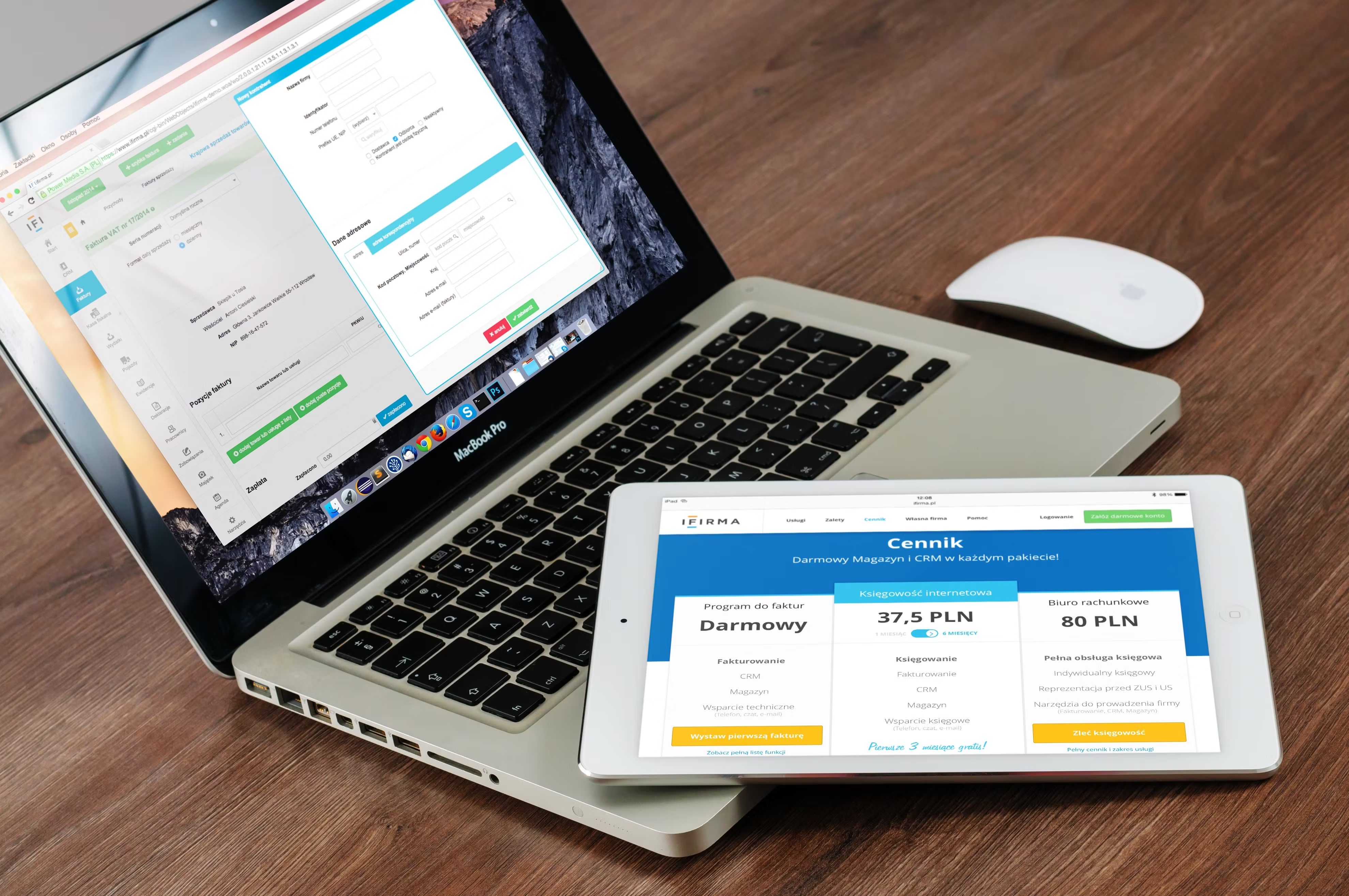
User behaviour analysis helps website owners understand how real people interact with a site, rather than relying on assumptions. It looks at actions such as clicks, scroll depth, navigation paths, form completion, search use, and where visitors drop off.
When used well, these insights can improve website design, UX, page layout, content structure, mobile usability, and conversions. For SEO, the value is indirect but important: clearer structure, faster pages, better engagement, and stronger accessibility can support crawlability and user satisfaction.
What User Behaviour Analysis Means in Website Design
User behaviour analysis is the process of studying how visitors move through a website and where they encounter friction. It can involve analytics, heatmaps, session recordings, scroll tracking, conversion funnels, and form analytics.
For designers and marketers, this is useful because it shows what people actually do. A homepage may look polished, but if visitors ignore the main call to action or leave before reaching key content, the design may not be doing its job.
Instead of guessing what users want, behaviour data highlights patterns. You may find that people skim long pages, tap the wrong menu item on mobile, or abandon service pages when the next step is unclear.
Why It Matters for SEO-Friendly Website Design
SEO-friendly website design is not only about keywords and content. It also depends on whether search visitors can find what they need quickly and move through the site without confusion.
When user behaviour shows that people struggle with navigation or skip important pages, that can point to problems with site structure, internal linking, or content hierarchy. A clearer layout helps users and can also make it easier for search engines to understand the relationship between pages.
Behaviour analysis is especially useful for service websites, business websites, and ecommerce stores where different page types need different outcomes. For example, a service page should guide users towards contact or enquiry, while a product page should support decision-making with clear details, pricing, trust signals, and next steps.
Google’s own guidance on usability and page experience is a helpful reference point for teams working on this kind of improvement: Google Search Central SEO Starter Guide.
How Behaviour Data Improves Page Layout and Content Structure
User behaviour analysis can reveal whether a page’s layout supports scanning, reading, and action. If people consistently stop near the top of a page, the most important message may need to appear sooner. If visitors scroll far but do not convert, the page may need better calls to action, trust signals, or simpler copy.
For landing pages, this often means reducing distractions and aligning the layout with one clear goal. For blog content, it may mean improving headings, adding internal links, and breaking up dense paragraphs. For service pages, it can mean placing benefits, process details, FAQs, and contact options in a more logical order.
Design teams can also use these insights to improve content layout across WordPress websites and custom builds. If users miss key sections, the issue may be hierarchy rather than copy quality. Small changes such as stronger headings, better spacing, and clearer visual cues can make a page easier to scan.
Mobile-First Design and Responsive UX
Behaviour analysis is particularly important on mobile, where screen space is limited and user patience is often lower. If mobile visitors scroll less, tap the wrong element, or abandon forms quickly, the issue may be with responsive design rather than the offer itself.
Mobile-first design means planning for smaller screens first, then scaling up. This encourages simpler navigation, shorter content blocks, readable typography, and tap-friendly buttons. It also helps avoid cluttered layouts that look acceptable on desktop but become difficult to use on phones.
If heatmaps or analytics show strong desktop engagement but weak mobile performance, check whether menus are too complex, forms are too long, or key content sits too far down the page. Responsive web design should support the same user journey across devices, not just resize the page.
Website Speed, Core Web Vitals, and Friction Reduction
User behaviour is often affected by speed. Slow pages can interrupt the browsing journey, especially on mobile or lower-quality connections. Even when users do not consciously mention speed, they may leave before engaging deeply with the page.
Core Web Vitals and other performance indicators matter because they relate to how quickly content becomes visible, how stable the layout feels, and how responsive the page is to interaction. A fast, stable page supports better UX and reduces friction in the journey from landing page to enquiry, add-to-cart, or contact form.
Behaviour analysis can help identify pages where speed issues have a practical effect. If a high-traffic product page has a poor interaction pattern, the problem may be image weight, script overload, or a layout that shifts as content loads. Tools such as PageSpeed Insights can help diagnose these issues alongside analytics data.
Using Behaviour Insights to Improve Navigation and Conversion Paths
Navigation should help users reach the content they want without having to think too hard. Behaviour analysis can reveal whether people use the menu, search bar, footer links, or breadcrumb trails to move around the site.
If users repeatedly return to the homepage or leave from a deep page, the internal path may be unclear. In that case, stronger category pages, better internal linking, and clearer labels can help. Ecommerce websites may need more obvious paths from category pages to product pages, while consultancy and service businesses may benefit from clearer routes from informational content to service pages.
For conversion-focused design, behaviour data can show where users hesitate. A form may be too long, a button may be visually weak, or the page may lack reassurance. However, better design does not guarantee more leads or sales. Results depend on traffic quality, offer relevance, trust signals, copy, and ongoing testing.
If you are reviewing a site’s wider SEO and design foundations, a structured audit can help spot friction points. Backlink Works offers a free website SEO audit that may be useful as a starting point for identifying structural and performance issues.
Best Practices for Turning Behaviour Data into Better Design
Start with the pages that matter most: homepage, service pages, product pages, landing pages, and high-traffic blog posts. These pages usually carry the strongest business impact.
Then look for patterns rather than one-off actions. A single user may behave unpredictably, but repeated drop-off at the same step usually suggests a design or content issue.
Useful improvements often include:
- Simplifying navigation labels and menu depth.
- Placing key messages and calls to action earlier on the page.
- Breaking long content into scannable sections with clear headings.
- Improving mobile spacing, tap targets, and readable text sizes.
- Reducing page weight and removing unnecessary scripts.
- Adding internal links that support discovery and context.
- Checking forms, filters, and checkout steps for avoidable friction.
It is also important to keep accessibility in mind. Clear contrast, descriptive labels, logical heading order, and keyboard-friendly interactions all improve usability for more people. Good accessibility often overlaps with good design, good SEO, and better behaviour patterns.
Conclusion
User behaviour analysis improves website design by replacing guesswork with evidence. It shows how visitors read, click, navigate, and leave, which helps teams make better decisions about layout, mobile usability, performance, content structure, and conversion paths.
For website owners, the main benefit is clarity. When design decisions are based on real behaviour, pages are more likely to feel useful, accessible, and easy to use. That can support stronger engagement, better user experience, and a more effective website overall, without relying on shortcuts or misleading tactics.
Frequently Asked Questions
What is user behaviour analysis in website design?
It is the study of how visitors interact with a website, including clicks, scrolling, navigation, and form activity, so design decisions can be based on real usage.
How does behaviour analysis help SEO?
It can improve site structure, internal linking, mobile usability, speed, and content clarity, all of which support a better user experience and easier crawling.
Which pages should I analyse first?
Start with your homepage, service pages, product pages, landing pages, and any pages that receive strong traffic but weak engagement.
What tools can help track user behaviour?
Common tools include analytics platforms, heatmaps, session recordings, and performance tools, depending on the questions you are trying to answer.
- Sponsored Ad -





