
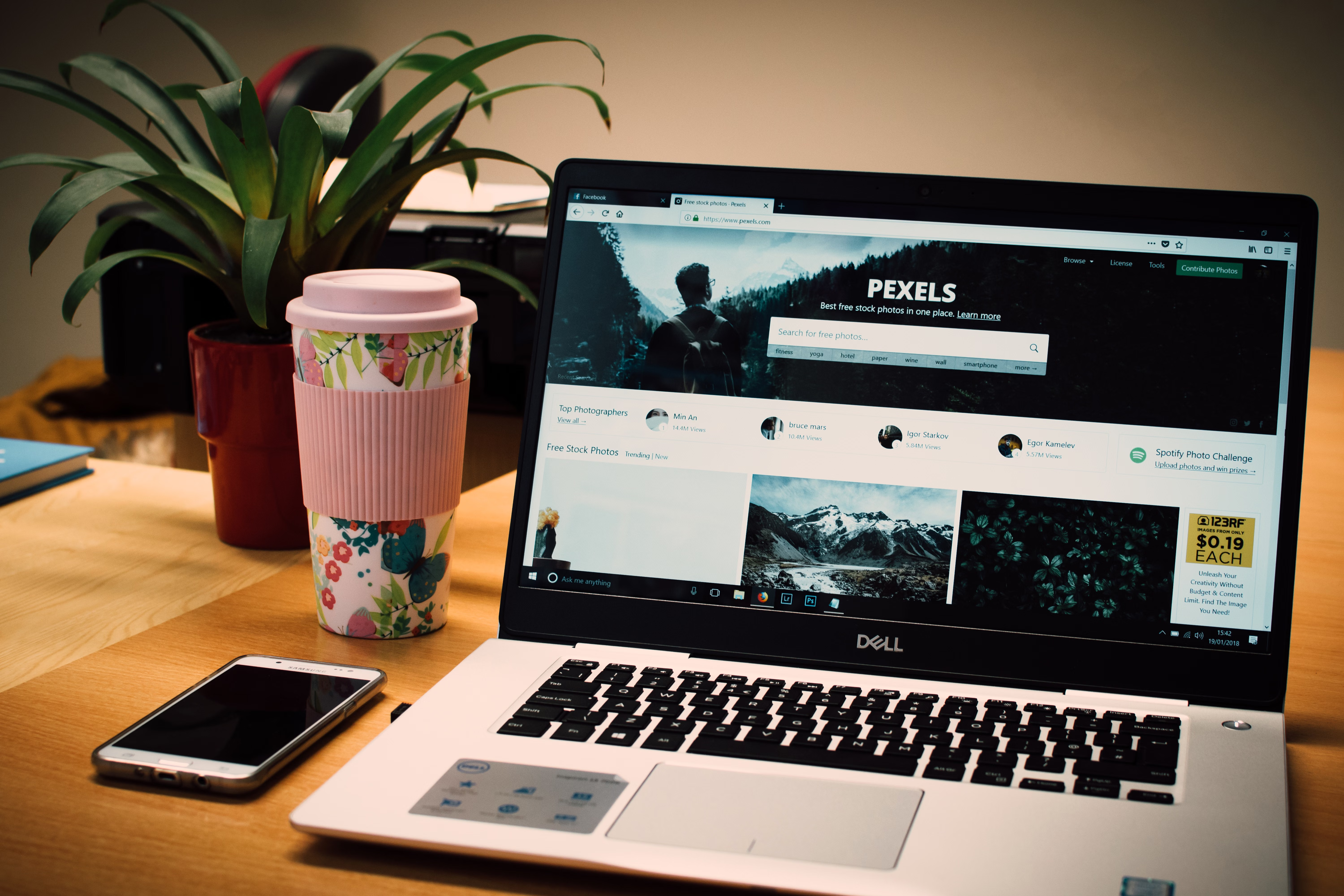
Updating a website is not only about refreshing the look and feel. A well-planned website update strategy should improve how people move through the site, how quickly pages load, how content is understood, and how search engines can crawl and interpret the structure.
For businesses, bloggers, ecommerce brands, and service providers, SEO-friendly design is a practical way to support visibility and usability at the same time. It helps align responsive web design, mobile-first layouts, navigation, content organisation, and performance with the needs of real users and search engines.
What SEO-friendly website design really means
SEO-friendly website design is the process of building or updating a site so that it is easy to use, easy to crawl, and easy to understand. It is not about cramming keywords into buttons or making pages look busy. Instead, it focuses on clear structure, accessible content, sensible internal linking, and a layout that works well on all devices.
Good design supports SEO in several ways. A clear page structure helps search engines understand topics. Fast-loading pages reduce frustration. Mobile-friendly layouts improve usability on smaller screens. Accessible typography, contrast, and spacing make content easier to read. These are all design decisions, but they also shape search performance and user behaviour.
Start with a structure that supports users and search engines
Before changing colours, fonts, or page templates, review the overall website structure. A strong structure helps visitors find the right information quickly and helps search engines discover important pages.
Think about the site in terms of core sections such as home, service pages, product pages, category pages, blog content, contact pages, and support pages. Each page should have a clear purpose. If a page exists, it should earn its place in the navigation or be linked from a relevant section of the site.
For example, a service business may benefit from dedicated pages for each service rather than one broad page that tries to cover everything. An ecommerce store may need clear category pages, well-organised product pages, and filtering that helps users narrow their choices without creating confusion.
Good structure also makes internal linking more effective. Related pages should connect naturally, so users can move deeper into the site without getting lost. If you are reviewing the wider SEO health of a redesign, a free website SEO audit can help identify structural issues before changes go live.
Design for mobile first, then refine for larger screens
Mobile-first design is no longer optional. Many users will first encounter your site on a phone, and if the mobile experience is clumsy, they may leave before they ever see your offer properly.
A mobile-first approach means designing the most important content and actions for smaller screens first. This usually leads to simpler layouts, clearer calls to action, shorter content blocks, and easier navigation. On larger screens, the design can expand without losing focus.
Practical checks include readable font sizes, tap-friendly buttons, enough spacing between elements, and menus that do not overwhelm the user. Avoid placing too many actions in the same area. A good mobile experience should feel calm, direct, and easy to scan.
If you are working in WordPress, choose themes and page builders that support responsive web design properly rather than forcing desktop layouts to shrink awkwardly. In ecommerce website design, product cards, filters, and checkout steps should also be tested on mobile so the buying journey stays clear.
Use layout and content hierarchy to guide attention
Page layout influences how people read, compare options, and decide what to do next. A strong layout does not just look tidy; it helps visitors process information in the right order.
Start with a clear headline, followed by a short explanation of what the page offers. Use subheadings to break up content into logical sections. Keep paragraphs short and make the most important points visible without forcing the user to hunt for them.
For landing pages and service pages, the layout should answer key questions quickly: What is this? Who is it for? Why should I trust it? What should I do next? Support this with relevant imagery, concise copy, and clear calls to action. Avoid clutter that competes with the main goal of the page.
In product pages, include essential details near the top, such as product benefits, specifications, price, and delivery or returns information. If there are supporting sections lower down, such as FAQs or comparisons, make sure they are easy to scan and do not bury critical information.
Improve speed and Core Web Vitals without harming usability
Website speed is part of design because the way a site is built affects how quickly users can interact with it. Slow pages can frustrate visitors, especially on mobile connections, and performance issues may also make crawling and indexing less efficient.
Core Web Vitals are useful indicators of page experience, but they should be treated as part of a wider design strategy rather than a checklist to game. Focus on sensible image sizes, efficient code, limited unnecessary scripts, and layouts that do not jump around as content loads.
Design choices matter here. Large background videos, oversized images, too many animations, and heavy third-party widgets can all slow a site down. If visual features are not improving the page, remove or simplify them.
For ongoing checks, Google’s PageSpeed Insights tool can help you spot obvious performance issues and prioritise fixes. The goal is not a perfect score; it is a faster, more stable experience for actual visitors.
Build trust with clear UI, accessibility, and conversion-focused details
UI and UX work best when they reduce friction. Good user interface design makes it obvious where to click, what each section means, and how to move forward. This is especially important for business websites, ecommerce pages, and service pages where trust plays a major role in conversion.
Use clear button labels, consistent colours, readable typography, and sufficient contrast. Avoid design patterns that hide important information or make users guess what happens next. Trust signals such as contact details, policies, reviews, case studies, and credentials should be easy to find without taking over the page.
Accessibility should also be part of the update plan. This includes alt text for meaningful images, semantic headings, keyboard-friendly navigation, and forms that are easy to complete. Accessible design supports more users and often improves clarity for everyone.
When planning conversions, remember that results depend on traffic quality, offer strength, trust signals, page clarity, copy, testing, and user intent. Good design can support all of these, but it does not replace a strong message or a useful product. If you want to compare your current site with broader SEO opportunities, Backlink Works Insights provides related resources on website growth and visibility.
A practical checklist for your next website update
Use this short checklist to guide the update process:
- Review navigation so key pages are easy to reach.
- Check that the site works well on mobile and tablet screens.
- Make sure headings follow a logical hierarchy.
- Improve page speed by simplifying heavy design elements.
- Keep landing pages focused on one main action.
- Use internal links to connect related pages naturally.
- Test forms, buttons, and menus for clarity and usability.
- Confirm that content is readable, accessible, and well spaced.
For WordPress website design, revisit plugins, themes, and page templates regularly. Too many add-ons can create clutter and slow performance. If your website uses a large number of pages, consider how category pages, service pages, and blog posts connect so visitors can move through the site without friction.
Common website update mistakes to avoid
One common mistake is treating the redesign as only a visual project. A prettier site is not necessarily a better site if the navigation becomes more confusing or the content becomes harder to read.
Another mistake is redesigning without checking analytics or user behaviour. Look at pages with high exits, weak engagement, or poor mobile performance before making changes. Those pages often need the most attention.
It is also wise to avoid hiding important content behind tabs or animations when the information should be visible upfront. Search engines can process a lot, but users should not have to work hard to understand the page.
Conclusion
A strong website update strategy balances SEO, UX, mobile usability, speed, and conversion clarity. The most effective design changes are often the simplest ones: better structure, cleaner navigation, faster pages, clearer content layout, and more thoughtful page templates.
Whether you are updating a WordPress site, rebuilding an ecommerce store, or refining service pages, design should help people find information quickly and take the next step with confidence. When website design supports accessibility, performance, and content clarity, it becomes a practical asset for long-term online growth.
Frequently Asked Questions
How does website design affect SEO?
Design affects crawlability, mobile usability, page speed, content structure, and internal linking, all of which support SEO performance.
What is the most important part of an SEO-friendly website update?
Clear structure is usually the starting point. If users and search engines can understand the site easily, other improvements become more effective.
Should mobile design be treated separately from desktop design?
Yes, in practice it should. A mobile-first approach helps ensure the most important content and actions work well on smaller screens.
Do better visuals automatically improve conversions?
No. Conversions depend on many factors, including usability, trust, copy, page speed, offer strength, and how well the page matches user intent.
- Sponsored Ad -





